AWS Elastic Beanstalk Launches New Fully-Managed Cluster Mode to Streamline Modern Application Infrastructure

Since its inception in 2011, AWS Elastic Beanstalk has served as a cornerstone of the Amazon Web Services ecosystem, abstracting the complexities of infrastructure management for developers working in Java, .NET, Python, Node.js, PHP, Ruby, and Go. Over the past fifteen years, the service has evolved from a simple deployment utility into a comprehensive application management platform. Today, AWS marks a significant milestone in this evolution by announcing the general availability of "Cluster Mode," a new operational paradigm that leverages the power of Amazon Elastic Kubernetes Service (Amazon EKS) to provide a unified, highly scalable environment for modern application portfolios.
The Evolution of Managed Infrastructure
The history of AWS Elastic Beanstalk is a study in the shifting requirements of cloud-native development. When it first launched, the primary challenge for developers was the manual provisioning of web servers, load balancers, and scaling policies. By providing a platform that allowed developers to upload code while AWS handled the "undifferentiated heavy lifting" of provisioning, patching, and monitoring, Elastic Beanstalk effectively lowered the barrier to entry for full-stack application deployment.
However, as organizations transitioned toward microservices architectures and containerized workflows, the operational requirements shifted. The industry-wide pivot toward Kubernetes necessitated a more robust backend engine. In response, AWS has spent the last several years re-engineering the Elastic Beanstalk core. This process included the integration of AI-powered environment analysis to diagnose health issues, the introduction of native GitHub Actions for CI/CD integration, and the implementation of OpenTelemetry-based observability. These incremental updates paved the way for the launch of Cluster Mode, which represents the most significant architectural shift in the platform’s history.
Understanding Cluster Mode: A New Operational Baseline
At its core, Elastic Beanstalk Cluster Mode is designed to solve the "operational sprawl" faced by engineering teams that manage dozens or hundreds of individual applications. Previously, running multiple applications often required separate, isolated infrastructure stacks, which increased both management overhead and costs.
With Cluster Mode, AWS introduces a shared infrastructure model powered by Amazon EKS. By consolidating application environments onto a single, managed EKS foundation, teams can achieve greater resource efficiency. The system manages the lifecycle of these applications—from deployment and scaling to patching and maintenance—while maintaining a consistent operational baseline. For an organization, this means that whether they are managing ten applications or a hundred, the administrative experience remains uniform. The service abstracts the underlying Kubernetes complexity, allowing developers to interact with the familiar Elastic Beanstalk interface while benefiting from the orchestration power of EKS.

Technical Implementation and Deployment Workflows
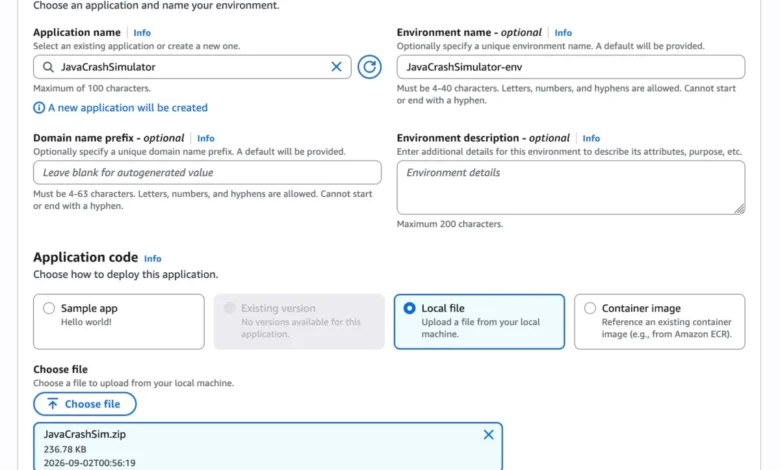
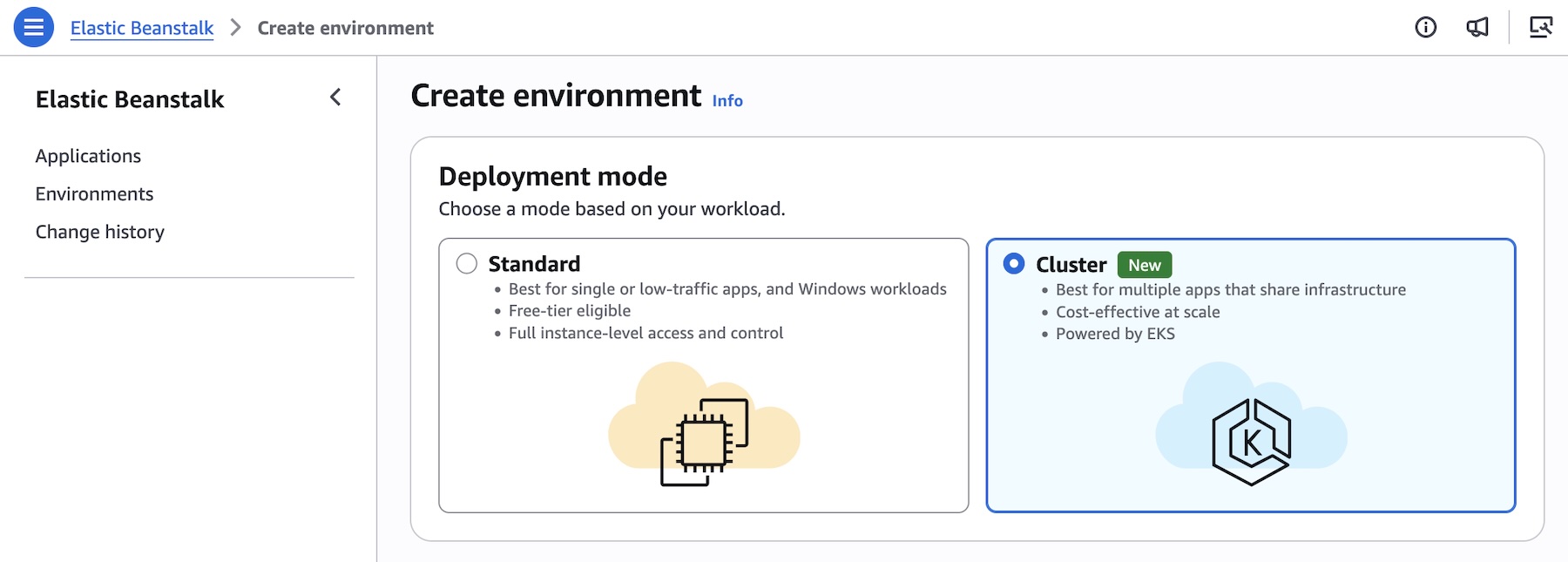
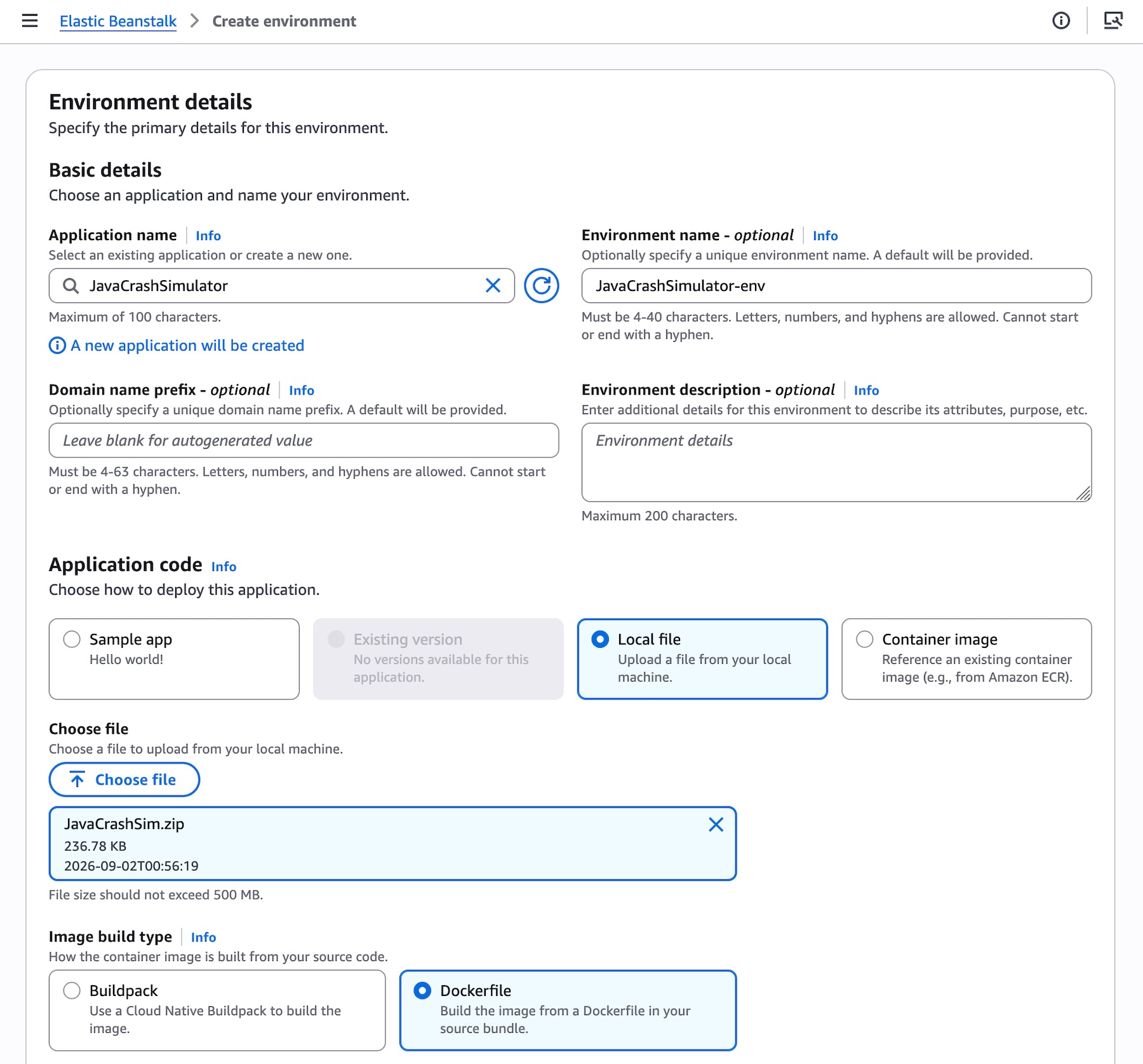
For developers and DevOps engineers, the transition to Cluster Mode is designed to be seamless. The deployment process allows for the intake of source code, Dockerfiles, or container images. When a user selects "Cluster" as the deployment type in the Elastic Beanstalk console, the system initiates the creation of an underlying EKS cluster.
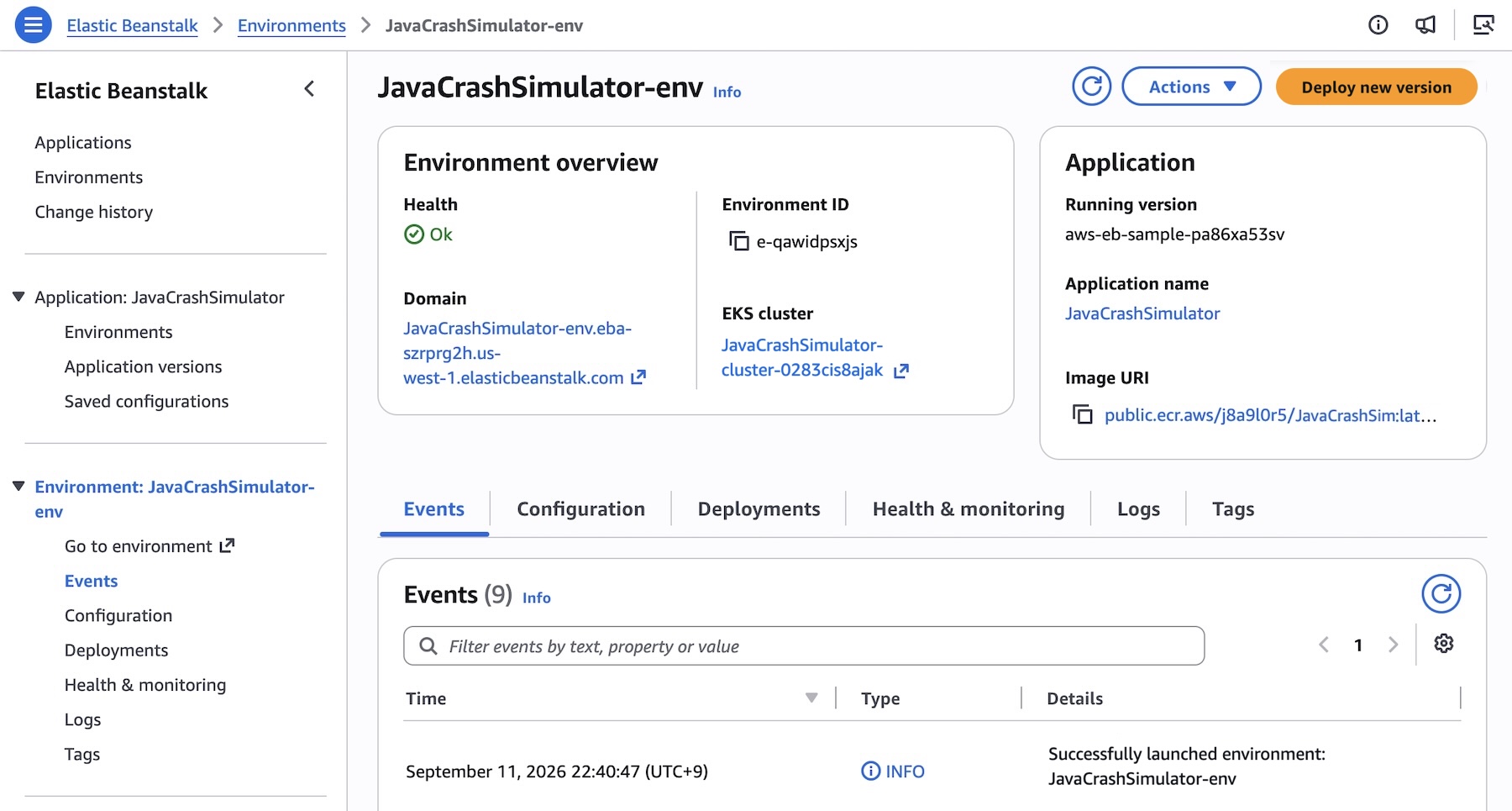
While the initial deployment—which includes the provisioning of the EKS control plane—may take approximately ten minutes, subsequent deployments are significantly faster due to the reuse of the existing infrastructure. This architecture supports a variety of deployment scenarios, including complex microservices. Using the AWS Command Line Interface (CLI) or the EB CLI, developers can register multiple microservices (e.g., frontend, cart, payment, and shipping services) as distinct application versions. Each service can be configured with specific resource requirements, such as CPU and memory limits, and exposed via public or private load balancers.
This granular control is managed through JSON-based configuration files, allowing teams to codify their infrastructure requirements as part of their version control process. Furthermore, Elastic Beanstalk continues to support "Standard Mode," which is powered by Amazon EC2. The two modes can coexist within the same application, providing a bridge for teams that need to migrate legacy workloads to the new container-native infrastructure at their own pace.
Strategic Implications for Enterprise Cloud Strategy
The shift toward Cluster Mode reflects broader trends in enterprise cloud computing, specifically the movement toward platform engineering. By providing a managed layer over Kubernetes, AWS is effectively commoditizing the operational management of containerized workloads.
From a cost-efficiency perspective, the shared-infrastructure model is expected to reduce the per-application overhead. As organizations scale, the ability to pack multiple microservices onto shared compute resources—managed by EKS Auto Mode—prevents the "idle capacity" problem that often plagues isolated environment deployments. Moreover, the integration of security features, such as mandatory HTTPS via AWS Certificate Manager and centralized secrets management through AWS Secrets Manager, ensures that security best practices are baked into the infrastructure by default.
Market analysts note that this move by AWS is a direct response to the demand for "Developer Experience" (DevEx). As organizations struggle with the steep learning curve of Kubernetes, services that provide the benefits of orchestration without the cognitive load of direct management are becoming increasingly valuable. By "taking full operational responsibility," AWS is positioning Elastic Beanstalk as a viable long-term solution for companies that want to focus on business logic rather than cluster orchestration.
Roadmap and Availability
As of today, Elastic Beanstalk Cluster Mode is generally available across all AWS Regions where Elastic Beanstalk is currently supported. AWS has emphasized that there is no additional service fee for using Cluster Mode; customers are billed only for the underlying resources consumed, such as the EKS control plane, EKS compute, Amazon ECR, and CloudWatch logs.
While the service offers substantial benefits, users should note that it is not eligible for the AWS Free Tier, reflecting the production-grade nature of the underlying EKS infrastructure. AWS plans to continue updating its regional availability and feature roadmap via the AWS Capabilities by Region portal. For teams looking to automate their interactions with this new feature, the integration with the AWS MCP (Model Context Protocol) Server and associated plugins allows for programmatic troubleshooting and API interaction using modern AI-driven tooling.
Conclusion: The Future of Managed Deployments
The launch of Cluster Mode signifies a maturation of the AWS Elastic Beanstalk platform. By aligning its engine with the industry-standard Kubernetes ecosystem while retaining the simplicity of its original vision, AWS is providing a bridge for organizations caught between the need for high-performance, containerized infrastructure and the desire for low-overhead management.
As the industry moves further toward standardized, automated deployment pipelines, the importance of platforms that handle the "full life cycle" of an application cannot be overstated. With the introduction of Cluster Mode, AWS has reinforced its commitment to maintaining Elastic Beanstalk as a premier choice for developers who require a balance between flexibility and operational abstraction. The ability to deploy, scale, patch, and monitor applications continuously—without direct intervention in the underlying Kubernetes layer—is a significant step forward in the quest to simplify the complexity of the modern cloud-native stack. For enterprises looking to streamline their application portfolios, the new era of Elastic Beanstalk offers a compelling path toward increased operational maturity and reduced technical debt.