Apple CEO John Ternus Doubles Down on the iPhone as the Ultimate AI Hub in Historic First Keynote

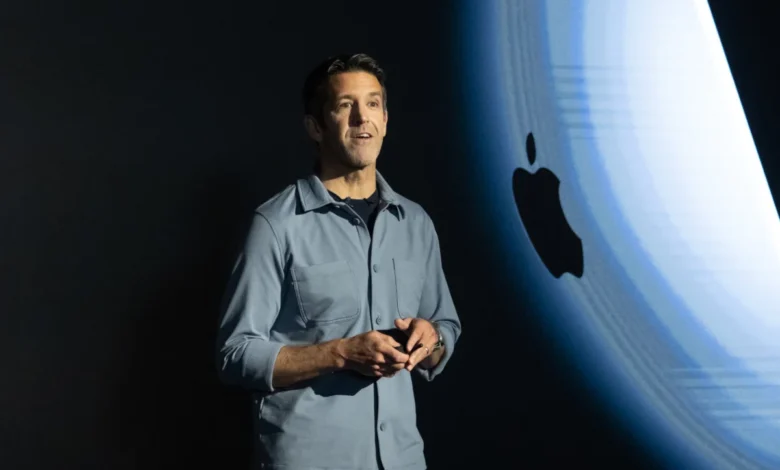
Apple stands at a critical juncture in its corporate history. As the technology sector navigates a profound paradigm shift driven by artificial intelligence, industry analysts and market watchers have spent months questioning the long-term viability of the smartphone. Critics argue that standalone wearable devices, ambient computing, and neural interfaces will soon eclipse the traditional pocket-sized screen. However, during his highly anticipated debut keynote address, newly appointed Apple CEO John Ternus offered an unequivocal rebuttal to these claims. He positioned the iPhone not as a fading legacy product, but as the undisputed cornerstone of Apple’s strategy for the artificial intelligence era.
This declaration represents a notable philosophical shift from the tenure of his predecessor, Tim Cook. Throughout his leadership, Cook frequently endeavored to convince Wall Street and consumers alike that Apple was evolving into a diversified services and hardware ecosystem that transcended any single flagship device. Ternus, by contrast, has boldly tethered the company’s immediate and long-term fortunes back to the venerable hardware that revolutionized personal computing nearly two decades ago.
The Argument for the Pocket-Sized Hub
During his keynote address, Ternus focused heavily on the unique hardware and software integration that makes the iPhone uniquely suited for modern artificial intelligence workloads.
"There’s no product in the world better designed to be your intelligent personal hub than iPhone," Ternus told the audience, outlining a vision where the smartphone acts as the central coordinator for an individual’s digital life.
To validate this assertion, Ternus posed a foundational design question to the industry: If an engineer were tasked with building the ultimate personal AI hub entirely from scratch, what specifications would it require? The answer, he argued, precisely mirrors the modern iPhone architecture: an ultra-powerful localized system-on-a-chip, high-resolution multi-lens camera systems, persistent global networking capabilities, and robust on-device machine learning accelerators.
This configuration gives Apple a formidable advantage in the compute-hungry AI landscape. While nascent AI wearables have attempted to carve out a niche by focusing on single-purpose interactions—such as voice-controlled lapel pins or smart glasses—they frequently struggle with latency, battery life, and computational bandwidth. The iPhone, conversely, benefits from decades of iterative hardware refinement. It packs desktop-class processing power into an ultra-portable chassis that consumers already carry with them everywhere.
Echoes of 2001: The Steve Jobs Playbook
Ternus’s aggressive defense of the iPhone bears a striking resemblance to a legendary moment in Apple history orchestrated by co-founder Steve Jobs. At the Macworld New York keynote in July 2001, Jobs faced a strikingly similar chorus of skepticism from industry pundits who declared that the personal computer was a dying medium. At the time, media outlets and tech analysts argued that the PC era was reaching its twilight, soon to be replaced by specialized digital appliances.
Jobs famously addressed these bearish predictions by displaying a mock tombstone for the "Beloved PC" on the screen behind him, directly calling out industry critics like Walt Mossberg and executives from Compaq and Gateway.
"This is what everyone else is telling us. That our PC is waning if not the hole being dug," Jobs remarked at the time. "We don’t think the PC is dying at all. We don’t think the PC is moving away from the center at all. We think it’s evolving, just like it has since it was invented."
Jobs argued that the personal computer was entering its "third great age," positioned to act as a "digital hub" that would connect, manage, and add value to a burgeoning ecosystem of peripheral electronics, including digital cameras, camcorders, and DVD players. Less than ten months after making that bold declaration, Jobs pulled the first-generation iPod out of his pocket—a peripheral device designed to interface with the Mac that ultimately transformed Apple’s financial trajectory and laid the groundwork for the iPhone itself.
By invoking this historical parallel, Ternus is signaling a strategic continuity. Just as Jobs defended the Mac while quietly building the bridge to the next generation of mobile computing, Ternus is forcefully anchoring Apple’s AI ambitions to the iPhone while keeping the broader product roadmap close to his chest. Whether Ternus is similarly sitting on an undiscovered hardware paradigm that will eventually complement the iPhone remains to be seen, but his message to the market is clear: the smartphone is not being replaced; it is being supercharged.
Market Pressures and the AI Hardware Race
Ternus assumes the chief executive role at a time when consumer electronics manufacturers are aggressively searching for the next major computing platform. Over the past twenty-four months, venture-backed startups and established competitors alike have saturated the market with alternative AI hardware concepts. Pin-based wearables, smart rings, and augmented reality headsets have all been pitched as "iPhone killers," predicated on the theory that consumers are experiencing screen fatigue and are eager to move away from traditional displays.
Despite these marketing pushes, consumer behavior has remained steadfastly loyal to the smartphone. Market research consistently demonstrates that while consumers are willing to experiment with companion wearables, the smartphone remains the primary point of access for productivity, communication, financial transactions, and media consumption.
Industry analysts point out that the smartphone’s dominance stems from its unmatched versatility. While users frequently leave laptops, tablets, and specialized accessories at home or in the office, the smartphone remains a constant companion. As artificial intelligence evolves from cloud-based text generation into proactive, context-aware personal agents that monitor health, schedule communications, and manage digital workflows in real time, the device that sits within arm’s reach twenty-four hours a day holds a structural advantage that no nascent wearable has yet been able to replicate.
Financial Implications and Investor Sentiment
Wall Street has monitored Apple’s leadership transition and its integration of artificial intelligence with intense scrutiny. Under Tim Cook, Apple’s valuation surged past historic milestones largely on the strength of its massive active installed base—which recently surpassed 2.2 billion active devices globally—and the rapid expansion of its high-margin Services division.
However, as competitors like Microsoft, Google, and Amazon aggressively rolled out foundational AI models, investors periodically questioned whether Apple was lagging behind in the generative AI race. Delays in deploying advanced machine learning features and the measured rollout of Apple Intelligence initially caused some market jitters.
Ternus’s keynote address was explicitly designed to calm those anxieties by reframing Apple’s position. Rather than framing AI as a separate product category that requires an entirely new hardware ecosystem, Ternus presented artificial intelligence as the ultimate software layer that enhances the utility of the hardware Apple has spent nearly two decades perfecting.
Financial analysts have responded with cautious optimism, noting that anchoring AI features directly to the iPhone hardware lifecycle could stimulate a massive multi-year upgrade supercycle. Millions of consumers currently walking around with older, non-AI-capable iPhone models will eventually be forced to upgrade to access advanced localized intelligence features, driving hardware revenues and reinforcing the sticky ecosystem loop that underpins Apple’s business model.
Looking Ahead: The Next Era of Apple Leadership
As John Ternus settles into his tenure as chief executive, his early strategic maneuvers indicate a leader who is confident in Apple’s core strengths. By refusing to chase fleeting industry fads and instead doubling down on the smartphone as the ultimate intelligent personal hub, Ternus is betting that the iPhone’s best days are still ahead of it.
The challenges facing Apple in the artificial intelligence era are formidable. Regulatory pressures across the globe, intensifying competition in key international markets like China, and the rapid pace of technological innovation mean that Ternus will have little room for error. Yet, by tying his debut executive vision directly to the most successful consumer product in modern history, he has drawn a clear line in the sand.
As the iPhone approaches its twentieth anniversary on the market, the device that changed the world is being asked to change it once more. If Ternus’s vision proves correct, the smartphone will not be dethroned by the AI revolution; rather, it will command it from the very center of our daily lives.