AWS Builder Center celebrates one year of community-driven innovation and platform expansion as it redefines developer engagement.

Launched on July 9, 2025, the AWS Builder Center has rapidly evolved from a foundational community portal into a comprehensive ecosystem designed to support the global developer population. Over the past twelve months, the platform has successfully integrated essential tools, educational resources, and collaborative features, effectively bridging the gap between theoretical cloud learning and practical implementation. As the platform enters its second year, it stands as a testament to Amazon Web Services’ commitment to fostering a collaborative, self-sustaining community of engineers, architects, and students.
A Year of Strategic Growth and Milestones
The trajectory of the AWS Builder Center reflects a concerted effort to consolidate disparate developer resources into a unified, high-utility interface. What began as a hub for community voting and basic profile management has matured into a sophisticated infrastructure offering sandbox environments, specialized workshops, and the extensive Builders’ Library.
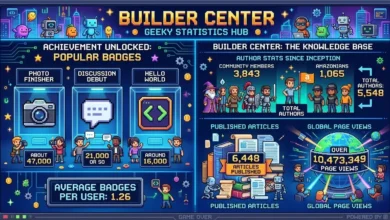
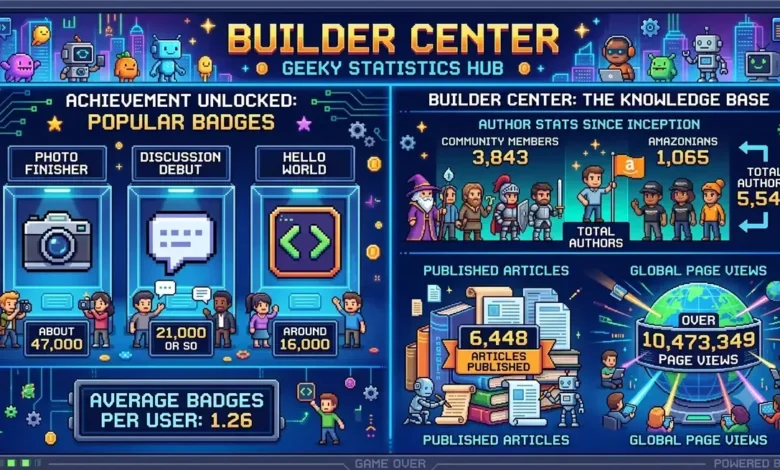
The internal data provided by the AWS team highlights the sheer scale of this growth. Since its inception, the platform has hosted 6,448 articles contributed by 5,548 unique authors. This content has generated a total of 10.4 million page views, underscoring the platform’s role as a primary destination for technical knowledge sharing. The introduction of a gamified badge system in March 2026 served as a catalyst for engagement; in the months since, users have claimed 99,226 badges, signaling a highly active and motivated user base.
Chronology of Platform Evolution
The evolution of the Builder Center can be categorized into three distinct phases of development:
- Foundational Phase (Q3 2025): The platform debuted with essential community-building features, including Wishlist voting, community profiles, and the initial integration of the toolbox. This phase focused on establishing the infrastructure for user-generated content and feedback loops.
- Expansion Phase (Q4 2025 – Q1 2026): AWS aggressively expanded the feature set to include granular category and complexity filters for workshops, the implementation of "Spaces" for group collaboration, and the introduction of user-centric features such as saved items, view counts, and availability notifications.
- Advanced Integration Phase (Q2 2026 – Present): The focus shifted toward accessibility and practical experimentation. The integration of GitHub and Amazon authentication streamlined the onboarding process, while the recent rollout of Sandbox Environments marks the culmination of the platform’s first-year vision.
Impact of Sandbox Environments
The most significant technical milestone in the platform’s first year is the introduction of Sandbox Environments. Designed to eliminate the friction typically associated with setting up cloud experiments, these environments provide users with a pre-provisioned AWS account specifically for workshop exercises.
From an operational perspective, the sandbox model is highly efficient. Each environment remains active for a duration of eight hours, after which the system triggers an automatic de-provisioning process, purging all resources. By removing the requirement for a personal credit card or manual environment cleanup, AWS has effectively lowered the barrier to entry for learners. This is a critical development for educational outreach, as it allows students and professional developers to engage with complex cloud architectures without incurring costs or managing security configurations for temporary projects.
Community-Led Content and Trends
The success of the AWS Builder Center is largely attributed to the quality of its community-driven technical writing. An analysis of the most popular articles reveals a clear preference for practical, project-based tutorials that address contemporary challenges in the industry.
Leading the engagement metrics is "Building an AWS Study Buddy with MCP + Strands Agents SDK" by Dineshraj Dhanapathy, which surpassed 50,000 views. This article demonstrates the community’s intense interest in the intersection of cloud services and generative AI agents. Similarly, "Migrating an EOL Linux Server to AWS in 8 Hours with Kiro" by Chris Miller, with over 45,000 views, highlights a recurring demand for migration best practices and legacy system modernization. Yash Aggarwal’s work on AI-driven neurological disease screening rounds out the top performers, illustrating that the platform is increasingly being used as a space for high-impact, socially conscious technological innovation.
Official Retrospectives and Future Outlook
Jeff Barr, a long-standing voice within the AWS ecosystem, provided a formal retrospective on the platform’s first year. His summary emphasizes that the Builder Center is not merely a documentation site, but a living, breathing component of the cloud development lifecycle. The inclusion of community feedback—specifically the 565 wishes submitted by users, of which 10 have already been implemented—proves that the platform is operating on a model of co-creation.

The roadmap for the coming year is already in motion, with 20 additional community-requested features slated for development. These updates are expected to further refine the user experience and expand the scope of the Builder Center’s library.
Broader Implications for the Cloud Industry
The success of the AWS Builder Center offers a blueprint for how large-scale technology providers can maintain a sense of community despite the vast scale of their operations. By prioritizing peer-to-peer knowledge sharing and providing a secure, sandboxed environment for experimentation, AWS is fostering a loyal and highly skilled developer workforce.
The implications for the broader industry are twofold. First, the platform establishes a standard for documentation and support that moves beyond passive reading, shifting toward active, experiential learning. Second, it creates a unique data repository where AWS can observe the specific problems developers are trying to solve in real-time. By tracking which workshops are most requested and which technical topics garner the most engagement, AWS can better align its product development and cloud service offerings with the actual needs of the global developer community.
As the platform moves into its second year, the focus will likely remain on scalability and the refinement of user-created content tools. The Builder Center is no longer an experiment; it is a vital pillar of the modern cloud computing experience, enabling developers to build, test, and share solutions within a secure and highly collaborative digital ecosystem. For the individual developer, the resource provides a path to continuous professional development; for the industry at large, it represents a successful model for scaling human expertise in a rapidly evolving technological landscape.