Simplifying AWS SigV4 Authentication with the New Standalone Signer for .NET

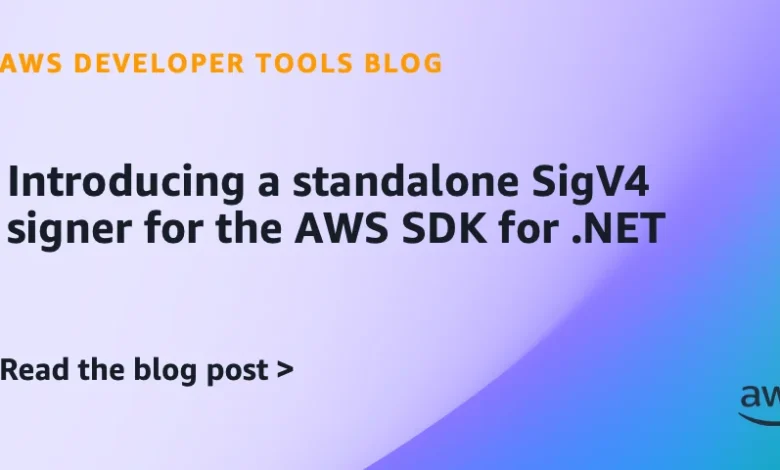
Until now, developers working within the .NET ecosystem who needed to sign AWS requests that were not explicitly covered by a generated SDK client faced a significant technical hurdle: they were forced to either manipulate internal SDK types or manually implement the complex AWS Signature Version 4 (SigV4) algorithm. This often resulted in brittle, error-prone code that required constant maintenance as AWS updated its security protocols. Recognizing this friction point, Amazon Web Services has introduced a public, standalone SigV4 signer within the AWS SDK for .NET, effectively democratizing access to the core authentication logic that powers the entire AWS platform.
This release, arriving with version 4.0.101.0 of the AWSSDK.Core package, marks a strategic shift in how AWS handles developer tooling. By exposing a public-facing API for request signing, AWS is acknowledging the growing diversity of modern cloud architectures, which frequently involve custom HTTP clients, non-standard API Gateway integrations, and unique microservices that sit outside the scope of traditional generated SDKs.
The Evolution of AWS Authentication
The AWS Signature Version 4 process is a rigorous security mechanism designed to protect the integrity of requests made to AWS services. It involves a multi-step process where a request is hashed, combined with secret keys, and signed using a derived signing key. For years, this complexity was abstracted away by service-specific SDKs, such as those for Amazon S3, DynamoDB, or Lambda. However, as the ecosystem expanded to include custom API Gateway endpoints, AWS AppSync, and various private VPC-bound services, developers found themselves building custom solutions to sign requests.
The manual implementation of SigV4 is notoriously difficult to get right. It requires precise handling of headers, canonical URI formatting, timestamp synchronization, and payload hashing. Small errors in the canonical request string result in "403 Forbidden" responses, which can be notoriously difficult to debug. The introduction of a first-party, supported library for this purpose signals that AWS is prioritizing developer productivity by reducing the "boilerplate" burden associated with security compliance.
Integration and Implementation Protocols
For .NET developers, the transition to the new signer is designed to be seamless. Because the AWSSDK.Core package is a foundational dependency for virtually all AWS service-specific NuGet packages, most enterprise-grade .NET applications are already using the necessary framework. Upgrading to version 4.0.101.0 is the only prerequisite to accessing the AWSSigV4Signer class.
The implementation follows a structured approach. To sign a standard request, developers must provide an AWSSigningRequest object—which encapsulates the HTTP method, URI, and headers—and an AWSSigV4Parameters object. The latter defines the identity of the signer, the target service, and the AWS region. By leveraging the DefaultAWSCredentialsIdentityResolver, the signer can automatically retrieve credentials from the environment, whether that involves IAM roles, environment variables, or local profile files, maintaining parity with the behavior of existing SDK clients.
One of the most critical aspects of this update is the handling of request headers. The documentation emphasizes that developers must include all headers generated by the signer, including X-Amz-Date and the security token for temporary credential sessions. Failure to include these auxiliary headers will invalidate the signature, as the AWS back-end expects the entire request context to be cryptographically bound.
Enhancing Workflow with Presigned URLs and HTTP Handlers
Beyond manual request signing, the new toolset addresses two specific, high-demand use cases: the creation of presigned URLs and the global signing of outbound HTTP traffic.
Presigned URLs are a cornerstone of AWS security, allowing developers to grant temporary, time-limited access to specific resources without sharing long-term security credentials. The new PresignAsync method streamlines this process, returning a URI that contains all necessary authentication parameters within the query string. This is particularly useful for scenarios where a client application, such as a browser or a mobile device, needs to upload or download data directly from an AWS service without the middle-tier server remaining in the data path.
For applications that rely heavily on the standard .NET HttpClient, the SigV4SigningHandler provides an elegant solution. By implementing the DelegatingHandler pattern, developers can "wrap" their HTTP clients with a signing layer. Once configured, every outgoing request is automatically intercepted, signed, and dispatched with the correct authentication metadata. This abstraction significantly reduces code duplication, as developers no longer need to invoke signing logic for every individual API call.
Implications for Microservices and API Gateway
The introduction of this signer has immediate implications for teams deploying serverless architectures using Amazon API Gateway. When invoking private or IAM-authorized REST/HTTP APIs, the execute-api service name serves as the identifier for the signer. By automating this process, developers can treat their custom-built internal APIs with the same level of security and integration rigor as native AWS services.
Furthermore, for developers building in distributed environments, the ability to override service and region defaults on a per-request basis—using HttpRequestOptionsKey—allows a single HttpClient instance to manage multiple AWS services simultaneously. This flexibility is a vital improvement for performance, as it allows for the reuse of HTTP connection pools, thereby reducing the latency overhead of establishing new TLS handshakes for every request.
Optimization Strategies for Large Payloads
A frequent challenge in AWS authentication is the overhead of hashing large request bodies. In standard SigV4, the entire payload must be hashed to ensure its integrity. For large file uploads or streaming data, this requirement can introduce significant latency and memory pressure.
The new signer addresses this by offering the SignPayload = false parameter. When enabled, the signer uses an "UNSIGNED-PAYLOAD" directive in the signature. This is a secure trade-off, provided that the request is transmitted over an encrypted HTTPS connection. By opting out of payload hashing, developers can handle massive files without the need for client-side buffering, effectively optimizing the throughput of their data pipelines.
Professional Analysis and Industry Impact
From an architectural standpoint, this update reflects the ongoing maturation of the .NET SDK for AWS. By decoupling the signing logic from the generated service clients, AWS has provided a modular foundation that will likely support future innovations in cloud-native application development.
Industry experts have noted that while the SDK generated clients remain the "gold standard" for interacting with well-defined AWS APIs, the standalone signer fills a critical "long tail" of requirements. As organizations move toward more specialized, custom-built microservices, the ability to enforce consistent, audited, and reliable security protocols across all HTTP traffic becomes a non-negotiable requirement.
However, the responsibility remains with the developer to ensure proper credential management. While the signer automates the mathematics of authentication, it does not replace the need for secure credential lifecycle management. Developers are advised to continue utilizing IAM roles and short-lived tokens whenever possible, ensuring that even if an application’s signing configuration is exposed, the blast radius of a potential credential compromise remains minimal.
Looking Ahead
As the AWS ecosystem continues to grow, the demand for interoperability between proprietary AWS services and custom application logic will only increase. The release of the AWSSigV4Signer is a proactive step in managing this complexity. By providing a stable, public interface, AWS is fostering a more robust developer experience, allowing teams to focus on business logic rather than the intricacies of cryptographic signing.
Developers looking to integrate this functionality should review the latest API documentation within the AWS SDK for .NET portal. As with all foundational security tools, the AWS engineering team encourages feedback and bug reports through their official GitHub repository. This community-driven approach ensures that as the SigV4 protocol evolves or as new use cases emerge, the .NET signer will remain a reliable, high-performance tool for the enterprise.
In summary, this update represents a significant leap forward for .NET developers. It effectively removes the "black box" nature of AWS request signing, providing a transparent, manageable, and highly extensible framework that meets the demands of modern, secure, and performant cloud-based applications.