AWS Emulator and Strategic Infrastructure Updates Define Latest Cloud Development Milestones

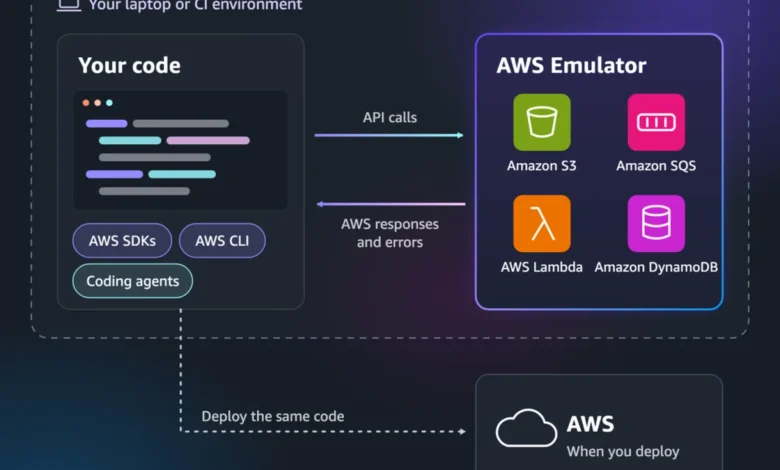
The recent introduction of the AWS Emulator marks a significant shift in how developers interact with cloud ecosystems, enabling local execution of AWS API calls without the traditional requirement for live cloud resource provisioning. This development, which reached general availability last week, arrives alongside a suite of updates across Amazon’s compute, storage, and identity management portfolios, reflecting a broader industry trend toward enhanced developer productivity, granular security isolation, and disaster recovery resilience.
The Rise of Localized Development Environments
The AWS Emulator represents a departure from strictly cloud-dependent development cycles. By allowing engineers and automated coding agents to point existing AWS CLI tools and SDKs to a local HTTPS endpoint, the emulator simulates the behavior of core AWS services. This capability is designed to streamline the "inner loop" of software development—the iterative process of writing, testing, and debugging code.
Historically, developers have relied on cloud-based sandbox environments to validate infrastructure-as-code (IaC) templates and application logic. This approach, while accurate, often incurs latency and potential costs. The emulator mitigates these factors by providing a containerized, local environment that supports standard SDK calls. According to technical documentation provided by AWS, the emulator currently supports operations like creating, writing to, and reading from Amazon DynamoDB tables.
However, the tool is not a complete replacement for cloud-based testing. It does not replicate Identity and Access Management (IAM) policy enforcement, complex cross-account permissions, or cross-region behaviors. As such, the industry consensus among cloud architects remains that local emulation serves as an early-stage validation tool, while final integration and security testing must still be conducted within the actual AWS environment to ensure parity with production-grade configurations.
Hardware-Level Isolation: Nitro Sandboxes
Parallel to the release of the AWS Emulator, Amazon has expanded its infrastructure security portfolio with the launch of Nitro Sandboxes for Amazon EKS (Elastic Kubernetes Service) and ECS (Elastic Container Service). This feature leverages the underlying AWS Nitro System to provide a hardware-level VM boundary for individual pods or tasks.
By enabling this isolation on shared EC2 instances, organizations can achieve a higher degree of multi-tenancy security without the overhead of maintaining separate instances for every microservice. This is particularly relevant for environments executing untrusted or dynamically generated code, where the risk of container escape or lateral movement must be minimized. The introduction of "confidential mode," which includes cryptographic attestation, provides an additional layer of protection against node-level operators, addressing compliance requirements for highly regulated sectors such as finance and healthcare.
Evolution of Identity and Security Protocols
Security updates this week also extended to Amazon Cognito, which now supports OAuth 2.0 token exchange. This feature addresses a common pain point for developers building complex agent-based architectures: the need for delegated access. By allowing a primary user token to be exchanged for a downstream, narrowly scoped token, developers can enforce the principle of least privilege more effectively.
This mechanism is particularly vital for AI agents. When an agent acts on behalf of a user, it often requires access to various backend services. Instead of forwarding a high-privilege user token, which creates a significant security risk, the system now enables the agent to utilize a restricted token that is limited in both scope and duration. The inclusion of an act claim within these tokens provides auditability, ensuring that downstream services can identify the intermediary agent responsible for the request.
Strategic Enhancements in Data and Search
The data storage landscape saw significant updates aimed at improving performance and resilience. Amazon ElastiCache Serverless for Valkey has been upgraded to support hybrid search and server-side aggregations. By integrating vector search capabilities directly into the cache, developers can reduce the latency associated with retrieving data from traditional databases for real-time applications, such as AI-driven recommendations or product discovery engines.
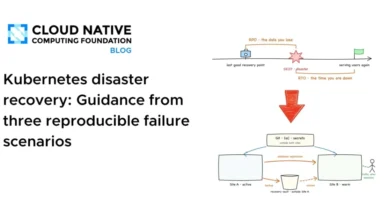
Simultaneously, Amazon OpenSearch Service has introduced managed cross-region disaster recovery for domains running version 3.7 or later. In a climate where system availability is paramount, this feature provides a defined path for regional failover. AWS has established recovery objectives for this service, aiming for under one minute of data loss (RPO) and under 20 minutes of recovery time (RTO). This move is a direct response to the increasing demand from enterprise customers for automated, high-availability configurations that do not require complex, custom-built replication scripts.
Scaling and Optimization: The AgentCore Runtime
As the adoption of generative AI agents continues to accelerate, the infrastructure supporting these agents is undergoing rapid optimization. The transition of the Amazon Bedrock AgentCore runtime to a next-generation default marks a milestone in operational efficiency.

By achieving sub-two-second startup times and scaling to zero during idle periods, the runtime addresses the "cold start" latency that has historically hindered real-time agent responsiveness. Furthermore, the reduction in memory billing—up to 68%—provides a tangible economic incentive for businesses to scale their AI operations. Each session remains encapsulated within its own isolated microVM, maintaining security standards while providing the agility required for high-volume, event-driven tasks.
Industry Context and Future Outlook
The breadth of these updates—ranging from local development tools to regional disaster recovery—highlights a strategic focus on the entire software lifecycle. The industry has reached a point where the bottleneck is no longer the raw capability of cloud infrastructure, but the efficiency with which developers can interact with that infrastructure.
The emphasis on coding agents throughout these announcements is not coincidental. As development tools increasingly incorporate AI-driven agents to automate code generation and testing, the underlying platforms must adapt to provide these agents with the feedback loops and isolated environments they require to function safely. The AWS Emulator, for instance, is essentially a response to the need for agents to "practice" within a low-stakes environment before committing to production infrastructure.
Looking toward the remainder of the year, particularly with the upcoming AWS re:Invent conference in Las Vegas, it is expected that these themes of "agentic" infrastructure, automated security, and localized development will remain central to the dialogue. Organizations are advised to audit their current deployment pipelines to determine where these new tools, particularly the local emulator and Nitro Sandboxes, can reduce operational risk and accelerate development velocity.
As with any transition to new infrastructure tooling, there is a requirement for thorough validation. While the promises of reduced costs and increased security are compelling, the implementation of cross-region disaster recovery and new token exchange protocols requires careful architectural planning to ensure that existing applications are compatible with the updated service definitions. The documentation provided by AWS for these releases, including the recent deep dives into Nitro Sandboxes and OpenSearch disaster recovery, serves as the primary resource for engineering teams tasked with integrating these advancements into their existing production environments.