AWS Infrastructure Sets Global Benchmarks During Record-Breaking Amazon Prime Day 2026


Amazon Prime Day 2026, the annual multi-day shopping event held from June 23 to June 26, 2026, represented more than just a retail milestone; it served as a massive-scale demonstration of cloud computing capabilities. For four days, millions of Prime members across the globe engaged with the platform, resulting in a transaction volume that pushed Amazon Web Services (AWS) infrastructure to its technical limits. The 2026 iteration of the event continued a decade-long tradition of AWS acting as the invisible engine behind Amazon’s retail operations, handling traffic spikes that would be insurmountable for traditional, on-premises data centers.
The Evolution of Prime Day Infrastructure
Since the inception of Prime Day in 2015, the event has grown from a singular promotional day into a multi-day global phenomenon. Over the last eleven years, Amazon has utilized these high-traffic periods as a stress test for AWS services. By analyzing the data from 2016 through 2026, observers can track the rapid maturation of cloud architecture. In 2016, the challenge was primarily about handling concurrency; in 2026, the focus shifted toward extreme high-availability, sub-millisecond latency, and the integration of advanced serverless and security-focused automation.
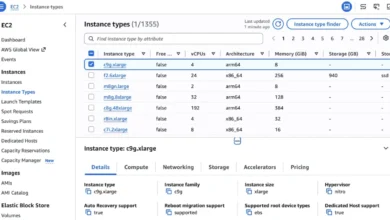
The 2026 event was characterized by a massive increase in reliance on AWS Graviton processors, which have become the backbone of Amazon’s compute efficiency strategy. As the company seeks to optimize power consumption and performance, the shift toward these custom-built ARM-based chips reached a new peak, powering nearly half of all EC2 compute instances during the four-day window.
Technical Performance Metrics and Scaling
The scale of Prime Day 2026 was defined by astronomical numbers that underscore the necessity of distributed, serverless architecture. Amazon DynamoDB, the company’s managed NoSQL database, remains the most critical component of the retail stack. During the 2026 event, DynamoDB processed over 59 trillion requests, peaking at 192 million requests per second. This capacity allowed Amazon to maintain high availability across its fulfillment centers, Alexa voice services, and global storefronts without downtime.
Parallel to the database performance, Amazon’s storage and messaging layers experienced unprecedented load:

- Amazon EBS: Peaked at over 24.8 trillion I/O operations, moving more than one exabyte of data daily.
- Amazon SQS: Handled a peak of 213 million messages per second, ensuring that microservices remained synchronized during the frantic pace of deal-seeking.
- Amazon SNS: Delivered 5 trillion messages in a single 24-hour period, facilitating the critical communication flow between systems and users.
The move toward containerization also saw a significant uptick. Amazon ECS, running on AWS Fargate, managed the orchestration of services at a scale that increased by 47.7% compared to 2025. This indicates a strategic shift toward ephemeral, highly scalable compute resources that can be spun up or down in milliseconds based on user demand.
Security and Observability in the Cloud
As the volume of traffic increases, the attack surface for bad actors grows proportionally. The security infrastructure behind Prime Day 2026 was tasked with protecting trillions of events. Amazon GuardDuty monitored an average of 14.08 trillion log events per hour, marking a 59% increase over the previous year. This level of surveillance is essential for maintaining consumer trust, ensuring that the surge in shopping activity is not interrupted by malicious interference.
Simultaneously, AWS CloudTrail processed 3.6 trillion API activity events over the four-day period. This massive volume of governance data provides a transparent audit trail of every configuration change and system interaction, reinforcing the reliability of the entire AWS ecosystem. CloudWatch, the company’s monitoring and observability service, handled 2.15 quadrillion metric observations per day, providing engineers with the granular visibility required to prevent bottlenecks before they impacted the end-user experience.
Proactive Resilience: The Role of AWS Fault Injection
A significant takeaway from the 2026 event was the proactive approach to system resilience. Amazon conducted over 44,000 experiments using the AWS Fault Injection Service (FIS). By intentionally introducing controlled faults—such as simulated network latency, instance failures, or high CPU utilization—Amazon’s engineering teams were able to identify and patch potential points of failure before the high-traffic event began. This represents a six-fold increase in chaos engineering experiments compared to 2025, suggesting that Amazon is moving toward an increasingly automated, self-healing infrastructure.
The Broader Economic Implications
The performance of AWS during Prime Day 2026 offers a blueprint for other enterprises managing large-scale, mission-critical events. As retail continues to digitize, the ability to scale compute and storage on demand is no longer a competitive advantage—it is a baseline requirement.
Market analysts have noted that the efficiency gains seen in 2026—particularly the 49% utilization of Graviton processors—have direct implications for the cost of cloud computing. By achieving higher performance per watt, Amazon is not only sustaining the Prime Day experience but also setting a precedent for sustainable cloud growth. The sheer volume of data processed, including the 2.1 trillion HTTP requests handled by Amazon CloudFront, highlights the global reach of the event and the importance of edge computing in reducing latency for consumers in different geographic regions.

Lessons for Enterprise Clients
For organizations looking to replicate the technical success of Amazon’s retail peak, the reliance on specialized support services has become essential. Amazon’s promotion of "AWS Countdown Premium" serves as a recognition that even with the most robust tools, the orchestration of such a massive event requires human expertise. The service, which helps companies manage infrastructure, optimize costs, and maintain security during major business events, is now a cornerstone of the AWS enterprise offering.
The 2026 Prime Day metrics suggest that the architecture of the internet is increasingly dominated by serverless and distributed paradigms. As Amazon continues to push the boundaries of what is possible in the cloud, the rest of the industry is provided with a roadmap for managing high-concurrency environments. The transition from monolithic databases to highly distributed NoSQL and RDBMS solutions like Aurora—which handled hundreds of billions of transactions—demonstrates that modern cloud-native design is the only viable path for global-scale commerce.
Looking Ahead
The data from Prime Day 2026 serves as a snapshot of the current state of cloud computing: a world where trillion-request volumes are the standard, and where the infrastructure is expected to be invisible to the user. As Channy Yun, a principal developer advocate at AWS, noted, the records broken in 2026 are likely to be eclipsed by the innovations of 2027.
As we look toward future iterations of the event, the focus will likely turn toward the integration of more sophisticated generative AI workloads and deeper automated optimization. If the trajectory of the last decade is any indication, the underlying AWS infrastructure will continue to evolve, enabling not just retail events, but the global digital economy at large. The 2026 event has effectively moved the goalposts for performance, reliability, and security, leaving the industry to contemplate the next wave of cloud-native advancements. With the infrastructure proving capable of handling 2.1 quadrillion metric observations daily, the ceiling for digital performance has once again been raised, setting the stage for even more complex and data-intensive global applications.
Related posts: