AI-Driven Breakthroughs in Viral Structural Biology Offer New Defense Against Future Pandemics

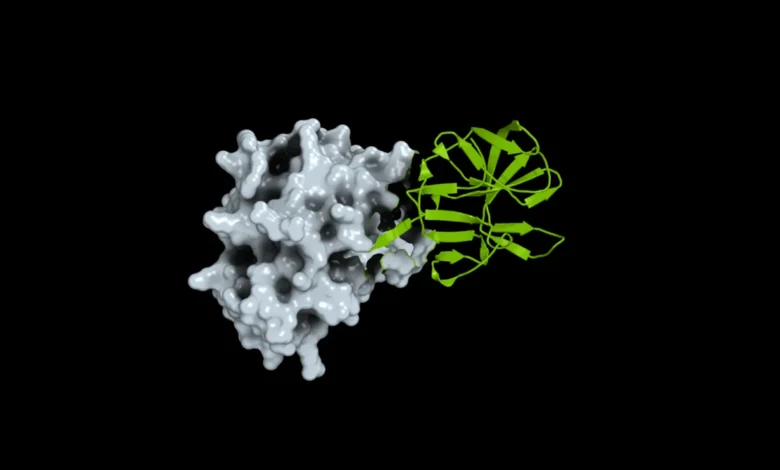
When the COVID-19 pandemic began in early 2020, the global scientific community was forced to operate under immense time pressure. However, researchers possessed one significant advantage: decades of foundational study into the structure of coronaviruses. This deep reservoir of knowledge allowed for the rapid design of mRNA vaccines and the identification of therapeutic targets. As global health organizations warn that the risk of another pandemic of similar or greater severity remains a distinct possibility—with experts estimating a 50% probability of such an event by 2050—the scientific community is moving from a reactive to a proactive stance. To address this, NVIDIA, Google DeepMind, and the European Molecular Biology Laboratory’s European Bioinformatics Institute (EMBL-EBI) have unveiled an expansive, open-access database containing 3D structural predictions for the protein complexes of more than 2,800 viruses.
The Technological Leap: From Years to Minutes
For decades, the standard methodology for determining protein structures relied on X-ray crystallography, nuclear magnetic resonance (NMR) spectroscopy, or cryo-electron microscopy. These processes are notoriously labor-intensive, often requiring years of laboratory work and thousands of dollars to map the architecture of a single protein. The transition to AI-driven modeling, specifically through AlphaFold2, has fundamentally altered this landscape. By leveraging machine learning to predict how amino acid sequences fold into complex 3D shapes, the time required to visualize these structures has been reduced from years to mere minutes.
To achieve the scale necessary for this viral dataset, the project utilized the NVIDIA BioNeMo Inference Runtime. This optimization allowed researchers to perform high-throughput inference on thousands of viral proteomes, effectively mapping the intricate interactions within viral complexes. Unlike singular proteins, these complexes—groups of molecules that work in tandem—are often the primary targets for vaccines and antiviral drugs. By making these structures available through the AlphaFold Database, the project provides a comprehensive map for researchers who are essentially working in the dark when facing novel or neglected viral threats.
Chronology of a Global Data Initiative
The release of this dataset is the culmination of years of computational progress and international cooperation. The chronology of this effort can be traced through several key milestones:
- 2021: Google DeepMind and EMBL-EBI launch the initial AlphaFold Database, providing open access to predicted structures for the entire human proteome and 20 other model organisms.
- 2022–2023: Researchers begin applying AlphaFold2 to broader, non-human biological systems. Simultaneously, NVIDIA introduces BioNeMo, a platform designed to accelerate generative AI for drug discovery.
- Early 2024: The collaborative coalition—including Seoul National University, the Swiss Institute of Bioinformatics, and the University of Glasgow—begins the systematic processing of viral families known to infect humans, ranging from common pathogens to emerging concerns like Mpox.
- September 2024: The data is finalized and timed to coincide with a United Nations General Assembly meeting in New York City, where world leaders convened to discuss pandemic prevention and international health security.
Supporting Data and Scientific Significance
The scale of this release is unprecedented. The database now contains more than 260 million protein and protein complex predictions, covering nearly every protein cataloged by science. Perhaps most significantly, approximately 30% of the newly added protein interactions are entirely novel to the scientific record. These structures do not appear in the Protein Data Bank (PDB), the historical repository for experimentally determined structures, representing a massive expansion of the "known" biological universe.
This structural data serves as an engine for hypothesis generation. In the field of virology, knowing the shape of a protein is the first step toward disabling it. When a virus mutates, it often alters the shape of its surface proteins to evade the immune system or gain entry into host cells. With a digital library of these shapes readily available, researchers can simulate how various drug compounds might bind to these proteins, potentially shortening the drug discovery pipeline by years.
Official Responses and Institutional Perspectives
The collaboration has drawn praise from major global health and research stakeholders. Risha Patel, life sciences partnerships manager at Google DeepMind, emphasized the philosophy of the initiative, stating that the project’s primary ambition is the democratization of foundational biology. By removing the technical and financial barriers to accessing structural data, the database serves as a global public good.
Joe Grove, a professor of molecular virology at the Medical Research Council-University of Glasgow Centre for Virus Research, highlighted the practical, everyday impact of this data. Reflecting on his own academic training, Grove noted that early-career researchers often have to "guess" at the mechanics of the viruses they study due to a lack of structural data. "This dataset is a powerful tool for all the researchers doing their Ph.D.s now," Grove remarked, noting that the availability of high-quality data will accelerate fundamental science by allowing researchers to focus on experimentation rather than estimation.
From the technical side, Chris Dallago, applied research science team lead in digital biology at NVIDIA, highlighted the shift in perspective this database enables. "We’re enabling biologists and the AI community to investigate protein interactions, not just as single molecules but as complexes," he said. By modeling the interactions between proteins, scientists can better understand the holistic functioning of a virus, which is critical for identifying potential vulnerabilities.
Broader Implications for Global Health Security
The implications of this dataset extend beyond immediate academic research into the realm of international security. The "next" pandemic may arise from a pathogen that has been largely ignored by commercial pharmaceutical companies. By providing the structural blueprint for these neglected viruses, the coalition is creating a "stockpile of knowledge" that can be activated as soon as an outbreak is detected.
Jo McEntyre, interim director of EMBL-EBI, noted that the inclusion of lesser-studied viruses is particularly vital for researchers in low-resource settings. In regions where outbreaks are frequently encountered but high-end structural biology equipment is unavailable, this open-access data lowers the barrier to entry for local scientists. This, in turn, facilitates a more rapid response to local health threats before they escalate into global crises.
Furthermore, the decision to open-source the BioNeMo Structure Prediction Pipeline is a critical step for long-term sustainability. By releasing the workflow itself, the team ensures that any laboratory with access to GPU resources can continue to generate structural predictions for new or emerging viral variants. This creates a decentralized model of preparedness where local research teams can contribute to the global knowledge base in real-time.
Future Outlook: Integrating AI and Traditional Science
While the AlphaFold Database and NVIDIA’s modeling tools provide a massive leap forward, experts caution that these tools are intended to complement, not replace, traditional experimental science. High-confidence AI predictions provide a roadmap, but the final validation of these structures still requires rigorous laboratory testing. The goal is to maximize the efficiency of that process—using AI to narrow down millions of possibilities to a few high-probability targets, which researchers can then verify through physical experimentation.
As the world continues to grapple with the legacy of COVID-19 and the looming threats of climate change and rapid urbanization—both of which increase the likelihood of zoonotic spillover—the ability to rapidly characterize new pathogens will be a defining feature of future public health success. The release of these 2,800 viral protein structures marks a critical evolution in the digital biological arsenal, moving the world toward a more resilient future where the "out of the blue" threats of the past are met with immediate, data-driven strategies.
For those in the scientific community, the resources are now available for exploration. The viral protein complex dataset can be accessed via the AlphaFold Database Pandemic Preparedness Portal, while developers and researchers looking to replicate or expand upon these results can utilize the open-source BioNeMo Structure Prediction Pipeline on GitHub. As these tools are adopted, the collective intelligence of the global research community will undoubtedly continue to build upon this foundation, turning raw data into the treatments and vaccines of the next generation.
Related posts: