The Complete Guide to Answer Engine Optimization and Selecting the Right AEO Checker for Your Brand

The digital landscape is undergoing a fundamental transformation as traditional search engine result pages (SERPs) are increasingly bypassed in favor of AI-generated summaries. As users turn to platforms like ChatGPT, Perplexity, and Google’s AI Overviews (AIOs) to resolve queries instantly, the conventional metrics of search engine optimization (SEO) are becoming insufficient. In this new era, visibility is no longer guaranteed by a blue link on the first page of Google; it is now defined by whether a brand is cited or mentioned within an AI’s synthesized response. This shift has necessitated the rise of Answer Engine Optimization (AEO), a strategic discipline focused on ensuring brand presence within the opaque, conversational responses provided by artificial intelligence.
The Evolution of Search and the Rise of AEO
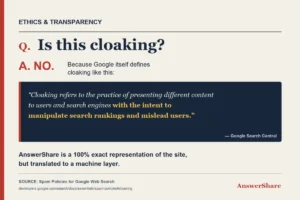
For over two decades, the primary objective of digital marketing was to influence the ranking algorithms of traditional search engines. By optimizing content for crawlability and authority, businesses secured traffic through click-throughs. However, the introduction of Generative AI into the search experience has fundamentally altered user behavior. Since Google’s formal rollout of AI Overviews in May 2024, a growing segment of the search population now receives a comprehensive, summarized answer directly on the search page.
![AEO checker tools that measure answer engine visibility [2026]](https://53.fs1.hubspotusercontent-na1.net/hubfs/53/aeo-checker-1-20260903-3858273.webp)
This "zero-click" phenomenon poses a significant challenge: if an AI model answers a user’s question completely, the incentive to click a source link diminishes. Consequently, brands that do not appear as a cited authority within the AI’s response effectively vanish from the user’s journey. AEO addresses this by optimizing content to be recognized, parsed, and trusted by Large Language Models (LLMs). Unlike traditional SEO, which targets keyword density and backlink profiles to climb a list, AEO focuses on entity recognition, structured data, and the delivery of precise, verifiable answers to complex queries.
The Mechanics of the AEO Checker
As the reliance on AI-driven answers grows, organizations are deploying AEO checkers to navigate this volatility. These software tools serve a dual purpose: they diagnose current visibility gaps and provide actionable intelligence for content refinement. A robust AEO checker typically evaluates several critical factors:
- Citation Frequency: The rate at which an engine references your domain when responding to specific queries.
- Brand Sentiment and Mention: Whether the brand is explicitly named in the answer, even if a direct link is absent.
- Competitive Benchmarking: Monitoring which competitors are consistently winning citations for high-value informational queries.
- Content Gap Analysis: Identifying topics where the AI provides a response but fails to cite authoritative sources, presenting an opportunity for a brand to fill that void.
Manual Verification vs. Automated Scalability
For businesses just beginning to address AI visibility, manual audits offer a foundational starting point. By utilizing incognito browser sessions and standardized prompt sets, marketing teams can record the responses provided by ChatGPT or Perplexity. However, this manual approach is inherently limited by the stochastic nature of generative models. AI responses are rarely static; they fluctuate based on session history, location, and model updates.
![AEO checker tools that measure answer engine visibility [2026]](https://no-cache.hubspot.com/cta/default/53/9dd5e54b-fbef-4dd0-bc44-1689feb1ea18.png)
To achieve statistical significance, a company must move toward automated monitoring. Leading AEO checkers facilitate this by running thousands of queries across multiple engines simultaneously. This creates a longitudinal data set that distinguishes between a temporary, isolated omission and a systemic failure to be indexed by the AI. As of late 2026, the industry has begun to prioritize tools that integrate directly into the broader marketing stack, allowing for a seamless transition from the detection of a content gap to the deployment of a corrective article or page update.
Strategic Landscape: Tools for Modern Optimization
The market for AEO software has fragmented into several specialized categories, each catering to different aspects of the search experience.
AI Overviews and Search Monitoring
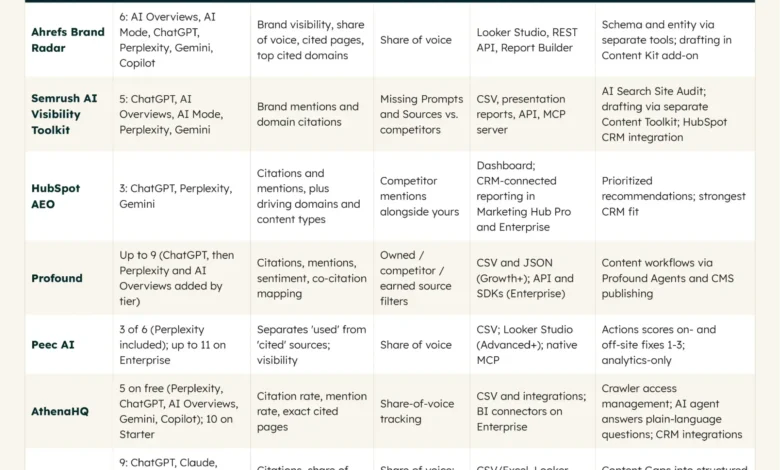
Tools such as Ahrefs (Brand Radar) and the Semrush AI Visibility Toolkit have emerged as leaders in monitoring the traditional search environment. Ahrefs utilizes a methodology rooted in real-world search queries to track AIO performance, providing a clear picture of how Google’s summary features are impacting traffic. Semrush, conversely, focuses on integrating AI visibility into existing organic research workflows, allowing teams to identify which of their current high-ranking pages are most susceptible to being replaced by an AI summary.
![AEO checker tools that measure answer engine visibility [2026]](https://53.fs1.hubspotusercontent-na1.net/hubfs/53/aeo-checker-2-20260903-852936.webp)
Citation Detection and Contextual Analysis
For companies specifically targeting conversational AI, platforms like HubSpot AEO and Profound offer granular insights. HubSpot’s approach emphasizes the conversion of visibility into business outcomes, linking AI citations to CRM data to demonstrate ROI. Profound differentiates itself by performing a deeper semantic analysis, looking beyond simple link counts to evaluate the context and sentiment of the citations, which is vital for maintaining brand reputation in an automated environment.
Technical Readiness and Entity Management
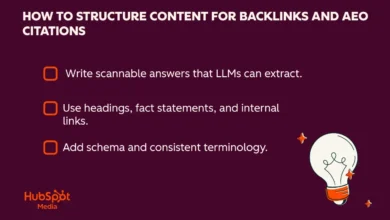
Because AI models rely heavily on the technical structure of a website to verify information, tools like Scrunch AI and Conductor focus on the "readability" of a domain. By ensuring that schema markup is accurate and that content is easily rendered for crawlers, these platforms ensure that a brand remains a "source of truth" for AI engines.
Key Metrics for Measuring Success
To accurately gauge the effectiveness of an AEO strategy, organizations should shift their focus from traditional traffic metrics to "visibility scores." Key performance indicators (KPIs) now include:
![AEO checker tools that measure answer engine visibility [2026]](https://53.fs1.hubspotusercontent-na1.net/hubfs/53/aeo-checker-3-20260903-8904553.webp)
- Citation Coverage: The percentage of target queries where the brand is included as a source.
- Share of Voice in AI: A comparison of how often a brand is cited relative to direct competitors.
- Entity Association: Tracking how often the brand is mentioned in relation to specific product categories or industry-relevant questions.
- AI-Referred Conversion: Using CRM data to identify leads that originated from an AI citation, acknowledging that while total traffic may drop, the quality of those leads is often significantly higher.
Broader Implications and Future Outlook
The rise of the answer engine is not merely a technical update to search; it is a fundamental shift in the economics of information. For decades, the "link" was the currency of the internet. Today, the "answer" has become the primary asset.
Industry analysts observe that this shift forces a higher standard for content quality. AI models are trained to prioritize information that is structured, direct, and backed by verifiable primary sources. Consequently, the "content fluff" that once cluttered search results is being filtered out by AI, rewarding brands that provide genuine, deep expertise.
However, this transition also brings concerns regarding transparency. The lack of standardized reporting from AI developers creates a "black box" environment for businesses. While Google has begun introducing generative AI performance reports in its Search Console, these remain limited in scope. Until there is a universal standard for reporting AI referrals, brands must rely on third-party AEO checkers to act as a bridge between their content and the AI-driven future.
![AEO checker tools that measure answer engine visibility [2026]](https://53.fs1.hubspotusercontent-na1.net/hubfs/53/aeo-checker-4-20260903-6212698.webp)
Conclusion
Adapting to this era of search requires a pivot from volume-based content strategies to authority-based ones. As the gap between traditional SEO and AEO continues to narrow, the most successful brands will be those that view their website not just as a destination for clicks, but as a knowledge repository for the next generation of AI. By implementing rigorous, automated AEO monitoring and prioritizing high-fidelity, structured information, businesses can ensure they remain at the center of the conversation—whether the user clicks through to their site or trusts the AI’s synthesis to make their final decision.