Global AI Collaboration Launches Massive Viral Protein Database to Preempt Future Pandemics

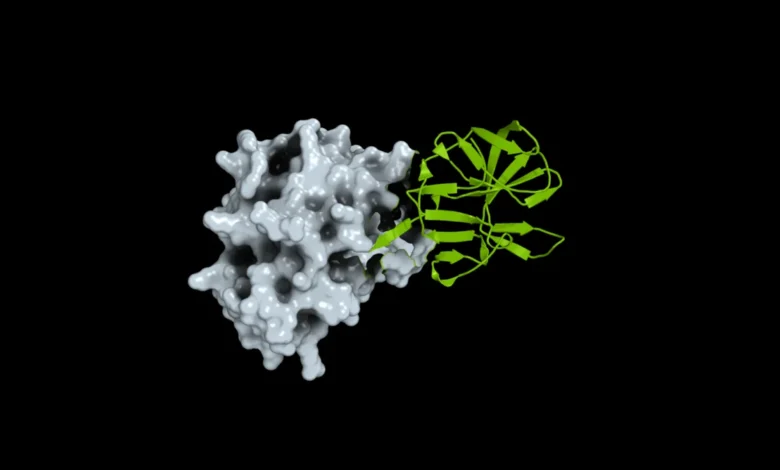
When the COVID-19 pandemic struck in early 2020, the global scientific community benefited from decades of foundational research into the structural biology of coronaviruses, a head start that allowed for the record-breaking development of mRNA vaccines. However, virologists and public health officials have long warned that the next pandemic pathogen may not be as well-understood. To address this looming vulnerability, a powerhouse coalition of global research institutions, including NVIDIA, Google DeepMind, and the European Molecular Biology Laboratory’s European Bioinformatics Institute (EMBL-EBI), has released a comprehensive, open-access database containing predicted 3D structures for the protein complexes of more than 2,800 viruses.
This initiative marks a significant shift in how the scientific community prepares for biological threats. By leveraging the power of artificial intelligence, researchers are effectively "stockpiling knowledge" to ensure that when the next novel pathogen emerges, the structural blueprints required to develop diagnostics, therapeutics, and vaccines will be ready for immediate use.
The Technological Leap: From Months to Minutes
The core of this achievement lies in the evolution of protein structure prediction. Traditionally, determining the 3D configuration of a protein required experimental methods such as X-ray crystallography or cryo-electron microscopy. These processes are notoriously labor-intensive, often requiring years of laboratory work and tens of thousands of dollars to solve a single structure.
The newly released dataset was generated using AlphaFold2, Google DeepMind’s groundbreaking AI model, further optimized by the NVIDIA BioNeMo Inference Runtime. By integrating BioNeMo, which is specifically designed to accelerate digital biology workflows on GPU-accelerated infrastructure, the team was able to scale inference to cover thousands of viral proteomes. Where traditional methods would have taken decades to map these protein complexes, this AI-driven approach completed the task in a fraction of the time, allowing for the systematic analysis of entire viral families known to infect humans.
A Strategic Response to Global Health Risks
The timing of this release is not coincidental. It aligns with the United Nations General Assembly’s discussions in New York City regarding pandemic prevention, preparedness, and response. According to projections by the Center for Global Development, there is a roughly 50% probability of a pandemic as severe as COVID-19 occurring by 2050.
In this context, the dataset serves as a proactive defense mechanism. Approximately 30% of the protein interactions identified in the new release are entirely novel, representing shapes and configurations never before documented in the Protein Data Bank. For researchers, these structures act as a map for potential drug binding sites, helping to identify how a virus might be neutralized before it even begins to circulate widely in human populations.
Chronology of the Initiative
The development of this project reflects a multi-year trajectory in the convergence of AI and biology:
- 2020-2021: The success of AlphaFold2 in solving the "protein folding problem" proves that AI can predict 3D structures with atomic-level accuracy, providing a proof-of-concept during the height of the COVID-19 pandemic.
- 2022-2023: Research groups begin applying AI to broader viral families, moving beyond single proteins to analyze complex interactions—the primary way viruses perform functions within a host.
- Early 2024: NVIDIA and Google DeepMind formalize a collaboration with academic partners, including the University of Glasgow and the Swiss Institute of Bioinformatics, to standardize the pipeline for viral proteome prediction.
- September 2024: The resulting dataset of 2,800+ viral complexes is integrated into the AlphaFold Database, making it accessible to the global scientific community.
Expert Perspectives on Structural Biology
The implications for the next generation of scientists are profound. Joe Grove, a professor of molecular virology at the Medical Research Council-University of Glasgow Centre for Virus Research, emphasizes the stark contrast between current capabilities and the past. "When I did my Ph.D., there were no structures for any of the proteins we were investigating," Grove noted. "It was like working in the dark—we had to guess what was going on. This dataset is a powerful tool for all the researchers doing their Ph.D.s now, giving them high-quality structural data that’s going to accelerate fundamental science."
Chris Dallago, applied research science team lead in digital biology at NVIDIA, views the database as an engine for hypothesis generation. "We’re enabling biologists and the AI community to investigate protein interactions, not just as single molecules but as complexes, so the whole field can move forward," Dallago stated. By releasing the BioNeMo Structure Prediction Pipeline—the same workflow used to generate the dataset—NVIDIA is ensuring that researchers can continue to update the database as new viral threats are discovered.
Democratizing Access to Foundational Biology
A recurring theme among the collaborating organizations is the need for "democratization." Jo McEntyre, interim director of EMBL-EBI, highlighted that the database is designed to lower the barrier to entry for scientists in low-resource settings. By providing these predictions openly, the project ensures that researchers in regions that might be the initial epicenter of a new outbreak have access to the same high-level structural data as those in well-funded international laboratories.
This global access is crucial for understanding viral diagnostics. When a new virus appears, the first step in creating a test or a vaccine is understanding the physical architecture of the virus’s surface proteins. If that data is already sitting in the AlphaFold Database, the time required to initiate a response could be slashed from months to weeks, or even days.
Broader Implications for Digital Biology
The release of these 2,800 viral complexes brings the total number of predictions in the AlphaFold Database to more than 260 million. This repository is effectively becoming a "Google Search" for the biological world, covering nearly every protein cataloged by science.
The shift toward AI-assisted structural biology represents a fundamental change in the methodology of the life sciences. It allows for a "digital-first" approach, where hypotheses are generated and tested in a virtual environment before a single test tube is touched in the wet lab. This not only reduces costs but also allows for the exploration of viral families that were previously considered too obscure or difficult to study.
Looking Toward the Future
The success of this collaboration highlights a new model for public-private partnerships. By combining the compute power and technical infrastructure of NVIDIA, the AI model expertise of Google DeepMind, and the virology and biological expertise of academic institutions like the University of Glasgow and Seoul National University, the project has bypassed the silos that often hinder scientific progress.
As the world continues to grapple with the potential for future zoonotic spillovers, this digital stockpile provides a critical layer of preparedness. The ability to model how proteins fold and interact is not merely an academic exercise; it is the frontline of modern medicine. With this dataset now public, the scientific community is better equipped to handle the "unknowns" that the next pandemic will inevitably present. Researchers are encouraged to explore the viral protein complex dataset via the AlphaFold Database Pandemic Preparedness Portal and to utilize the BioNeMo structure prediction tools for their own target discovery efforts. Through these digital tools, the hope is that when the next "out of the blue" pathogen arrives, humanity will be ready with the answers already in hand.