NVIDIA Graduate Fellowship Program Opens Applications for 2027-2028 Academic Year to Empower Doctoral Research in Accelerated Computing

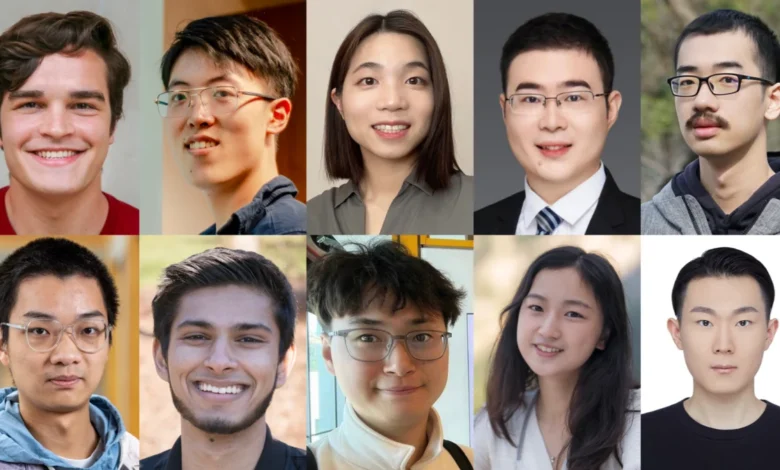
The NVIDIA Graduate Fellowship Program has officially opened its application portal for the 2027-2028 academic year, marking the 26th year of a global initiative designed to support doctoral students whose research pushes the boundaries of accelerated computing. By providing financial grants of up to $60,000, access to proprietary hardware, and mentorship from industry-leading researchers, the program serves as a critical bridge between academic inquiry and industrial application. Applications are currently being accepted from qualified Ph.D. students worldwide, with a submission deadline of October 30, 2026.
A Legacy of Supporting Scientific Advancement
Since its inception in 2002, the NVIDIA Graduate Fellowship Program has functioned as a cornerstone of the company’s commitment to fundamental research. Over the past two and a half decades, the program has awarded more than 220 grants, representing an investment of approximately $8 million in the next generation of scientific talent.
The program was established during a period of rapid transition in the computing industry, as the limitations of traditional CPU-based processing became increasingly apparent in fields requiring massive parallelization. By identifying students who were pioneering the use of Graphics Processing Units (GPUs) for non-graphical tasks—a precursor to the modern artificial intelligence boom—NVIDIA aimed to cultivate a workforce capable of leveraging accelerated computing to solve "grand challenge" problems in science and engineering.
Scope of Research and Eligibility Criteria
The fellowship is specifically tailored for students conducting doctoral research that aligns with NVIDIA’s core technological domains. These include, but are not limited to, artificial intelligence, deep learning, machine learning, autonomous vehicles, computer graphics, robotics, healthcare, and high-performance computing (HPC).
To be considered for the 2027-2028 cycle, applicants must have completed at least one full year of Ph.D.-level studies at an accredited institution by the time of their application. A defining requirement of this fellowship, which distinguishes it from many purely financial awards, is the mandatory in-person internship. Candidates must be available to conduct a summer internship at an NVIDIA research facility in 2027. This component is designed to ensure that fellows gain direct experience with the hardware and software ecosystems they are studying, while also fostering collaborative relationships with NVIDIA’s internal engineering teams.
The Evolution of Accelerated Computing Research
The landscape of academic research has shifted dramatically since the program’s founding. In the early 2000s, the focus was largely on hardware-level optimizations and the early adoption of CUDA (Compute Unified Device Architecture). Today, the focus has pivoted toward the integration of AI models into every facet of computational science.
Recent fellowship recipients have utilized these grants to explore areas such as large language model (LLM) efficiency, neural radiance fields (NeRFs) for 3D reconstruction, and the application of machine learning to climate modeling and protein folding. By funding these specific niche interests, NVIDIA ensures that its own research roadmap remains informed by the cutting-edge developments emerging from university laboratories.
Economic and Academic Implications
The impact of the NVIDIA Graduate Fellowship extends beyond the direct financial support of $60,000 per student. In an era where the demand for specialized talent in the semiconductor and AI sectors far outstrips supply, the program acts as a sophisticated talent pipeline. Recipients of the fellowship are frequently recruited into top-tier research positions within the industry, including roles at NVIDIA, Google DeepMind, OpenAI, and various academic institutions.
Economically, the program serves as a form of venture philanthropy. By lowering the financial barrier to entry for doctoral students, NVIDIA enables researchers to pursue high-risk, high-reward projects that might otherwise be deemed too expensive or resource-intensive for standard university budgets. Access to NVIDIA’s advanced hardware clusters allows fellows to perform computations that would be impossible on standard academic hardware, effectively accelerating the timeline of their research outcomes.
Chronology of the 2027-2028 Selection Process
The path to securing a fellowship is structured to ensure that only the most promising research projects receive support. The timeline for the upcoming cycle is as follows:
- Application Period: The portal is currently open. Candidates are encouraged to prepare detailed research proposals that demonstrate technical depth and relevance to accelerated computing.
- Submission Deadline: All applications must be finalized and submitted by October 30, 2026.
- Internal Review: Following the submission deadline, a committee composed of NVIDIA researchers and engineers evaluates proposals based on innovation, potential impact, and the candidate’s academic record.
- Interview and Selection: Finalists are typically interviewed to assess their communication skills and alignment with the internship component.
- Summer 2027 Internship: Successful fellows must complete a mandatory in-person internship, which provides the practical foundation for the following academic year of research.
- Fellowship Year: The 2027-2028 academic year constitutes the official period of the award.
Perspectives on Industry-Academia Collaboration
While official statements from current leadership emphasize the "collaborative spirit" of the program, external observers point to the mutual benefit of such partnerships. Industry-academia alliances are increasingly viewed as essential to maintaining national and global competitiveness in the "AI arms race."
"The synergy between academic freedom and industrial resources is the engine of modern technological progress," noted one industry analyst familiar with corporate research programs. "When a company like NVIDIA provides the compute power and the mentorship, they are not just ‘giving back’ to the community; they are shaping the future infrastructure of their own field. It is a strategic alignment of incentives."
By embedding researchers within their own corporate culture for the duration of a summer, NVIDIA gains early insights into the methodologies being developed in the ivory tower, while students gain access to the real-world constraints—such as power efficiency, scalability, and latency—that define the commercial viability of their academic discoveries.
Addressing Global Challenges Through Targeted Funding
The program’s shift in focus over the last few years has mirrored the global focus on sustainability and healthcare. In the 2026-2027 cycle, for instance, a significant portion of the grants were directed toward research in computational biology and digital twins. The use of GPU-accelerated computing in these fields has drastically reduced the time required to simulate molecular interactions and infrastructure failures, demonstrating that the scope of the fellowship is not merely theoretical but deeply practical.
As the program enters its 27th year in 2027, the criteria for success remain unchanged: a commitment to excellence, a capacity for innovation, and a desire to utilize accelerated computing to address the most complex challenges facing humanity.
Final Instructions for Prospective Applicants
For those interested in applying, the NVIDIA research portal serves as the centralized hub for all documentation, including eligibility FAQs and technical requirements. The selection committee emphasizes that the strength of the research proposal is paramount. Applicants are advised to highlight how their specific research objectives utilize NVIDIA’s current and future hardware architectures, and how their findings might contribute to the broader scientific community.
As the deadline of October 30, 2026, approaches, the academic community anticipates another highly competitive round of applications. For doctoral students, the fellowship represents more than just financial support—it is a validation of their contribution to the evolving landscape of global technology, positioning them at the center of the most significant compute-driven breakthroughs of the 21st century.