When Merchandising Meets Media: The High-Stakes Turf War Inside Enterprise Ecommerce Search

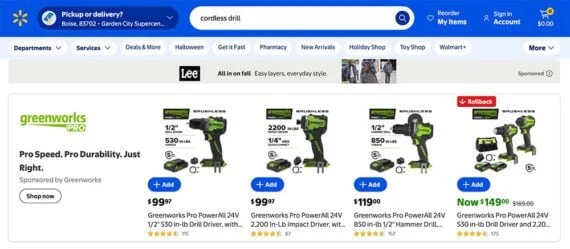
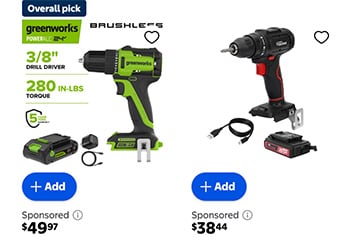
A routine search for a "cordless drill" on Walmart’s digital storefront reveals a profound transformation quietly reshaping the landscape of enterprise ecommerce. At the very top of the search engine results page (SERP), a prominent Greenworks-sponsored brand module showcases four distinct products. Immediately beneath that module, the next three individual product listings are also sponsored slots. An organic, non-paid search result does not appear to the consumer until the seventh product position. Every single ad displayed is entirely relevant to the user’s intent, preventing the page from slipping into a disruptive user experience. Yet, beneath this seamless presentation lies a fundamental operational question facing modern digital retailers: When advertising budgets dictate which products a consumer encounters first, precisely where does traditional merchandising end and retail media begin?
This friction highlights a growing tension across the digital retail sector. As brick-and-mortar giants and online-only platforms alike aggressively build out high-margin retail media networks (RMNs), the physical and digital real estate of an ecommerce website has become ground zero for an internal corporate tug-of-war. Merchandisers, tasked with optimizing conversions, customer lifetime value, and seasonal inventory flow, find themselves competing directly with media monetization teams whose primary key performance indicators (KPIs) center on ad revenue growth and advertiser retention.
The Evolution and Rise of Retail Media Networks
To understand the current debate over digital shelf space, one must examine the meteoric rise of retail media over the past half-decade. Historically, brands paid supermarkets and big-box stores for end-cap displays, circular placements, and eye-level shelf positioning. As consumer behavior shifted rapidly toward online channels—accelerated dramatically by the COVID-19 pandemic between 2020 and 2022—retailers realized that their digital traffic, customer data, and high-intent browsing moments were immensely valuable commodities.
Retail media networks transformed ecommerce platforms from simple digital catalogs into powerful advertising channels. According to global advertising forecasts, retail media has evolved into a multi-billion-dollar industry, often yielding profit margins of 70% to 80% for the hosting retailers. For companies operating under thin traditional retail margins, this high-margin advertising revenue stream has become vital to overall corporate profitability.
However, as ad inventory expands to meet insatiable demand from brands fighting for visibility, retailers are beginning to hit a saturation point. The core challenge is no longer about how many ads a site can sell, but rather how those ads impact the foundational shopping experience that attracted the consumer in the first place.
Competing Objectives Within the Enterprise
The modern ecommerce website operates under two distinct, and often conflicting, strategic objectives. On one side stands the merchandising team. Merchandisers are evaluated on metrics such as gross merchandise value (GMV), conversion rates, profit margins, sell-through velocity, and inventory turnover. Their goal is to put the absolute best product—determined by historical sales data, seasonal relevance, and margin optimization—in front of the consumer to maximize the likelihood of a transaction.
On the other side stands the retail media sales team. Their dashboards track ad impressions, click-through rates, cost-per-click (CPC) yields, total ad revenue, and advertiser renewal rates. When a high-paying brand purchases sponsored slots on a category page or search results page, the media team is incentivized to honor that placement, regardless of whether that specific product aligns with the organic sorting algorithms designed by the merchandising department.
Left unchecked, the media team often holds a structural advantage in internal corporate politics. Ad revenue is immediate, easily attributable, and neatly reportable on quarterly earnings calls. Conversely, the negative impact of a displaced organic product—such as a slight drop in conversion rate because a less relevant sponsored item took prime digital real estate—is diffuse, delayed, and notoriously difficult to isolate on a financial dashboard. A sponsored slot that generates thousands of dollars in ad revenue this month while quietly degrading the user experience is viewed as an unqualified success by the media team, while the resulting friction remains nearly invisible to the merchandising department.
The Perspective of Industry Leadership
Industry experts acknowledge that striking the right balance requires deliberate organizational governance rather than leaving prime digital space to whichever department moves fastest.
Sherry Smith, president of retail media at Criteo, emphasizes that retailers must exercise caution regarding where and how advertising is introduced into the customer journey. "Retailers also need to be thoughtful about where and how they introduce advertising," Smith noted in correspondence regarding the platform dynamics. "More inventory doesn’t necessarily mean more value. The focus should be on placements that perform for advertisers, remain useful to shoppers, and create incremental value for the retailer once the costs of running the program are taken into account."
Smith underscores that retail media must function as an enhancement rather than a replacement for core discovery. "Retail media gives retailers another way to create value from assets they already have, including their digital traffic, shopper data, and the moments when consumers are actively looking for products," she explained. That core value proposition is maximized only when sponsored content complements the shopping journey rather than obstructing it.
Relevance as the Natural Boundary
The conflict between merchandising and media is not inevitable. In many instances, the goals of both departments intersect harmoniously through the lens of relevance. When a brand purchases a sponsored placement for an item that naturally ranks high in organic merchandising algorithms due to its popularity, quality, and strong conversion history, no friction occurs. The retailer collects ad revenue, the brand secures visibility, and the shopper receives a highly relevant product recommendation.
"The key is making sure media adds to the experience rather than getting in the way of it or simply replacing organic discovery," Smith observed. "At the end of the day, relevance matters. If the advertising is useful to the shopper, it’s much more likely to create value for everyone involved."
Relevance, therefore, serves as the natural boundary line for enterprise ecommerce governance. When paid placement elevates a product that fails to meet the standards of customer utility or organic relevance, the user experience deteriorates. Shoppers forced to scroll past multiple tiers of mildly relevant or purely cash-driven sponsored listings may experience search fatigue, leading to lower platform loyalty and decreased long-term lifetime value.
Establishing Governance and Rules for Sharing
Recognizing the long-term risks of over-monetizing digital shelf space, mature ecommerce organizations are beginning to establish formal governance frameworks to bridge the gap between merchandising and media. These internal guidelines typically incorporate several practical rules:
-
Establishing Hard Inventory Caps: Retailers are setting strict ceilings on the percentage of above-the-fold search results and category page slots that can be allocated to paid advertisements, ensuring that organic discovery remains prominent.
-
Implementing Dynamic Relevance Thresholds: Rather than allowing the highest bidder to win any auction, ad serving algorithms are being programmed to factor in historical conversion data and user relevance scores. If a sponsored product falls below a minimum relevance threshold, it is disqualified from prime placement regardless of the bid amount.
-
Cross-Functional Leadership Boards: Leading companies are replacing siloed decision-making with joint merchandising-media committees. These committees review performance metrics holistically, monitoring the downstream effects of ad placements on overall category conversion rates and customer retention.
Implications for the Future of Ecommerce
The struggle playing out on Walmart’s cordless drill search page—and replicated daily across Amazon, Target, Home Depot, and countless specialty retailers—signals a maturing phase for the digital retail industry. As brands demand measurable returns on their retail media investments, and as consumers grow increasingly discerning about online advertising clutter, retailers can no longer treat digital shelf space as an infinite resource to be auctioned off to the highest bidder.
The long-term winners in the enterprise ecommerce space will be those organizations that successfully dismantle internal silos, aligning their merchandising and media strategies around a unified goal: maximizing customer utility. By treating digital real estate as a shared asset governed by strict relevance standards, retailers can protect their core commerce business while sustainably capturing the high-margin revenue potential of retail media.