Walmart Opens Its Fifth Next-Generation Fulfillment Center in Stockton California to Accelerate West Coast Delivery Capabilities

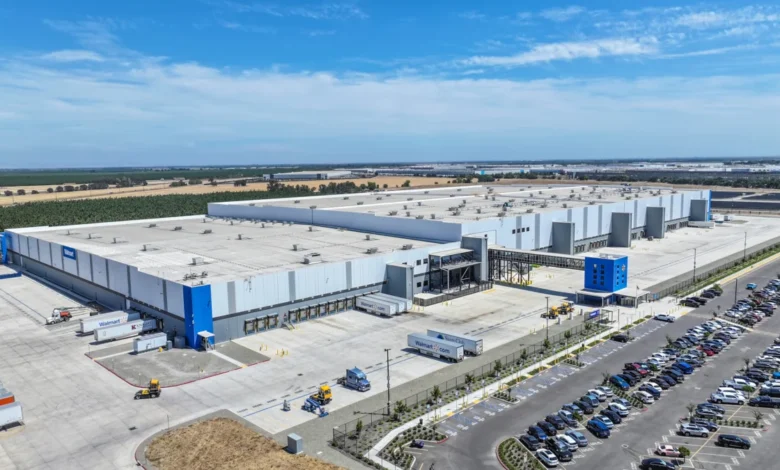
Walmart has officially inaugurated its fifth next-generation fulfillment center in Stockton, California, marking a significant milestone in the retail giant’s ongoing effort to modernize its supply chain and logistical infrastructure. Spanning 900,000 square feet, this facility is designed to bolster the company’s storage capacity and significantly expedite the fulfillment of online orders across the West Coast. As Walmart solidifies its position as the No. 2 retailer in the Digital Commerce 360 Top 1000 Database, this strategic expansion underscores a broader corporate mandate to achieve unparalleled delivery speeds in an increasingly competitive ecommerce landscape.
A Technological Paradigm Shift in Fulfillment
The Stockton facility is not merely a warehouse; it serves as a high-tech nerve center for Walmart’s regional operations. The hallmark of this site is its sophisticated, automated, high-density storage and retrieval system. Unlike traditional fulfillment models that rely heavily on human labor to navigate massive floor plans, this system employs advanced robotics to bring products directly to associates.
By automating the retrieval process, Walmart has effectively condensed a historically complex 12-step fulfillment process into just five steps. This transition serves a dual purpose: it minimizes the physical strain on the workforce while allowing associates to pivot toward higher-value tasks that require critical thinking and human oversight. According to corporate data, this shift toward automation is no longer an outlier but a standard; more than half of Walmart’s total ecommerce fulfillment volume is now processed through such automated facilities. Furthermore, the integration of automated freight systems has reached 3,100 U.S. stores, signaling a systemic shift toward tech-enabled logistics.
The Chronology of Walmart’s Supply Chain Transformation
Walmart’s pivot toward "next-generation" centers began several years ago as the company sought to defend its market share against digital-native competitors. The roadmap for this transformation has been characterized by consistent, large-scale investments in AI and automated robotics.
- 2021-2022: Walmart initiates a widespread pilot program for automated storage and retrieval systems (AS/RS) across key regional distribution hubs.
- 2023: The retailer reports a surge in ecommerce volume, validating the need for faster, more localized fulfillment centers to support two-day and next-day shipping promises.
- Early 2024: Walmart announces a series of regional investments, prioritizing high-density population centers to reduce the "last mile" delivery time.
- October 2026: The Stockton, California facility officially opens, marking the fifth in a series of flagship next-generation centers that now enable the company to reach 95% of the U.S. population with next- or two-day delivery.
This timeline reflects a strategic acceleration that correlates with the company’s Q1 and Q2 fiscal reports, which showed online sales growth of 26% and an increasing reliance on speed as a competitive differentiator.
Impact on the Walmart Fulfillment Services (WFS) Ecosystem
The significance of the Stockton facility extends beyond Walmart’s first-party retail business. It plays a critical role in the growth of Walmart Fulfillment Services (WFS), the company’s third-party logistics offering for marketplace sellers. By providing independent merchants access to the same automated infrastructure used for Walmart’s own inventory, the company is positioning itself as a comprehensive partner for brands seeking to scale.
The data supports the efficacy of this strategy. In the fiscal first quarter, units shipped same-day or next-day through WFS grew by nearly 150%. For small-to-medium-sized businesses selling on Walmart.com, the Stockton center represents a logistical upgrade, allowing them to compete with larger retailers by leveraging Walmart’s established speed and reliability. This symbiotic relationship between Walmart and its third-party sellers is a cornerstone of the retailer’s plan to challenge Amazon’s long-standing dominance in the marketplace sector.
Strategic Implications of Delivery Speed
During the August 2026 earnings call, Walmart CEO John Furner reiterated a sentiment that has become the company’s rallying cry: "Speed matters, and we have a significant competitive advantage." This advantage is derived from the convergence of the company’s massive physical footprint and its digital intelligence.
Walmart’s ability to utilize its 4,700+ U.S. stores as fulfillment nodes has been instrumental. Currently, the company can reach roughly 60% of the U.S. population with deliveries in 30 minutes or less, a capability expanded to 38 major markets. This hybrid model—combining massive, automated regional centers like the one in Stockton with hyper-local store fulfillment—creates a tiered delivery structure. High-velocity items are staged at the regional level, while urgent, local demand is met through store-based fulfillment.
The financial implications are profound. By reducing the number of steps in the fulfillment process, Walmart lowers its cost-per-unit, effectively increasing its margins even as it invests heavily in technology. CFO John David Rainey has frequently cited this operational efficiency as a "key catalyst for growth," enabling the company to maintain competitive pricing while simultaneously improving the customer experience.
Official Statements and Industry Reception
In a statement regarding the Stockton launch, Karisa Sprague, senior vice president of fulfillment operations at Walmart U.S., emphasized the human-centric benefits of the facility. "We’re bringing together associates with advanced technology and automation to create a safer, more efficient operation that can fulfill more orders and get products to customers faster," Sprague noted. She characterized the facility as a "critical part" of the broader network evolution on the West Coast, highlighting the investment as a boon for the Central Valley region’s economy.
Industry analysts observe that this move is a defensive and offensive maneuver. Defensively, it protects the company’s margins against inflation and rising labor costs. Offensively, it creates a moat that is increasingly difficult for smaller retailers to cross. As Walmart continues to climb the ranks of AI-integrated commerce—currently ranked No. 37 in the Digital Commerce 360 AI Commerce Rankings—the Stockton facility serves as a testing ground for even more advanced machine learning applications in inventory forecasting and warehouse management.
Looking Ahead: The Future of Retail Logistics
As the retail sector moves toward 2027, the focus for industry leaders will remain on the intersection of physical proximity and digital efficiency. The Stockton center is a testament to the fact that physical infrastructure remains the backbone of online success. Without the capability to move goods rapidly from a shelf to a doorstep, even the most sophisticated digital storefronts fail to retain customer loyalty.
Walmart’s investment in Stockton is not an isolated event but a signal of the company’s long-term vision: a fully integrated, automated, and hyper-responsive supply chain. As the retailer continues to refine its fulfillment network, the pressure on competitors to match this level of logistical sophistication will only intensify. For the consumer, this translates to an era of "on-demand" retail, where the distance between a click and a delivery is measured in hours rather than days. For investors, the Stockton facility offers a glimpse into a leaner, faster, and more profitable Walmart—one that is successfully navigating the transition from a traditional big-box retailer to a high-velocity digital powerhouse.
The success of this facility will be measured in the coming quarters through its impact on regional delivery times and the continued adoption rate of the WFS program. If history is any indicator, the Stockton model will likely serve as the blueprint for future upgrades across the company’s remaining regional distribution centers, ensuring that Walmart maintains its momentum in a shifting global market.