NVIDIA Unleashes New Era of AI-Driven Scientific Discovery at SC26 with Rubin HPC and Nemotron for Science

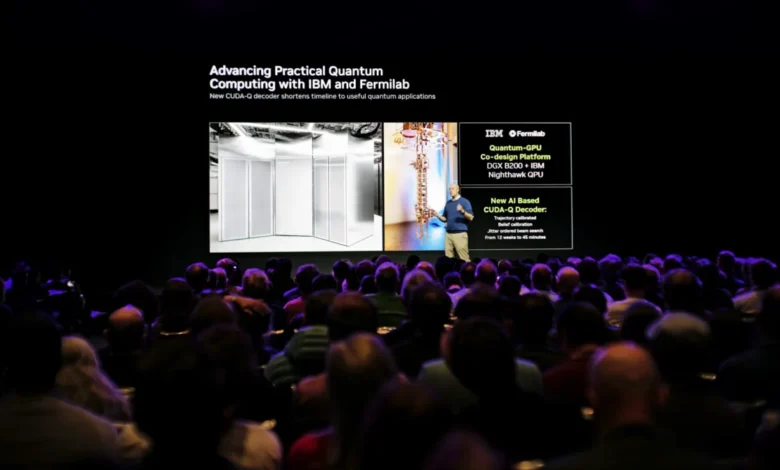
Ian Buck, NVIDIA’s vice president of hyperscale and high-performance computing, marked a significant milestone at the SC26 conference in Chicago this week, signaling a paradigm shift in how supercomputing centers integrate artificial intelligence. Two decades after his inaugural presentation on CUDA technology at SC06 in Tampa, Florida, Buck returned to the stage to unveil a comprehensive hardware and software ecosystem designed to transform how researchers interact with high-performance computing (HPC) environments. The centerpiece of this announcement is the introduction of AI agents capable of autonomous hypothesis generation, code execution, and iterative experimental validation.
The evolution of NVIDIA’s platform—now boasting over 1,000 CUDA-X libraries—reflects a transition from basic parallel processing to a sophisticated "scientific stack" that combines traditional physics-based simulation with large-scale generative AI and quantum computing. This synthesis, according to Buck, is the defining frontier of modern scientific discovery.
The Rise of Scientific AI Agents
At the heart of the SC26 announcements is the launch of Nemotron for Science, a specialized toolkit designed to bring advanced AI agency to research laboratories. By combining the Nemotron 3.5 Super VL open model with curated chemistry datasets and specialized post-training recipes, NVIDIA is empowering scientists to deploy autonomous agents that operate directly on their own localized hardware, such as DGX Spark systems or institutional supercomputers.
The implications for research velocity are profound. During the keynote, Buck highlighted a practical application at the Argonne National Laboratory, where an agent-driven system was tasked with molecular discovery. With a single prompt, the agent autonomously planned and executed a series of simulations, identified promising candidate structures, and successfully isolated two new binding sites.
This workflow addresses a long-standing bottleneck in scientific research: the manual overhead of designing, running, and interpreting individual simulation cycles. By shifting the burden of experimental loops to AI agents, researchers can maintain data sovereignty and model control while accelerating the pace of discovery in life sciences and materials chemistry. Unlike cloud-only AI solutions, Nemotron for Science emphasizes local execution, ensuring that sensitive research data remains within the security perimeter of the research institution.
Hardware Foundations: The Vera CPU and Rubin HPC GPU
Recognizing that autonomous agents require a robust computational architecture to manage complex tool calls and data evaluation, NVIDIA is expanding its Vera CPU platform. These processors are engineered specifically to handle the "agent loop"—the constant cycle of evaluation, execution, and data aggregation that defines modern AI workflows.
The German Climate Computing Center (DKRZ) has already committed to the Vera platform for its upcoming HLRE-5 supercomputer, slated for operation in early 2028. This move mirrors the adoption patterns seen at the Texas Advanced Computing Center, signaling a broader industry trend toward CPU-GPU co-design tailored for AI-integrated research.
Complementing the Vera CPUs is the new Rubin HPC GPU. Built to serve as the workhorse for engineering, scientific analytics, and AI, the Rubin HPC architecture represents a massive leap in processing density. With over 50,000 CUDA cores—roughly triple the capacity of the current Hopper architecture—the Rubin GPU is designed to handle high-precision scientific workloads ranging from FP64 for traditional physics simulations to FP4 for inference-heavy AI tasks. Featuring seventh-generation NVLink connectivity and advanced sparse-data acceleration, the Rubin HPC is positioned to become the industry standard for scientific supercomputing when it enters the market in 2028.
Advancing Quantum-Classical Co-design
NVIDIA’s commitment to the future of computing extends beyond classical architecture into the quantum realm. During the SC26 keynote, Buck outlined a multi-faceted approach to quantum error correction, a critical hurdle in making quantum computing practically viable.
In a landmark collaboration, NVIDIA, IBM, and the Fermi National Accelerator Laboratory have announced a co-design platform aimed at integrating NVIDIA DGX B200 systems with IBM’s Nighthawk quantum processors. This partnership aims to bridge the gap between classical and quantum computing, leveraging the strengths of both to tackle complex error-correction tasks.
Recent breakthroughs in this space have been substantial. Simulations conducted on the JUPITER supercomputer at the Jülich Supercomputing Centre have validated a technique known as "magic state cultivation," which has demonstrated the potential to reduce the computational operations required for a single logical quantum step by a factor of ten. Furthermore, the introduction of the TCBP-JOBS algorithm within the CUDA-Q framework has slashed the time required for error-correction research from an intensive 12-week process to a mere 45 minutes. This dramatic reduction in decoding latency—from 300 microseconds to 10 microseconds—marks a pivotal advancement in the quest for scalable, fault-tolerant quantum computing.
Infrastructure and Networking Evolution
Underpinning these computational advancements is a renewed focus on data center networking. Buck introduced the first public deployments of NVIDIA Photonics co-packaged optics switches, currently being piloted at Lambda. By integrating photonics directly into the switch architecture, NVIDIA is achieving a 15x improvement in reliability, specifically regarding bit-error rates and link flaps. This infrastructure upgrade is vital for the upcoming generation of AI-driven supercomputers, where the ability to move massive datasets between CPUs, GPUs, and memory with near-zero latency is essential for maintaining the performance of the agent-based workflows.
Industry Implications and Future Outlook
The announcements at SC26 represent a clear strategic pivot by NVIDIA. By shifting from a provider of raw compute to an architect of scientific workflows, the company is attempting to define the next 20 years of research computing, much as it defined the previous two decades with the introduction of CUDA.
The integration of AI agents into the scientific stack is not merely a convenience; it is a necessity driven by the growing complexity of data. As scientific challenges—such as climate modeling, drug discovery, and materials science—become more data-intensive, the traditional manual approach to research is reaching its limit. The ability to "outsource" the repetitive, logic-based components of research to an autonomous agent allows human scientists to focus on higher-level strategy and interpretation.
However, the transition is not without challenges. The requirement for specialized hardware, such as the Rubin HPC and Vera CPUs, suggests that the "scientific stack" of the future will require significant capital investment. Institutions will need to weigh the cost of upgrading to these high-performance, AI-optimized architectures against the potential gains in research throughput.
Furthermore, the collaboration between NVIDIA and IBM underscores a shift toward a heterogeneous computing future. No single architecture—whether it be a traditional CPU, an AI-optimized GPU, or a quantum processor—is expected to solve the world’s most complex problems in isolation. Instead, the future of science will be built on the seamless orchestration of these different technologies.
As the industry moves toward 2028, the success of these initiatives will likely be measured by the ability of research laboratories to adopt and integrate these AI agents into their daily operations. If the initial results from Argonne National Laboratory and the Jülich Supercomputing Centre are any indication, the fusion of AI and high-performance computing is set to become the most powerful instrument in the modern scientific toolkit. By providing the open-source infrastructure—via Nemotron for Science and CUDA-Q—NVIDIA is ensuring that it remains the central architect of this digital scientific revolution.