Tractor Supply Co. expands its last-mile delivery reach through a strategic nationwide partnership with Uber.

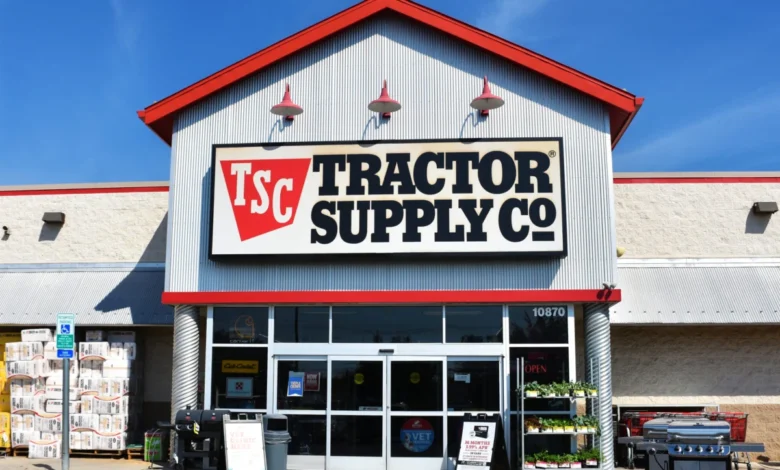
Tractor Supply Co. has officially integrated its retail operations with the Uber ecosystem, marking a significant milestone in the company’s ongoing digital transformation. As of November 12, consumers across the United States can access an extensive catalog of pet supplies, livestock care products, hardware, and lawn equipment through the Uber, Uber Eats, and Postmates platforms. This partnership represents a calculated move by the rural lifestyle retailer to leverage existing gig-economy infrastructure to bridge the gap between its store-heavy physical footprint and the rising consumer expectation for rapid, on-demand fulfillment.
Strategic Rationale and Geographic Expansion
The collaboration is rooted in a fundamental divergence from the traditional urban-centric model of delivery services. While most on-demand platforms prioritize high-density metropolitan centers, Tractor Supply’s store network—which encompassed 2,486 locations across 49 states as of late September—is heavily concentrated in rural, exurban, and suburban markets. By partnering with Uber, Tractor Supply is effectively extending the reach of "on-demand" services to populations that have historically been underserved by major delivery applications.
Nathan Bernheim, head of retail partnerships at Uber, emphasized that the convenience of modern commerce should not be restricted by geographic boundaries or city limits. For Uber, this partnership allows for greater utilization of its driver fleet in areas that are typically lower-density, potentially increasing transaction volumes in regions where the company has sought to deepen its presence. For Tractor Supply, the move serves as a customer acquisition tool, exposing the brand to millions of Uber users who may have previously relied on other retail channels for their home and garden needs.
A Chronology of Delivery Evolution
Tractor Supply’s journey toward robust digital fulfillment has been a multi-year endeavor characterized by a shift from legacy shipping models to a sophisticated, store-based "hub-and-spoke" system.
- 2022: Tractor Supply formalized its initial entry into the on-demand delivery space through a partnership with DoorDash, signaling the first major step toward integrating its inventory with third-party marketplaces.
- 2024–2025: The company aggressively scaled its "Final Mile" delivery initiative. By transitioning to a model where one store acts as a hub for three or four surrounding locations, the retailer significantly reduced delivery times and costs.
- July 2026: In an effort to diversify its delivery partnerships, the company joined the Instacart Marketplace, broadening its digital footprint and testing the efficacy of same-day delivery services.
- September 2026: Tractor Supply bolstered its physical supply chain infrastructure by opening an 865,000-square-foot distribution center in Nampa, Idaho. This facility was specifically designed to support the retailer’s aggressive store growth and the increased demand for rapid inventory replenishment.
- November 2026: The official launch of the Uber partnership, further consolidating the retailer’s omnichannel strategy.
Data-Driven Growth and Market Positioning
Tractor Supply currently holds the No. 83 position in the Digital Commerce 360 Top 1000 Database, a ranking that monitors the largest North American online retailers by annual ecommerce revenue. Furthermore, the company’s investment in digital agility is reflected in its No. 225 standing in the AI Commerce Rankings, underscoring a commitment to utilizing predictive analytics to manage inventory levels across its massive physical footprint.
The financial imperative for this pivot is clear. During the second fiscal quarter of 2026, while the company faced a challenging macroeconomic environment—resulting in a 1.5% decline in comparable store sales—its digital sales growth remained robust. Management attributed this performance directly to the strength of its store-based delivery network. CEO Hal Lawton reported that the company completed as many last-mile deliveries in the first half of 2026 as it did during the entirety of 2025, validating the "hub-and-spoke" strategy.
The Changing Landscape of Delivery Aggregators
The landscape of third-party delivery services is undergoing a period of rapid consolidation that may impact retailers like Tractor Supply in the coming years. On October 29, 2026, DoorDash announced a definitive agreement to acquire Instacart in a transaction valued at approximately $17 billion. While this deal is currently subject to regulatory review and shareholder approval, it introduces a new variable into the retail delivery equation.
Market analysts suggest that while the merger is expected to close between late 2027 and mid-2028, the current autonomy of both platforms provides Tractor Supply with a degree of stability in the short term. Because DoorDash intends to maintain the Instacart brand, app, and enterprise technology stack, the disruption to Tractor Supply’s existing integrations is expected to be minimal. Nevertheless, the consolidation of two of its key delivery partners highlights the necessity for retailers to maintain a diversified portfolio of logistics providers to mitigate risk.
Official Statements and Customer Experience
Matthew Rubin, senior vice president and president of digital and ecommerce at Tractor Supply, characterized the Uber partnership as an essential step in the retailer’s ongoing mission to simplify the lives of its customers. "Tractor Supply is continually finding new ways to serve customers and make Life Out Here more convenient," Rubin stated. By integrating with the Uber ecosystem, the company is not merely adding a delivery option; it is removing the friction associated with transporting bulky or heavy items—such as large bags of pet feed or agricultural supplies—which are often cumbersome to transport manually.
To facilitate customer adoption of the new service, Uber has initiated a promotional campaign, offering a $20 discount on Tractor Supply orders of $60 or more. While the specific fee structures and delivery speed guarantees remain dynamic—dependent on local availability and courier supply—the user experience is designed for simplicity: customers select their nearest Tractor Supply store through the Uber, Uber Eats, or Postmates apps, populate their cart, and track the delivery in real-time.
Broader Implications for the Retail Sector
The move by Tractor Supply serves as a case study for "Big Box" retailers looking to maintain relevance in an era defined by instant gratification. By outsourcing the delivery labor to established gig-economy networks, companies can focus on their core competencies—merchandising, inventory management, and store operations—without the capital expenditure required to build and maintain a proprietary, nationwide delivery fleet.
This strategy also highlights a shift in the competitive landscape of the pet and home improvement sectors. As incumbents like Tractor Supply pair with national delivery apps, they are effectively neutralizing the speed advantage previously held by pure-play e-commerce giants. Furthermore, the ability to utilize the "hub-and-spoke" store model to serve as a local warehouse allows the company to minimize the "last-mile" expense, which is notoriously the most costly component of the supply chain.
Looking ahead, the success of this partnership will likely be measured by the company’s ability to maintain inventory accuracy at the store level. As digital demand increases, the reliance on real-time stock data becomes critical; failure to sync in-store inventory with the Uber platform could lead to order cancellations and decreased customer loyalty. However, given Tractor Supply’s recent investments in distribution infrastructure and digital database management, the company appears well-positioned to navigate these operational complexities.
In summary, the integration of Tractor Supply with the Uber network is a strategic alignment of two distinct retail philosophies: the localized, product-specific expertise of a rural lifestyle retailer and the scalable, consumer-facing logistics network of a global tech firm. As the retail industry continues to grapple with shifting consumer behaviors and the consolidation of delivery platforms, Tractor Supply’s multi-pronged approach to omnichannel commerce provides a blueprint for how legacy retailers can successfully modernize their fulfillment capabilities.