A New Dawn in the Cloud: ‘Warhammer 40,000: Dawn of War IV’ Is Coming to GeForce NOW

The landscape of cloud-based gaming continues to shift as NVIDIA’s GeForce NOW service integrates a suite of high-profile titles and cutting-edge graphical technologies. This week’s "GFN Thursday" announcement highlights the inclusion of KING Art Games’ Warhammer 40,000: Dawn of War IV, a significant expansion of the service’s real-time strategy (RTS) catalog, and the rollout of NVIDIA DLSS 5 with 3D-Guided Neural Rendering across major titles like War Thunder and Where Winds Meet. By leveraging cloud infrastructure, NVIDIA aims to bypass local hardware limitations, allowing players to stream resource-intensive titles to a variety of devices, including low-power laptops, handheld consoles, and mobile devices.
The Strategic Expansion of Warhammer 40,000: Dawn of War IV
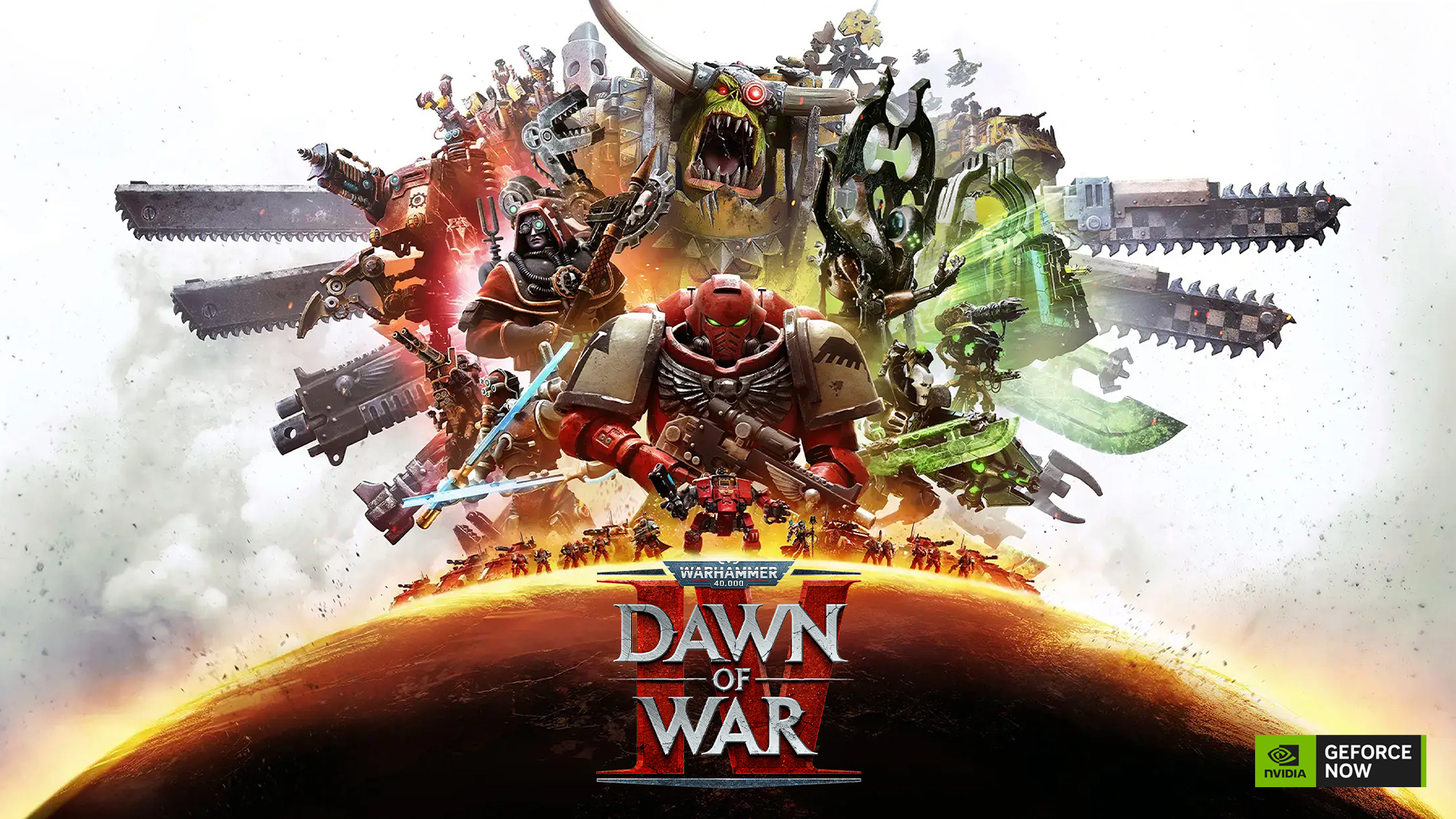
The arrival of Warhammer 40,000: Dawn of War IV on the GeForce NOW library represents a strategic maneuver to capture the RTS audience. Developed by KING Art Games and published by Deep Silver, the title is scheduled for a Steam release on Thursday, Dec. 3. This installment is positioned as a return to the franchise’s foundational mechanics, prioritizing large-scale combat, intricate base building, and resource management—elements that historically defined the series’ success.
The game introduces the Adeptus Mechanicus as a playable faction, joining the long-standing Space Marines, Orks, and Necrons. With over 70 campaign missions playable in both solo and cooperative modes, the title is designed for longevity. The inclusion of "The Last Stand" and competitive multiplayer modes further segments the gameplay experience, catering to both narrative-driven players and those seeking competitive tactical challenges. By hosting this title on GeForce NOW, NVIDIA mitigates the high-end hardware requirements usually associated with modern RTS titles, which often feature thousands of units simultaneously rendered on screen. This shift toward cloud-based delivery allows for consistent performance without the storage burden of frequent patches and massive game file installations.
Advancements in Graphical Fidelity: DLSS 5 and Neural Rendering
A pivotal component of this week’s update is the broader implementation of NVIDIA DLSS 5, specifically the 3D-Guided Neural Rendering feature. This technology represents a significant leap in image reconstruction, utilizing AI to interpolate frames and enhance visual fidelity without placing excessive strain on the user’s local hardware.
The integration timeline for this technology is as follows:
- Mid-November: War Thunder receives its "Eagle’s Shadow" update, which incorporates DLSS 5 and 3D-Guided Neural Rendering. This update is not merely visual; it adds a substantial content payload, including new naval, aerial, and ground vehicles, as well as updated ballistics systems like cluster bombs.
- Monday, Nov. 23: Where Winds Meet will receive official DLSS 5 support. As an open-world wuxia action RPG, the game relies heavily on environmental detail and fluid character movement, both of which are expected to benefit from the increased model performance of the latest DLSS iteration.
Data provided by NVIDIA indicates that the current DLSS 5 model, which debuted in October, offers double the performance of its predecessor. Since the technology’s initial introduction in March, cumulative performance gains have reached a tenfold improvement. For GeForce NOW Ultimate members—who are granted access to RTX 5080-class cloud rigs—this represents a significant jump in the ability to maintain high frame rates at 4K resolution, effectively bridging the gap between high-end enthusiast desktop PCs and cloud-streamed gameplay.
Expansion of the Dragon’s Dogma 2 Universe
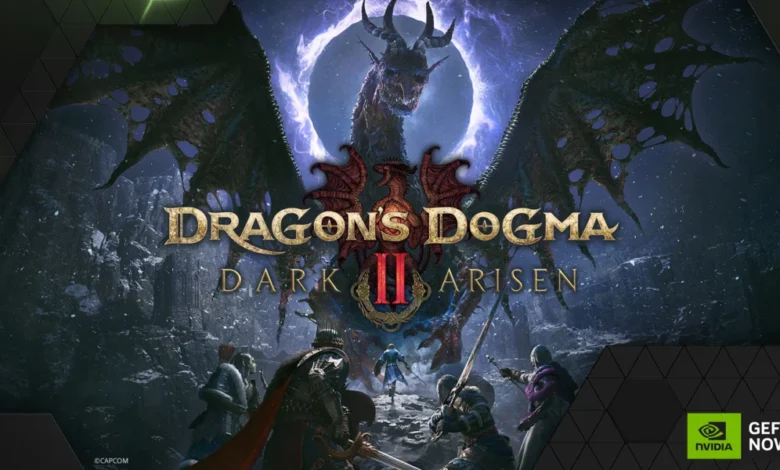
Capcom’s Dragon’s Dogma 2 receives a substantial content injection with the release of the Dark Arisen expansion, now fully supported on the GeForce NOW platform. The expansion introduces the region of Norgan, a new narrative arc involving the "Fallen Dragon," and 12 distinct dungeon challenges known as "Lost Rites."
From an operational standpoint, the transition of such large-scale DLC to the cloud is seamless for the end user. GeForce NOW handles the version control and deployment, ensuring that players do not need to manage local disk space for these large expansion files. The inclusion of customization options, such as new hairstyles and tattoos, along with a collaborative event with the popular Delicious in Dungeon franchise, underscores a focus on community-driven content. The ability to access these assets instantly through the cloud serves as a test case for how developers can maintain engagement in long-term live-service or expansion-based games without forcing players to endure prolonged download times.
Chronology and Industry Context
The rapid expansion of the GeForce NOW library follows a distinct pattern of collaboration between NVIDIA and major publishers. Since the inception of the service, the goal has been to normalize cloud gaming as a viable alternative to local hardware. The 20th-anniversary celebration of the iconic GeForce 8800 GTX GPU, which features a playable cloud-based demo incorporating DLSS 4.5 and path tracing, serves as a juxtaposition between the industry’s past and its future.
The current hardware cycle, characterized by the RTX 50-series architecture, has allowed NVIDIA to push the boundaries of what is possible in the cloud. Industry analysts suggest that the emphasis on "3D-Guided Neural Rendering" is a deliberate effort to solve the latency and visual artifacts traditionally associated with lower-bandwidth cloud streaming. By offloading the complex neural calculations to the server side, NVIDIA effectively "upscales" the user’s experience regardless of their physical distance from the data center, provided their network connection meets minimum stability requirements.
Implications for the Gaming Ecosystem
The implications of these developments are twofold. First, for the consumer, the barrier to entry for high-fidelity gaming continues to lower. The availability of day passes for Performance and Ultimate tiers allows for a flexible consumption model, effectively creating a "gaming-as-a-service" ecosystem that is increasingly decoupled from the cyclical need to upgrade expensive local hardware.
Second, for developers, the ability to offload the visual processing of a game to a cloud server means they can create more graphically dense worlds without fearing that the "minimum specs" requirement will alienate a large segment of their potential player base. Warhammer 40,000: Dawn of War IV is a prime example; by utilizing the cloud, the game can push more complex unit AI and larger battlefield simulations than would typically be recommended for a standard consumer laptop.
As NVIDIA continues to integrate these technologies, the focus remains on ensuring that the user experience on the cloud is indistinguishable from local play. The success of the "GFN Thursday" program, which provides a consistent cadence of updates and additions, has successfully created a predictable pipeline for subscribers. Whether through the addition of legacy-inspired titles or the implementation of cutting-edge neural rendering, NVIDIA’s strategy is clearly defined: make the hardware irrelevant to the gaming experience.
Looking ahead, the industry will likely monitor the adoption rates of DLSS 5 in the coming quarter. As more developers integrate 3D-Guided Neural Rendering, the standard for "acceptable" performance on mobile and handheld devices is expected to rise. NVIDIA’s commitment to supporting these features on the cloud platform simultaneously suggests that the company views the cloud not just as a distribution method, but as the primary venue for demonstrating the full capability of its proprietary graphical technologies. For the subscriber, the upcoming weeks promise a convergence of high-strategy, open-world exploration, and technical refinement, all accessible through a single login on a variety of supported devices.