Dyania Health Uses AI to Turn Decades of Patient Records Into Better Care

The healthcare industry is currently undergoing a structural transformation as artificial intelligence moves from experimental research projects into the operational backbone of modern hospitals. From pediatric research initiatives to the deployment of smart hospital infrastructure, AI technologies are being leveraged to automate routine administrative burdens, effectively reclaiming valuable time for care teams to focus on patient-centered outcomes. By integrating high-performance computing—specifically NVIDIA-accelerated hardware—health systems are now able to bridge the gap between fragmented legacy data and actionable clinical insights.
The Data Dilemma in Modern Medicine
For decades, the standard for medical documentation has been the "free text" note. Whether stored in legacy paper files or digitized within modern Electronic Health Records (EHRs), the bulk of patient history is captured in physician notes, operative reports, diagnostic imaging summaries, and pathology logs. While these documents contain the entirety of a patient’s health trajectory, they remain largely inaccessible for rapid analysis.
In a traditional hospital setting, a clinician tasked with understanding a patient’s full history—particularly for those with chronic, multi-year conditions—faces an Herculean task. Reading through thousands of pages of disparate notes is time-prohibitive, often resulting in "information blindness," where critical historical context is overlooked simply because it is buried in a report from several years prior.
Dyania Health and the Evolution of Clinical Reasoning
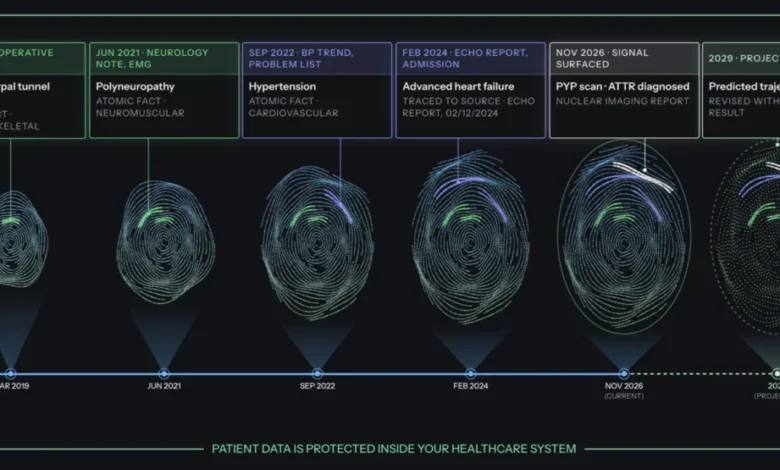
Dyania Health, a New Jersey-based clinical AI firm, has addressed this bottleneck by developing Synapsis AI. Unlike standard keyword-search tools, Synapsis is designed as a clinical reasoning engine. It performs a comprehensive sweep of every note, lab result, and report associated with a patient’s record, utilizing natural language processing (NLP) to connect findings that may have occurred years apart.
The system mimics the cognitive process of a specialist reviewing a chart. It synthesizes longitudinal data to answer complex clinical questions, ultimately outputting a set of evidence-based "clinical signals." These signals are fully traceable, allowing physicians to click directly back to the source document in the record to verify the AI’s logic. This ensures that the human clinician remains the ultimate arbiter of medical decisions, maintaining the essential "human-in-the-loop" model required for high-stakes healthcare environments.
Data Sovereignty and Computational Security
A primary barrier to the widespread adoption of cloud-based AI in healthcare has been data privacy and the strict regulatory frameworks surrounding Patient Health Information (PHI). Dyania Health has architected Synapsis AI to operate entirely within the host health system’s own firewall.
By running on NVIDIA-accelerated computing infrastructure located on-site, the platform ensures that sensitive patient records never leave the hospital’s secure network. This design choice mitigates the risks associated with third-party data transfers and addresses the compliance concerns of hospital Chief Information Security Officers (CISOs).
To achieve this level of performance, Dyania builds and trains its models using NVIDIA NeMo, an open-source library for building generative AI models. Once trained, the models are optimized via NVIDIA TensorRT and TensorRT-LLM, enabling the software to run with high efficiency on the hospital’s internal GPU servers. This localized approach provides the speed of modern AI without compromising institutional data sovereignty.
Case Study: Predictive Analytics at the Cleveland Clinic
The utility of this technology was demonstrated in a recent application at the Cleveland Clinic, one of the world’s leading academic medical centers. The institution utilized Synapsis AI to conduct a retrospective study of more than 7,800 patients who underwent aortic valve replacement procedures between 2005 and 2021.
The research objective was to identify long-term patterns related to valve deterioration and the risk of reintervention. Synapsis AI processed the entire longitudinal history of each patient, including echocardiograms and post-surgical notes spanning over a decade. By correlating these variables, the platform generated a predictive model for outcomes at the three-, five-, and ten-year intervals.
"Using technology to bring together and analyze information that can help us predict the duration of implanted heart valves is a promising step towards enhanced outcomes and more personalized care for patients," said Dr. Lars Svensson, chief of the Heart, Vascular & Thoracic Institute at Cleveland Clinic.
The manual completion of this chart review would have required years of labor from a team of researchers. The AI platform performed the task in a fraction of that time, demonstrating the massive scalability of automated clinical review.
Implications for the Future of Clinical Operations
The success of the Cleveland Clinic study serves as a proof-of-concept for broader clinical applications. The potential use cases for such technology are vast, ranging from identifying patients eligible for complex clinical trials to automating the population of clinical registries—a task that currently consumes thousands of hours of administrative time across the healthcare sector.
Furthermore, by closing care gaps in cardiology, oncology, and other high-acuity fields, AI-driven reasoning engines are helping hospitals move from a reactive model of care to a proactive one. When clinicians are alerted to a patient’s specific risk factor before an adverse event occurs, the quality of care improves while the overall cost of treatment often decreases.
Chronology of AI Integration in Healthcare
- 2010-2015: The rise of EHR mandates leads to an explosion of digitized but unstructured data. Healthcare systems begin to struggle with "data hoarding," where information is stored but remains unusable for decision support.
- 2016-2019: Early adoption of AI in imaging begins, primarily focusing on radiology and pathology. However, most AI applications remain siloed from the patient’s holistic longitudinal record.
- 2020-2022: The COVID-19 pandemic accelerates the need for remote monitoring and automated data analysis. NVIDIA and other hardware providers introduce specialized GPU stacks designed specifically for the healthcare industry.
- 2023-2024: The shift toward "Clinical Reasoning Engines" like Dyania’s Synapsis AI signals the next phase of development: systems that do not just classify images, but understand the context of the entire patient narrative.
Industry Analysis and Regulatory Outlook
The integration of AI into clinical workflows is not without challenges. Regulatory bodies, such as the U.S. Food and Drug Administration (FDA), continue to refine their frameworks for "Software as a Medical Device" (SaMD). As these systems become more autonomous, the requirement for explainability—the ability to show exactly why an AI made a specific recommendation—will become the industry standard.
Dyania Health’s commitment to providing traceable evidence is a direct response to this need for clinical transparency. By anchoring every AI-generated insight to a verifiable source within the patient’s record, companies can build the necessary trust with clinical staff.
As health systems continue to face staffing shortages and increasing patient volumes, the role of AI as an "assistive tool" rather than a replacement for human judgment is becoming the prevailing strategy. By automating the extraction of intelligence from unstructured data, healthcare providers can reclaim the time required for the patient-physician relationship—the bedrock of medicine.
Looking forward, the maturation of these technologies will likely lead to a new paradigm of "precision healthcare," where treatment plans are optimized not just by population averages, but by the nuanced, AI-analyzed history of the individual patient. Whether through faster identification of candidates for life-saving clinical trials or the early detection of surgical complications, the synthesis of decades of medical notes represents one of the most significant advancements in modern clinical science.