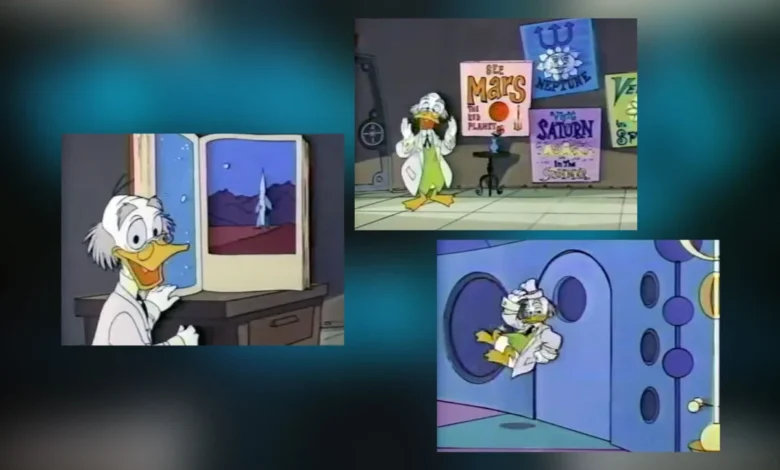
Sixty-five years ago, on September 24, 1961, the Walt Disney Company introduced a character who would become an unlikely ambassador for the burgeoning field of aerospace science: Professor Ludwig Von Drake. Debuting on the television program Walt Disney’s Wonderful World of Color on NBC, the character was envisioned as a polymath—a scientist, lecturer, and psychologist—whose frantic, eccentric energy served to bridge the gap between complex technological concepts and the average American household. As the brilliant uncle of Donald Duck, Von Drake was not merely a cartoon trope; he was a sophisticated narrative device designed to capitalize on the public’s fascination with the Space Race, a competition that was fundamentally reshaping the geopolitical and scientific landscape of the early 1960s.
The Genesis of a Scientific Icon
The character design and persona of Ludwig Von Drake were significantly influenced by the real-world rocket scientists and aerospace pioneers who were then guiding the United States’ efforts to reach the stars. During this era, Walt Disney maintained a close working relationship with figures such as Wernher von Braun, the German-American aerospace engineer who became the chief architect of the Saturn V launch vehicle. Alongside experts like Heinz Haber, a specialist in aviation medicine, and science writer Willy Ley, these individuals were frequent collaborators on Disney’s "Tomorrowland" segments.
Von Drake was essentially a caricature of the mid-century academic stereotype: brilliant, occasionally absent-minded, and possessed of a thick, exaggerated accent that hinted at the European origins of the scientists who had helped kickstart the American space program. By personifying scientific inquiry through a beloved member of the "Duck" family, Disney managed to make the intimidating advancements of the Space Age palatable to a mass audience. This approach was highly intentional; Disney sought to align his brand with the optimism and technical progress of the Kennedy-era technological boom.
Chronology of the Space Age Partnership
The introduction of Von Drake followed a period of intense collaboration between Disney and the scientific community. To understand the significance of his 1961 debut, one must look at the preceding timeline of Disney’s space-themed programming:
- 1955: Disney releases "Man in Space," a Disneyland episode that utilized animation to explain the physics of rocket propulsion to a general audience.
- 1957: Following the launch of Sputnik 1 in October, the urgency of space education increases. Disney airs "Man and the Moon" and "Mars and Beyond," further cementing the studio’s reputation as a conduit for public scientific literacy.
- 1961 (September 24): Ludwig Von Drake makes his television debut, providing a recurring character who can anchor future scientific segments.
- 1963 (February 10): The airing of "Inside Outer Space," where Von Drake explicitly addresses the public’s anxiety regarding the rapidly changing nature of space exploration.
This timeline demonstrates that Von Drake was not an isolated creative decision, but rather the culmination of a decade-long strategy to integrate aerospace education into family entertainment.
The "Inside Outer Space" Perspective
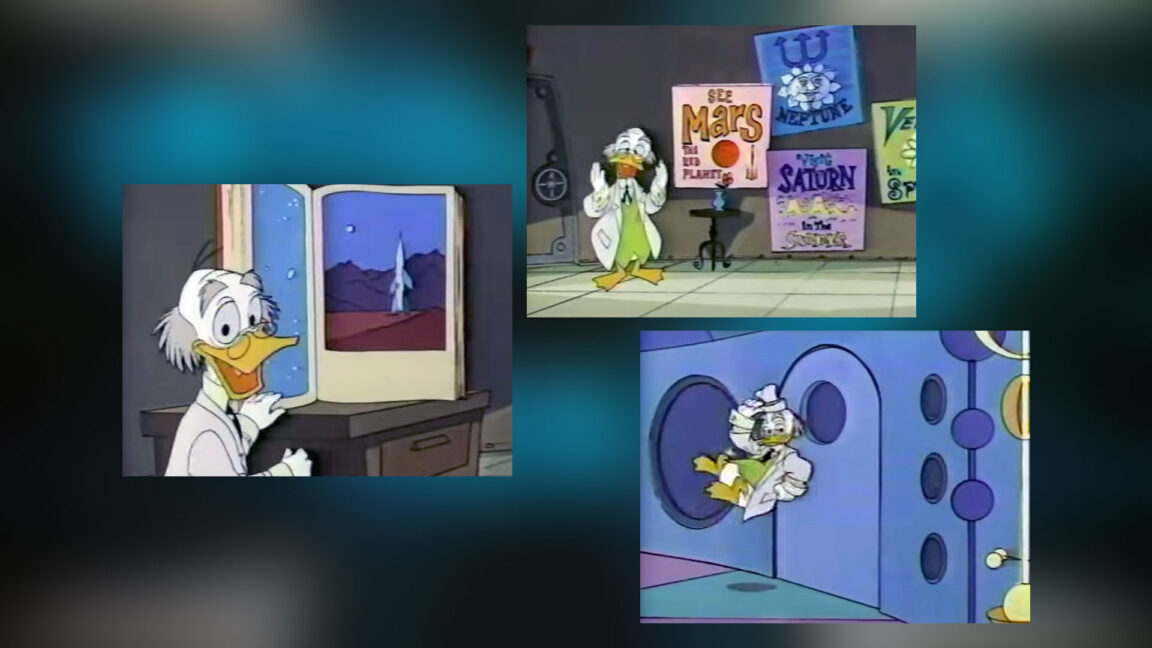
In the February 10, 1963, episode titled "Inside Outer Space," the character’s dialogue reflected the rapid pace of scientific discovery. When Von Drake introduced his "guidebook," he quipped: "You people out there are going to see stars you have never seen before… when you go traveling in outer space. In fact, there are going to be a lot of things out there you don’t know about, but don’t let it bother you, ’cause all of the answers is right in here."
The meta-humor regarding his guidebook becoming "obsolete" was a subtle nod to the reality of 1960s science. With the Gemini and Apollo programs looming on the horizon, the information contained in textbooks was indeed becoming outdated almost as quickly as it was printed. By framing science as a fluid, ever-changing field, Disney and his writers were teaching children and adults alike that scientific "truth" was a process of constant iteration rather than a static set of facts.
Supporting Data and Scientific Integration
The success of these broadcasts was bolstered by the studio’s access to high-level technical data. Through the guidance of consultants like Heinz Haber, the animation team was able to translate complex topics—such as the effects of G-forces on the human body, orbital mechanics, and the psychological stresses of long-duration space flight—into visual metaphors.
For instance, the "bottle suit" model, discussed by Wernher von Braun and his colleagues in 1964, represented a real-world attempt to solve the problem of pressurized movement in a vacuum. By showcasing these designs alongside animated segments featuring characters like Von Drake, Disney created a synergy between high-end engineering and popular culture. This allowed the American public to feel as though they were "in the know" regarding the government’s secret or highly technical aerospace projects.
Broader Impact and Implications
The emergence of a character like Ludwig Von Drake had a profound influence on the public’s perception of science in the 1960s. By the time of the Apollo 11 moon landing in 1969, a generation of children had grown up watching Disney’s explanations of space flight. The "Disneyfication" of science was criticized by some purists as a simplification of reality, but historians generally agree that it played a crucial role in maintaining public support for NASA’s budget.
The broader implications of this media strategy were twofold. First, it democratized knowledge. Before the internet, television was the primary source of intellectual stimulation for millions of households. By using a character as engaging as Von Drake, the studio ensured that complex scientific principles—such as the necessity of multi-stage rockets—were understood by the layperson. Second, it created a lasting association between the Disney brand and the concept of "future-thinking." This legacy continues today in the design and themes of various attractions at Disney theme parks, where the spirit of the early space pioneers is still maintained.
Analysis of the "Disney Method"
The "Disney Method" of science communication, as exemplified by the Von Drake segments, relied on three pillars:
- Anthropomorphism and Persona: Assigning human traits to characters to make abstract science feel relatable.
- Narrative Arc: Framing science not as a series of lectures, but as an adventure or a mystery to be solved.
- Cross-Platform Integration: Using the television show to promote themes that were simultaneously being developed in feature films and theme park attractions.
This approach was arguably the most successful science communication campaign of the 20th century. While the specific facts presented by Ludwig Von Drake—such as the specific mechanics of 1960s lunar modules—have been superseded by modern technology, the pedagogical model remains a standard in the field.
Conclusion: A Legacy of Inquiry
Looking back 65 years after the debut of Ludwig Von Drake, it is evident that the character served a vital role in the cultural life of the United States. He was a product of a specific moment in time—a bridge between the post-war scientific explosion and the digital future. Whether he was explaining the principles of color television or the logistical challenges of reaching Mars, Von Drake represented the curiosity and the slight, humorous absurdity of the human endeavor to understand the universe.
The partnership between the Walt Disney Company and the pioneers of the Space Age, such as Wernher von Braun and Willy Ley, created a template for public engagement that modern organizations strive to replicate. By recognizing the power of storytelling, these figures ensured that the complexities of rocketry and orbital mechanics were not hidden away in classified documents or dense academic journals, but were instead shared with the public, sparking the imagination of future generations of engineers, scientists, and dreamers. Ludwig Von Drake may have been a cartoon, but the scientific spirit he represented was very real, and its impact on the technological trajectory of the mid-20th century remains an enduring testament to the power of media in the service of discovery.