Nvidia CEO Jensen Huang Projects Massive AI Growth and Defends Dominance at Goldman Sachs Conference


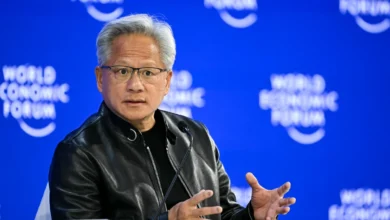
Nvidia CEO Jensen Huang delivered an unapologetically bullish outlook for the artificial intelligence hardware market during a keynote appearance at the Goldman Sachs Communicopia + Technology conference. Speaking to an audience of investors, analysts, and technology leaders, the chief executive detailed why he believes his company’s historic growth trajectory will remain uninterrupted through the end of next year. Despite mounting competition from major cloud providers, custom silicon startups, and rising macroeconomic pressures, Huang asserted that Nvidia’s positioning at the epicenter of the global AI infrastructure build-out gives it a unique vantage point—one that practically amounts to seeing the future.
The remarks arrive at a critical juncture for the semiconductor giant, which has redefined market capitalization records over the past several years on the back of generative AI adoption. While Wall Street continues to debate whether the insatiable demand for graphics processing units (GPUs) can maintain its momentum, Huang’s presentation doubled down on the company’s previously stated financial guidance. He reaffirmed that Nvidia could achieve up to 70% year-over-year revenue growth in the upcoming fiscal period, a projection that, if realized, would catapult the company’s annual top-line figures into unprecedented territory.
Shifting Perceptions: From Consumer Gaming to Multi-Million-Dollar Supercomputers
To understand Nvidia’s current market standing, Huang suggested that observers must first shed outdated perceptions of what a GPU actually is. Reflecting on the company’s origins as a designer of consumer graphics cards meant to enhance PC gaming experiences, Huang emphasized that the scale of modern artificial intelligence deployment has fundamentally transformed the hardware category.
"Most people think Nvidia builds a chip. I mean, you need airplanes to ship what we build," Huang told conference attendees. He contrasted the legacy notion of a discrete graphics card retailing for a few hundred dollars with the modern reality of enterprise-grade AI clusters. "One GPU now is not $399. It’s $8.5 million dollars. That’s one GPU, all connected with NVLink, 2 million parts, right? 250,000 kilowatts. That’s a GPU, and we ship thousands of them."
This immense complexity is embodied in products like Nvidia’s flagship GB200 NVL72 system, which integrates 36 Grace CPUs and 72 Blackwell GPUs into a single rack architecture. According to Huang, demand for this specific system is currently compounding at an astonishing rate, marked by 27% month-to-month sales growth. This hardware serves as the computational backbone for training and deploying the world’s most advanced large language models.
Reaffirming Lofty Financial Guidance
Huang’s commentary reinforced the forward-looking metrics the company first shared during its quarterly earnings report last month. Having reported consecutive quarters of record-shattering revenue driven almost exclusively by data center infrastructure sales, Nvidia management has projected continued expansion well into next year.
Financial analysts currently estimate that Nvidia will conclude its current fiscal year with approximately $400 billion in total revenue. A subsequent 70% year-over-year growth rate would push the company’s revenue to roughly $680 billion. When initially offered during the company’s earnings call, this guidance stunned some market skeptics who questioned whether such staggering numbers were mathematically sustainable for a hardware vendor of Nvidia’s size.
However, Huang expressed absolute confidence in these targets, arguing that the breadth of Nvidia’s market penetration safeguards its financial outlook against localized slowdowns or customer-specific budget adjustments.
Navigating Competitive Pressures Across the AI Ecosystem
Nvidia’s dominance has naturally attracted a formidable array of rivals hoping to chip away at its near-monopoly on AI acceleration. The competitive landscape spans multiple fronts. Hyperscale cloud providers—including Amazon Web Services, Microsoft Azure, and Google Cloud—are aggressively developing their own proprietary application-specific integrated circuits (ASICs) to reduce their reliance on Nvidia hardware. Simultaneously, premier AI research laboratories such as OpenAI and Anthropic have explored custom silicon initiatives to optimize their own specific workloads.
Furthermore, a new generation of hardware startups has entered the fray. Companies like Cerebras, which recently closed major enterprise deployments, and Etched, which hit a $5 billion valuation on substantial sales projections, are targeting specialized niches within the acceleration market.
Despite these challenges, Huang maintained that Nvidia’s software moat—anchored by its proprietary CUDA programming ecosystem—and holistic systems engineering insulate the company from direct displacement.
"Nvidia runs every model. Every single lab can use us," Huang noted, explicitly referencing models developed by Anthropic, OpenAI, Google, and various open-weight communities. "We are a foundational platform of the AI ecosystem, a foundational platform of the AI industry."
Unprecedented Visibility Into Global Infrastructure
To explain his certainty regarding future demand, Huang pointed to Nvidia’s unique positioning within the global supply chain. The company’s operational visibility extends from upstream memory manufacturers all the way downstream to real estate developers and nascent cloud providers.
"We’re tracking every single gigawatt of land, power, shell around the world. Literally everything on the planet," Huang stated. He clarified that the term "shell" refers to the physical infrastructure of a data center building before server racks and cooling systems are installed.
Because Nvidia collaborates closely with original equipment manufacturers (OEMs), specialized neocloud providers, major hyperscalers, and AI-native startups, the company maintains a real-time ledger of global computing capacity expansion. "We’re working with everybody, and so we kind of know where everything is," he added.
Addressing Concerns Over Circular Financing
A recurring topic of discussion among financial analysts tracking the artificial intelligence boom involves the nature of venture investments made by hardware and cloud giants into AI startups that subsequently allocate those capital infusions toward purchasing hardware from the original investor. Critics have drawn unfavorable parallels to the circular financing arrangements that preceded the collapse of telecommunications suppliers like Lucent Technologies during the dot-com era.
When pressed on whether Nvidia engages in similar circular deals, Huang offered a characteristically direct and lighthearted response.
"Well, it’s not circular because we put a little bit of money in, and a lot of money comes back," Huang quipped. "I look at the spreadsheet, we put in $1 and $100 comes back in. Is that circular? If that is, let’s do more of that."
Jokes aside, Huang defended the structural integrity of Nvidia’s venture strategy by emphasizing rigorous due diligence. He asserted that before the company deploys capital into any startup or ecosystem partner, management verifies that the entity possesses authentic, revenue-generating customer contracts. By his estimation, he has personally reviewed approximately $100 billion worth of such underlying commercial agreements.
"I’m not taking any risks," Huang said. "I need a sure thing."
Broader Industry Implications and Long-Term Outlook
As the broader technology sector continues to pour trillions of dollars into artificial intelligence infrastructure, industry observers remain divided on the long-term sustainability of the current spending cycle. A fundamental rule of technological evolution dictates that early-stage build-outs eventually give way to efficiency optimization. At present, a substantial portion of AI industry growth is fueled by well-funded startups that raise massive venture rounds and immediately reinvest those funds into cloud compute resources and hardware purchases.
Even Huang acknowledges that as the AI market matures, enterprises will inevitably seek greater efficiencies in how they manage infrastructure and process tokens. Software optimization techniques, algorithmic advancements, and architectural refinements could theoretically reduce the raw compute requirements per unit of intelligence over time.
Nevertheless, for the immediate future, Nvidia’s deeply entrenched role across every tier of the AI stack ensures that it remains the primary beneficiary of the ongoing infrastructure gold rush. Whether through multi-million-dollar server racks, pervasive software frameworks, or granular visibility into global data center construction, the company continues to dictate the pace and scale of the artificial intelligence revolution.