Amazon Refreshes Kindle Lineup With New Colorsoft and Signature Edition E-Readers

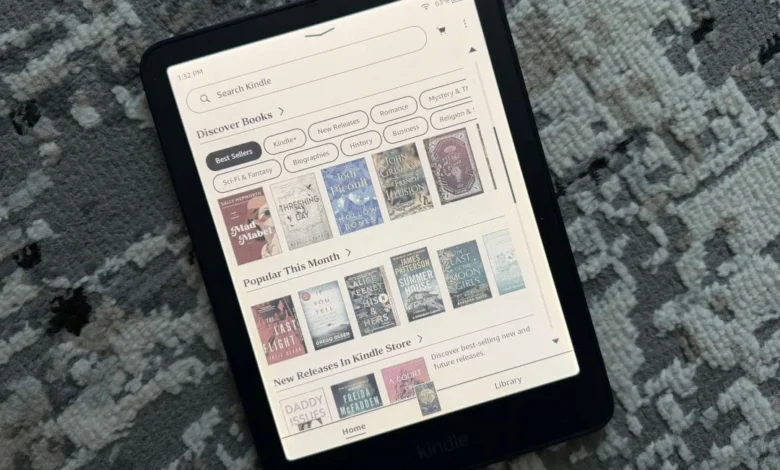
Amazon’s recent hardware refresh of its iconic Kindle lineup marks a significant step forward in the company’s hardware strategy, headlined by the introduction of the new basic Kindle, an updated Paperwhite, and the second-generation Kindle Colorsoft. Expanding on the color e-reader technology first introduced to the
market in 2024, the updated Kindle Colorsoft aims to refine the digital reading experience with a thinner profile, improved ergonomics, and a high-resolution color E-Ink display tailored for graphics-heavy content.
The baseline Kindle Colorsoft is priced starting at $290, while the premium Signature Edition—which offers 32GB of storage and an aluminum back available in graphite or a maroon-inspired Fig finish—retails for $320. These new entries sit atop a refreshed ecosystem that also includes a newly designed entry-level basic Kindle and an updated Paperwhite, reinforcing Amazon’s dominant market share in the dedicated e-reader space.
Evolution of E-Ink Technology and Chronology of the Colorsoft
The journey of color e-paper technology has been gradual. For well over a decade, dedicated e-readers relied strictly on monochrome E-Ink screens to replicate the exact look of printed paper. While these displays offered exceptional battery life and readability under direct sunlight, they severely limited formats that relied on chromatic context, such as comic books, graphic novels, illustrated children’s books, and culinary cookbooks.
In 2024, Amazon broke tradition by launching its inaugural color Kindle, introducing a novel way for readers to experience digital media without migrating to backlit tablet screens like the iPad. Building upon that foundational release, the late-2026 hardware refresh introduces a second-generation Colorsoft that is noticeably lighter and thinner than its predecessor. By adopting an edge-to-edge display and trimming excess bezel width, Amazon has successfully updated the physical footprint of the device while retaining the core visual specifications that define the product line.

Hardware Specifications and Performance Analysis
Under the hood, the new Kindle Colorsoft maintains a 7-inch color E-Ink display. When rendering standard black-and-white text, the panel delivers a crisp 300 pixels per inch (ppi), ensuring sharp typography identical to traditional monochrome Kindles. However, when displaying color content, the resolution shifts to 150 ppi.
While tech enthusiasts often compare these displays to conventional LCD or OLED tablets, industry analysts emphasize that E-Ink color technology serves a fundamentally different purpose. The colors on the Colorsoft are purposefully muted, avoiding the glaring, high-saturation light emission typical of standard mobile devices. This softer palette reduces eye strain significantly, making prolonged reading sessions comfortable.
Furthermore, the hardware includes adjustable color temperature controls, enabling users to transition from a stark white light to a warmer, amber-toned display ideal for evening and nighttime reading. An integrated auto-adjusting brightness sensor dynamically adapts the front lighting to ambient environmental conditions.
Design Adjustments and Ergonomic Improvements
Consumer feedback from the first-generation Colorsoft directly influenced several physical redesigns in the latest iteration. Most notably, Amazon relocated the physical power button. On the previous model, the power toggle sat on the bottom edge of the device directly adjacent to the USB-C charging port. This placement frequently resulted in accidental shutdowns or wake-ups when users gripped the device or rested it vertically on a surface.
In the updated model, the power button has been moved to the top-right edge of the chassis, a more intuitive location that aligns with modern smartphone and tablet design standards.

The Signature Edition elevates the physical build quality further by introducing an aluminum back panel. The metallic finish adds a premium tactile feel and structural rigidity. Despite the inclusion of metal, the device remains lightweight and comfortable for prolonged, one-handed reading. Additionally, the device retains its IPX8 water resistance rating, allowing users to read near swimming pools, bathtubs, or at the beach without risking permanent water damage from accidental splashes or brief submersions.
Battery longevity remains a hallmark of the Kindle ecosystem, though color panels naturally demand more power than monochrome alternatives. Amazon rates the Colorsoft for up to eight weeks of battery life on a single charge—slightly lower than the 12-week benchmark achieved by the monochrome Paperwhite, but vastly superior to any conventional tablet computer. Real-world testing confirms that users can go weeks between charges under normal reading conditions.
Market Positioning, Pricing Strategy, and Broader Implications
The introduction of the second-generation Kindle Colorsoft highlights a growing demographic of digital readers who demand specialized media capabilities. Graphic novel enthusiasts, academic researchers utilizing color-coded highlights, and fans of illustrated literature form the primary target audience for the device.
Nevertheless, pricing remains a significant barrier to entry. At $290 for the base model and $320 for the Signature Edition, the Colorsoft occupies a luxury tier within the e-reader market. By comparison, Amazon’s standard basic Kindle starts at $169.99, while the immensely popular Paperwhite is priced at $199.99.
Industry analysts observe that while the Colorsoft represents a major technical achievement for E-Ink manufacturing, it remains a niche product for the average consumer. For individuals who read exclusively text-based novels, the traditional monochrome models offer better value and longer battery performance. However, for power users committed to color-centric digital media, the refined second-generation Colorsoft delivers a compelling, albeit expensive, upgrade that successfully bridges the gap between traditional paperbacks and modern multimedia tablets.