‘It’s so corrosive to democracy’: Over 50 federal prosecutors speak out against Trump’s $100,000 a month ‘insider trading’ scheme | Fortune

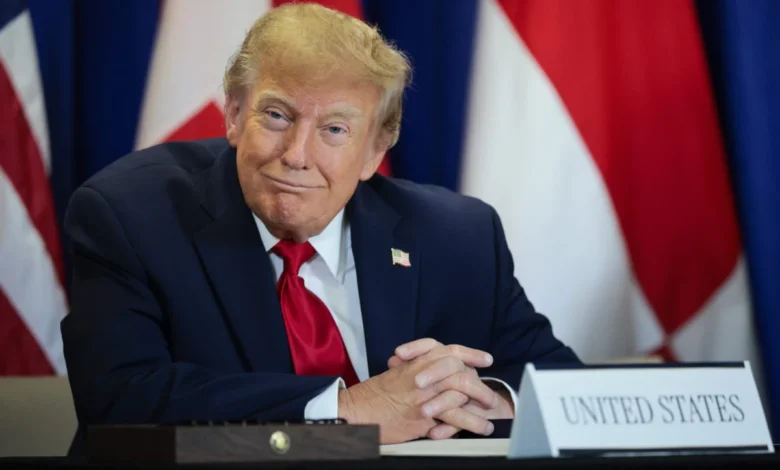
A high-stakes legal battle is escalating around Donald Trump’s media conglomerate as a coalition of more than 50 former federal prosecutors and law enforcement officials formally intervenes in a federal lawsuit. The group is urging a federal judge to block a controversial $100,000 monthly subscription service operated by Trump Media & Technology Group (TMTG), the parent company of Truth Social. The service offers financial institutions and trading firms high-speed, early access to posts published by the president and other high-ranking officials.
The legal filing, submitted as an amicus brief in the U.S. District Court for the Southern District of New York, contends that the arrangement fundamentally violates core anti-corruption principles. Furthermore, the intervenors argue that the commercialization of official presidential communications could potentially implicate multiple federal criminal statutes, including prohibitions against unlawful insider trading, illegal gratuities, and conflicts of interest.
The intervention amplifies ongoing scrutiny surrounding the intersection of political power, corporate monetization, and modern digital finance. As regulatory bodies and legal experts examine the boundaries of executive communication, the outcome of this preliminary injunction request could set a profound legal precedent regarding how digital platforms monetize official statements issued by sitting heads of state.
A Coalition of Decades of Government Experience
The amicus brief was filed in support of a preliminary injunction sought by two media freedom and advocacy organizations, The Intercept and the Freedom of the Press Foundation. The supporting coalition brings together a formidable concentration of legal expertise, featuring 53 former officials who served across 11 presidential administrations, spanning both Republican and Democratic leadership.
Collectively, the signatories represent more than 880 years of public service within the Department of Justice, the Federal Bureau of Investigation (FBI), and various U.S. Attorney’s Offices nationwide. Many of these officials specialized in public corruption and public integrity matters, giving them deep institutional familiarity with the federal statutes governing official conduct and the misuse of government office for personal financial gain.
Legal representatives for the coalition argue that the monetization of official statements represents a radical departure from historical norms surrounding government transparency. Renata O’Donnell, senior legal counsel at the Campaign Legal Center—which assisted with the filing alongside the law firm Singleton Schreiber—emphasized the broader democratic concerns underpinning the challenge.
"It’s so corrosive to democracy and to the public interest when we see the president financially benefitting from his official role," O’Donnell noted. She pointed to the constitutional framework established by the nation’s founders, who sought to insulate the executive branch from undue influence and ensure that the president remains fundamentally independent of private financial entanglements.
The filed brief explicitly underscores this sentiment, asserting that the commercial strategy behind the platform defies foundational governance standards. "There is no legitimate, let alone significant, government interest in allowing public officials to profit personally by selling early access to official government announcements," the document reads. "But Truth Social’s new scheme to charge up to $100,000 per month for users to get early access to messages from the President and other officials on the platform seeks to do precisely that."
The Mechanics of Truth API and the Threat of Insider Trading
At the heart of the legal controversy is the "Truth API," a specialized data licensing product launched by TMTG. Designed primarily for high-frequency trading firms, institutional investors, and financial corporations, the API is marketed as a tool to capture real-time updates from prominent Truth Social accounts seconds before they become visible to the general public.
In the fast-paced world of modern financial markets, mere seconds can translate into millions of dollars in profit or loss, particularly when communications originate from the commander-in-chief and relate to critical economic policies, trade regulations, geopolitical events, or corporate interventions. Industry reports indicate that nearly a dozen institutional trading firms have already subscribed to the six-figure monthly service since its rollout.
Legal and economic scholars have raised immediate alarms regarding the fairness and legality of such an arrangement. Gian Luca Clementi, an economics professor at the New York University Stern School of Business, offered a blunt assessment of the subscription model in previous commentary. "This is insider trading by definition," Clementi stated, highlighting the inherent informational asymmetry created when select market participants are granted paid, preferential access to potentially market-moving statements issued by a public official.
The amicus brief expands on this economic critique, noting that the financial structure of TMTG creates a direct line of financial enrichment for Donald Trump himself. Because Trump remains a major shareholder and primary beneficiary of TMTG, any increase in the company’s enterprise value—driven by lucrative corporate subscriptions—directly enhances his personal wealth. This financial feedback loop differentiates the Truth API from traditional, equitable government press release distribution systems, which are designed to disseminate information simultaneously to all citizens and media outlets without commercial barriers.
Potential Criminal Liability and Expanded Legal Violations
While the amicus brief does not constitute a formal criminal indictment or a standalone lawsuit, it serves as a formal warning to the court regarding the expansive legal exposure generated by the subscription model. The signatories argue that the Truth API framework stretches across multiple pillars of federal and state law, potentially exposing both the corporate entity and its paying subscribers to severe legal liabilities.
Beyond traditional insider trading statutes under the Securities Exchange Act—which penalizes the dissemination and utilization of material, non-public information—the filing points to several other legal vulnerabilities:
- The Trade Secrets Act: Concerns regarding the handling and preferential distribution of official government communications as proprietary corporate assets.
- Illegal Gratuities and Illicit Compensation: Statutes prohibiting public officials from receiving anything of value beyond their official salary in connection with the performance of their duties.
- Federal Conflict of Interest Laws: Regulations designed to prevent federal employees and elected officials from participating in official matters that directly affect their personal financial interests.
O’Donnell highlighted that the legal exposure is not isolated to the platform’s operators but extends downstream to the corporate clients purchasing the service. "There is potential criminal liability for folks who have paid the $100,000," O’Donnell explained. "That would extend to folks who have already paid… and for future folks who might. And so, to shunt some of that future harm, it is in the public interest to shut this down sooner rather than later, before more folks sign on."
In addition to the amicus brief in New York, the legal pressure on TMTG is mounting on the West Coast. The city and county of San Francisco filed a separate lawsuit against Trump Media, accusing the company of violating California’s Unfair Competition Law as well as federal insider trading regulations. San Francisco’s legal action seeks both a permanent injunction to halt the operation of the API service and the imposition of civil penalties for statutory violations.
Chronology of Events and Corporate Context
The controversy surrounding the Truth API follows a broader pattern of commercial diversification by Trump Media & Technology Group and associated business ventures spearheaded by the Trump family. A review of the timeline reveals how the company has systematically expanded from a single social media alternative into a multifaceted media and fintech conglomerate:
- January 2025: TMTG officially launches its fintech and financial services brand, Truth.Fi, signaling a strategic push into digital-asset management and investment products.
- Mid-2025: Public financial disclosures released by the Office of Government Ethics reveal substantial income generated from cryptocurrency and digital asset initiatives, including World Liberty Financial—a crypto venture co-founded by Trump and his sons—which reported nearly $800 million in associated revenue alongside millions in memecoin sales.
- July 2026: SEC filings and corporate announcements reveal initial details regarding the development and upcoming rollout of the Truth API data licensing product, pitching the high-speed feed to institutional finance clients.
- August 2026: Market analysts and financial ethics experts publicly question the legality of the service, with academic figures labeling the early-access model as a form of institutionalized insider trading. TMTG doubles down on the plan despite growing pushback.
- September 2026: The city of San Francisco files a formal lawsuit against TMTG in state court over unfair competition and insider trading violations. Concurrently, TMTG expands its portfolio by launching exchange-traded funds (ETFs) focused on American defense and energy security.
- October 2026: A coalition of 53 former federal prosecutors and law enforcement officials files an amicus brief in the U.S. District Court for the Southern District of New York, supporting a preliminary injunction to block the subscription service.
Broader Implications for Governance and Financial Markets
As the federal court weighs the arguments for a preliminary injunction, the implications of the case extend far beyond the immediate fate of the Truth API. The dispute forces a judicial examination of how 20th-century anti-corruption statutes and securities regulations apply to 21st-century digital media ecosystems, particularly when political communication, platform ownership, and high-frequency trading intersect.
Legal scholars note that traditional public figures—including past presidents and lawmakers—have routinely utilized social media platforms to make policy announcements, express opinions, or release economic commentary. However, the commercialization of a direct pipeline to a sitting president’s digital statements introduces an unprecedented commercial layer into the public information sphere.
If the plaintiffs and the coalition of former prosecutors succeed in securing an injunction, it could establish a rigid boundary preventing public officials from monetizing their official output through private corporate entities. Conversely, allowing the service to proceed could open a new frontier in political finance, where real-time access to executive governance becomes a premium commodity reserved for those corporations and investors capable of paying six-figure monthly fees.
As of publication, representatives for Trump Media & Technology Group have not formally responded to requests for comment regarding the amicus brief, maintaining their previous stance as the litigation proceeds through the federal judicial system.