AWS Lambda now supports GPU instances for Event Functions on Lambda Managed Instances | Amazon Web Services

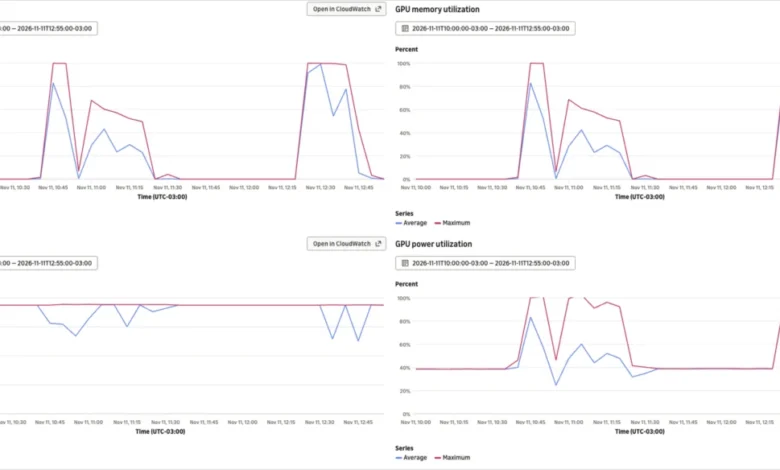
A Paradigm Shift in Serverless Compute
Historically, the serverless computing model has been constrained by its reliance on general-purpose CPU architectures. While ideal for event-driven microservices, this limitation forced organizations to move heavy-duty computational tasks to provisioned infrastructure like Amazon EC2 or Amazon EKS. The introduction of GPU support within Lambda Managed Instances (LMI) effectively bridges this divide.
Under this new model, developers package their applications as Open Container Initiative (OCI) images. These containers run on G-series EC2 instances, but the underlying complexity of hardware provisioning, security patching, and capacity orchestration is abstracted by the AWS Lambda control plane. This transition reflects a broader industry trend toward "abstracted acceleration," where the goal is to make specialized hardware as accessible as basic memory and CPU resources.
The Technical Evolution of Lambda
The evolution of AWS Lambda has been marked by a constant effort to reduce the "operational tax" of cloud development. In 2014, Lambda launched as a strictly CPU-bound service. Over the following decade, AWS introduced support for larger memory configurations, increased timeouts, file system mounting, and container image support.
The integration of GPU support via LMI marks the next logical step in this chronology. By leveraging Lambda Managed Instances, AWS is providing a bridge between the granular control of EC2 and the automated convenience of Lambda. This is not merely an addition of hardware; it is a fundamental shift in how event-driven architectures handle compute-intensive workloads.
Addressing the Infrastructure Bottleneck
For years, machine learning engineers and DevOps practitioners have struggled with the "GPU Dilemma." Building self-managed GPU clusters requires significant engineering overhead:

- Dependency Management: Synchronizing CUDA versions, NVIDIA drivers, and deep learning frameworks (PyTorch, TensorFlow) across a fleet of instances is notoriously error-prone.
- Resource Inefficiency: GPU hardware is expensive. Traditional static provisioning often results in low utilization, as GPUs remain idle while waiting for event triggers, yet businesses continue to pay for the full capacity.
- Integration Complexity: Connecting GPU inference to event sources like S3, SQS, or API Gateway requires building custom glue code and handling retries, scaling, and observability manually.
The new Lambda capability addresses these points directly. By utilizing per-execution environment concurrency, multiple requests can be batched onto a single GPU. This multiplexing capability is critical for cost-optimization, allowing a single high-performance instance to serve multiple concurrent users without the latency penalty of spinning up new instances for every request.
Strategic Implementation and Workflow
The deployment process for these functions follows standard CI/CD pipelines, integrating seamlessly with existing tools such as AWS SAM, Terraform, and the AWS CLI. The workflow for an AI-based inference task typically involves:
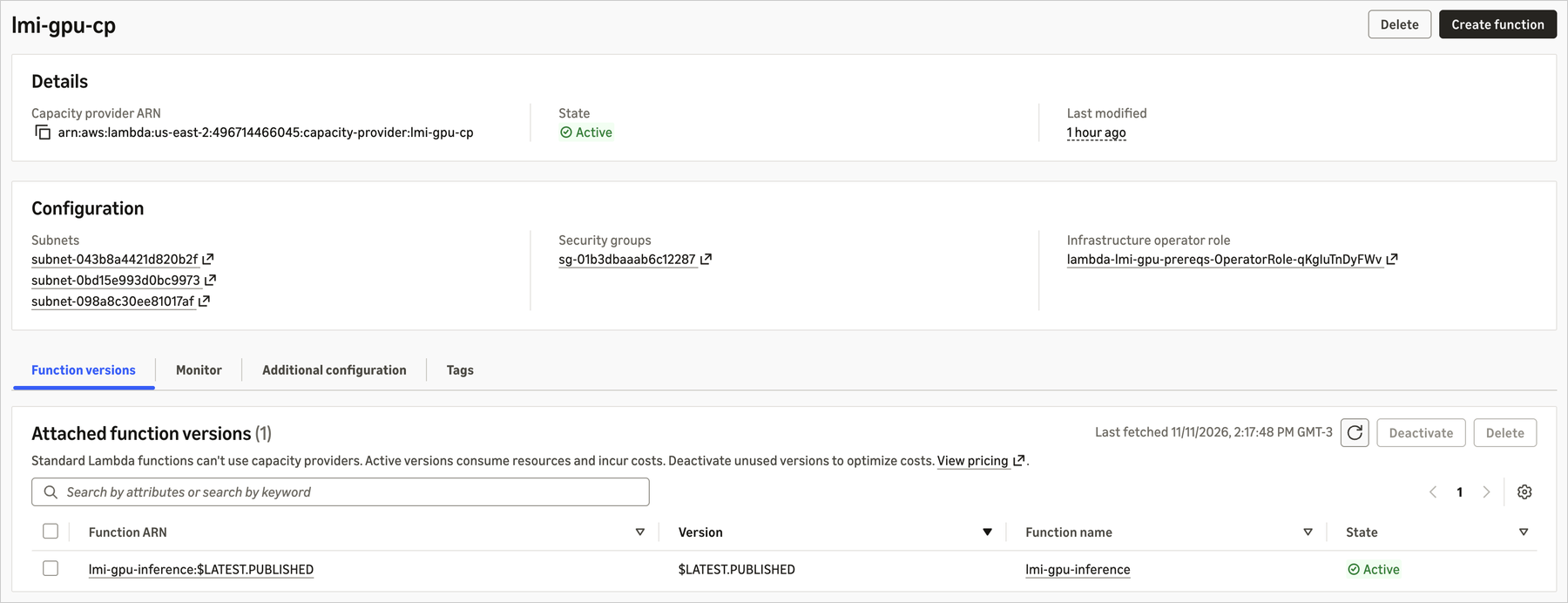
- Capacity Provider Setup: Defining the required instance types (e.g., G5, G6, G6e) and setting auto-scaling parameters to manage costs.
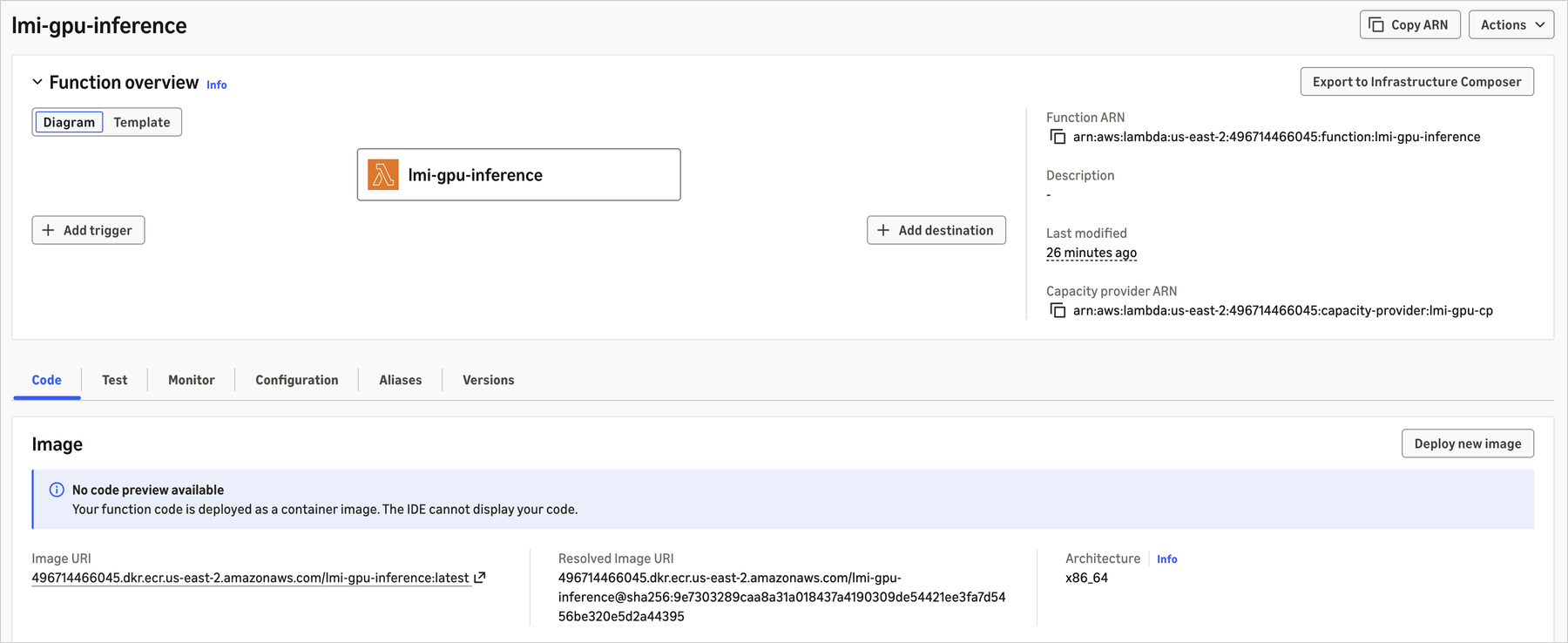
- Containerization: Utilizing curated base images—such as the vLLM or Sglang variants—that contain pre-configured drivers and inference servers.
- Model Loading: Utilizing S3-based storage to stream model weights, reducing cold-start times via techniques like Seekable OCI (SOCI) lazy loading.
- Execution: Triggering the function via standard event sources, enabling the model to scale from zero to high-throughput levels automatically.
This workflow removes the need for custom inference server code. For instance, by using the vLLM base image, a developer can stand up an OpenAI-compatible API endpoint in minutes, merely by specifying a model ID from Hugging Face or an S3 bucket.
Economic and Operational Implications
The financial model for this service is designed to align with the cost-sensitive nature of modern AI development. By billing based on the underlying EC2 usage plus a management fee, AWS ensures that users benefit from existing Savings Plans and Reserved Instances.
From an industry perspective, this development signals a commoditization of GPU inference. As small to medium-sized enterprises (SMEs) look to implement proprietary LLMs or fine-tuned models, the ability to deploy these without a dedicated MLOps team becomes a significant competitive advantage. It allows firms to focus on model performance and application logic rather than the underlying kernel versions or CUDA compatibility.
Analytical Outlook
Industry analysts view the move toward serverless GPUs as a catalyst for "Agentic AI" architectures. In these systems, a standard Lambda function (on CPU) manages the logic and tool-use, while the "heavy lifting" of inference is offloaded to a GPU-accelerated Lambda function. This split-compute architecture allows for the creation of complex, multi-step workflows that remain cost-effective because the GPU is only invoked when necessary.
Furthermore, the support for up to 90-minute timeouts and 32GB of ephemeral storage indicates that this service is not just for quick inference tasks. It is also designed for batch processing, video transcoding, and scientific data analysis that requires high throughput but intermittent usage patterns.
Future-Proofing the Architecture
As of late 2026, the supported instance families include G4dn, G5, G6, and the newer G6e series, providing a range of price-to-performance options. The platform’s ability to "fall back" across instance generations when capacity is tight in a specific region represents a major step forward in operational resilience.
While the service is robust, it remains important for architects to monitor "Insufficient Capacity Errors" and to use Capacity Reservations (ODCR) for mission-critical production workloads. By combining the elastic nature of Lambda with the power of modern NVIDIA GPUs, AWS has successfully removed one of the last major barriers to entry for high-performance serverless computing.
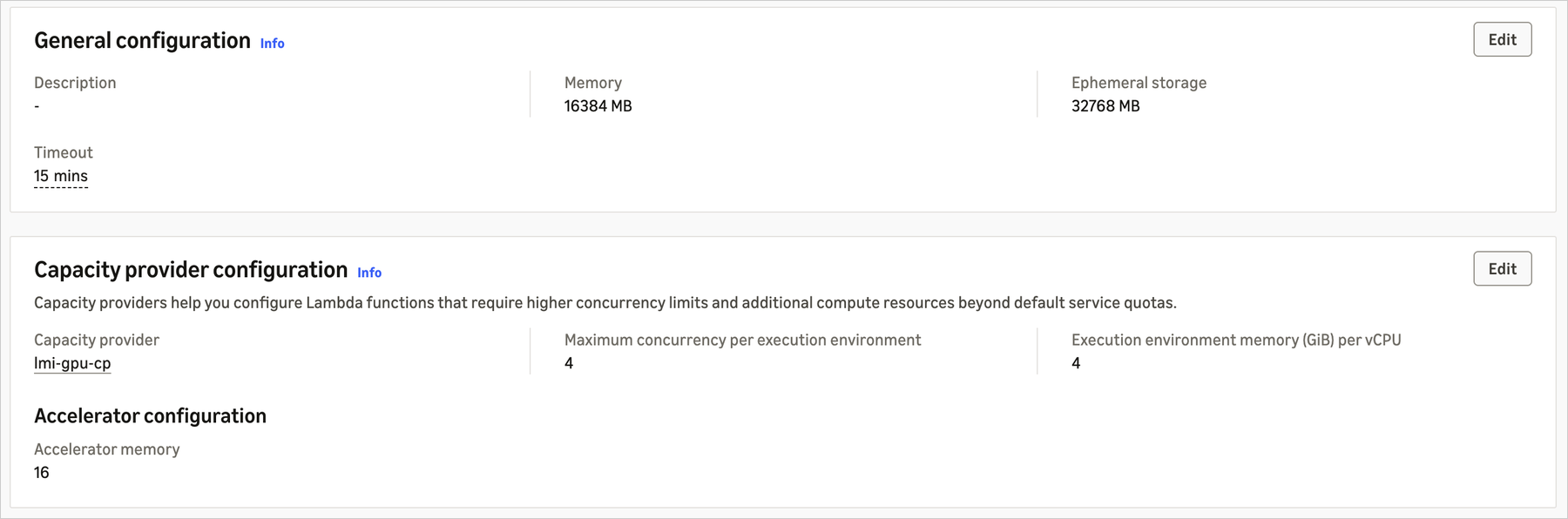
As the ecosystem matures, we can expect deeper integration with tools like the AWS Agent Toolkit, further simplifying the orchestration of complex AI agents. For developers, the message is clear: the era of manual cluster management for GPU workloads is rapidly coming to an end, replaced by a model where compute power is treated as a fluid, available, and highly efficient utility.
Related posts: