Amazon Aurora PostgreSQL now supports direct querying of Apache Iceberg and Parquet data in your data lake | Amazon Web Services

The Evolution of Data Integration Challenges
For over a decade, organizations have relied on Extract, Transform, and Load (ETL) pipelines to move data from cost-effective object storage like Amazon S3 into high-performance relational databases like Aurora. This architecture, while robust, introduces significant latency, operational overhead, and infrastructure costs. Data engineers must manage synchronization, handle schema evolution across disparate systems, and maintain complex orchestration layers just to ensure that business intelligence dashboards or AI agents have access to a unified view of organizational information.
As enterprises increasingly adopt AI-driven applications, these requirements have intensified. AI agents, by nature, require context—often spanning years of historical logs, customer interactions, and transactional records—to provide accurate, reasoning-based outputs. Pre-replicating every possible dataset an AI agent might need is not only impractical but economically unfeasible as data volumes reach the petabyte scale. The new capability announced by AWS represents a shift toward a "query-in-place" model, where the engine moves to the data rather than moving the data to the engine.
Chronology and Technical Integration
The integration of DuckDB into the Amazon Aurora ecosystem follows a strategic period of alignment between the two projects. The DuckLabs team, responsible for the development and maintenance of the popular DuckDB analytical database, joined Amazon recently, signaling a commitment to deep-tech integration.

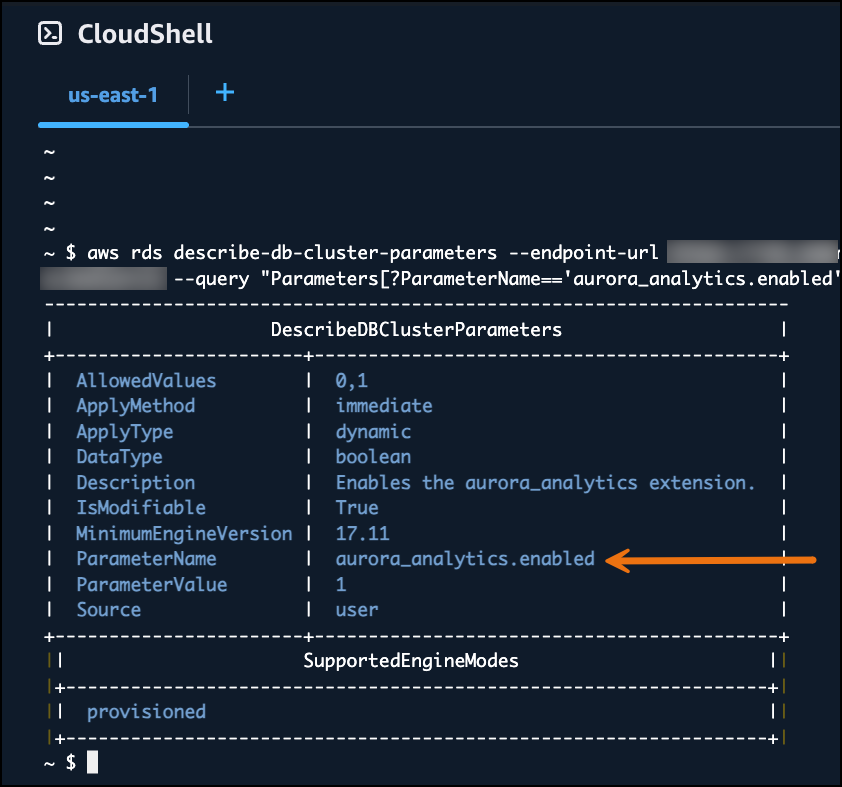
Starting with Aurora PostgreSQL versions 17.11 and 18.6, users can now enable the aurora_analytics extension. This extension acts as the bridge between the PostgreSQL optimizer and the DuckDB execution engine. When a user queries a foreign table mapped to an Apache Iceberg or Parquet file in S3, the Aurora engine offloads the analytical scan to the embedded DuckDB instance. This process is transparent to the end-user, who continues to interact with the database using standard PostgreSQL syntax and connectivity tools.
The timeline for this deployment reflects an accelerated development cycle within AWS to meet the demands of real-time analytics. By providing a unified interface, AWS effectively allows developers to join live, uncommitted transactional writes in Aurora with archived data in a data lake without requiring a single row of data to be physically migrated between storage layers.
Technical Performance and Optimization Strategies
One of the core concerns with "query-in-place" architectures is performance latency. To mitigate this, the AWS engineering team has implemented several sophisticated optimization techniques within the Aurora runtime:
- Predicate Pushdown: The system identifies filters within a SQL query and applies them at the source (the S3-based Parquet or Iceberg file) rather than pulling the entire dataset into memory. This drastically reduces I/O consumption and network traffic.
- Column Pruning: Aurora reads only the columns necessary for the query. In analytical workloads involving tables with hundreds of columns, this can result in performance gains of several orders of magnitude.
- Intelligent Caching: Frequently accessed data from the data lake is cached within the Aurora instance, ensuring that subsequent queries against historical trends are served with near-memory speeds.
- Metrics Transparency: Administrators can utilize the
aurora_analytics_stat_statements()function to monitor the efficiency of their external queries, tracking specific metrics such as bytes read from S3 and total rows scanned.
These optimizations are critical for maintaining the high availability and throughput standards that Aurora users expect. By keeping query processing local to the Aurora node, the system avoids additional network hops that typically plague federated query architectures.

Broader Industry Implications and Data Strategy
The introduction of this capability signifies a broader trend in the database industry: the erosion of the boundary between Operational Databases (OLTP) and Online Analytical Processing (OLAP) systems. Known as HTAP (Hybrid Transactional/Analytical Processing), this approach allows businesses to extract value from their data at the moment of creation while simultaneously leveraging historical context.
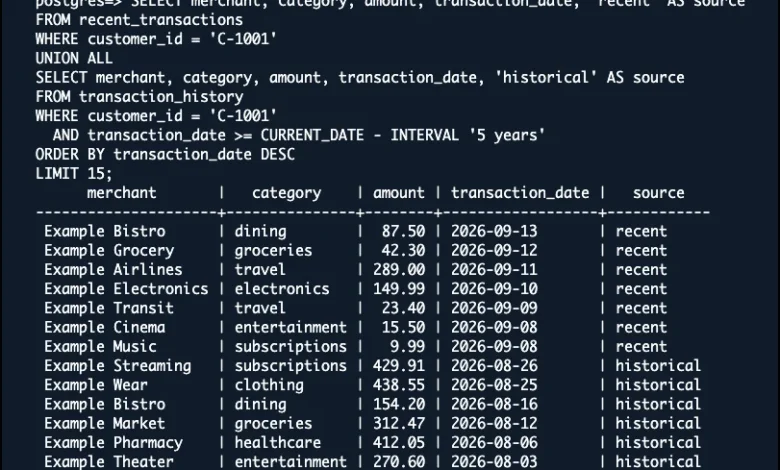
For industries such as fintech, healthcare, and retail, the implications are profound. In a retail scenario, a store manager could run a query comparing the last five minutes of sales (stored in Aurora) against the sales patterns of the previous five years (stored in S3) to identify anomalous behavior or seasonal trends. Previously, this query would have required a complex data warehouse synchronization, likely resulting in a delay of several hours.
Furthermore, the support for the Iceberg REST Catalog (IRC) ensures that Aurora is not siloed within the AWS ecosystem. By connecting to IRC-compatible catalogs, organizations can query data managed by various analytics tools, promoting a more interoperable and vendor-neutral data lake architecture.
Economic and Operational Impact
From a financial perspective, the removal of ETL pipelines results in immediate cost savings. Organizations no longer need to pay for the compute resources required to run, monitor, and scale intermediate data movement services. Because the new capability is provided at no additional charge beyond standard Aurora compute usage and S3 request costs, the total cost of ownership (TCO) for analytical workloads is significantly reduced.
Operational complexity is similarly diminished. Engineering teams are freed from the "maintenance burden" of managing pipeline failures, schema mismatches, and data integrity checks between the operational database and the data lake. By consolidating these functions into the PostgreSQL interface, AWS enables smaller teams to manage larger datasets with greater agility.
Future Outlook and Next Steps
As the industry continues to move toward more autonomous data systems, the integration of specialized engines like DuckDB into general-purpose databases will likely become a benchmark. Future iterations of this feature are expected to include expanded support for additional file formats and deeper integration with AWS Glue’s automated schema evolution capabilities.
For organizations looking to adopt this feature, the process is straightforward:
- Ensure the Aurora PostgreSQL cluster is running the required major version (17.11 or 18.6+).
- Assign an IAM role with
AuroraAnalyticspermissions to the cluster. - Execute
CREATE EXTENSION aurora_analytics;within the SQL environment. - Map S3 data sources using the
CREATE FOREIGN TABLEcommand or automate the process usingIMPORT FOREIGN SCHEMA.
As companies navigate the increasing complexity of their data estates, the ability to maintain a single "source of truth" while simultaneously querying deep history provides a distinct competitive advantage. This advancement in Amazon Aurora PostgreSQL is not merely a feature update; it is a fundamental shift in how transactional and analytical data are harmonized, setting a new standard for performance and efficiency in the cloud.