AWS Contributors Engage with Global Open Source Ecosystem at Open Source Summit Korea 2026

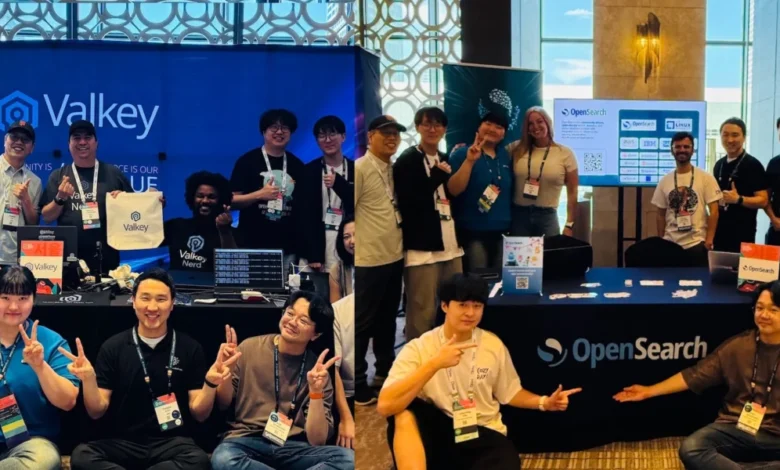
The Open Source Summit Korea 2026 and the concurrent MCP DevSummit Seoul 2026 recently served as a focal point for the global developer community, drawing hundreds of engineers, architects, and open source contributors to the South Korean capital. Over the course of four intensive days, participants engaged in technical workshops, collaborative sessions, and networking events centered on the evolution of critical open source infrastructure. AWS contributors played an active role in these proceedings, particularly through their direct engagement with the OpenSearch and Valkey communities, signaling a continued institutional commitment to projects that underpin modern cloud-native architectures.
The Significance of Open Source Summit Korea
Open Source Summit Korea has established itself as one of the most vital regional gatherings for the Linux Foundation, providing a platform for the cross-pollination of ideas between local Korean developers and global open source project maintainers. In 2026, the event emphasized the maturation of observability tools and high-performance data storage solutions. The inclusion of the MCP DevSummit Seoul further highlighted the shifting focus toward standardized interfaces for modular computing, an area where open source projects like OpenSearch and Valkey are increasingly essential.
For attendees, the value of the summit lay in the direct access to project maintainers. The involvement of local Korean OpenSearch community leaders—who facilitated dedicated booth interactions and hosted a specialized user group meetup—demonstrated the importance of regional ecosystems in global software development. Such interactions are critical for identifying local requirements, gathering feedback on performance bottlenecks, and fostering a culture of collaborative maintenance.
Evolution of OpenSearch: Scaling Data Observability
OpenSearch, an enterprise-grade search and observability suite, has seen significant functional expansion throughout 2026. The project’s trajectory reflects a broader industry demand for unified visibility into complex, distributed environments.
On June 9, 2026, the community released OpenSearch 3.7, which introduced a suite of tools designed to streamline the management of Service Level Objectives (SLOs). By enabling users to query, alert, and track metrics across logs, traces, and metrics from a single interface, the update significantly reduced the cognitive load required to maintain system reliability. Furthermore, the 3.7 release marked a breakthrough in performance, with developers reporting a 5.5x increase in vector retrieval speeds. This enhancement is particularly relevant for organizations integrating Generative AI into their data pipelines, where rapid semantic search is a prerequisite for responsive user experiences.
The integration of these features into the Amazon OpenSearch Service, effective July 30, 2026, provided enterprise users with a managed pathway to adopt these improvements. By leveraging managed instances of version 3.7, organizations have gained access to refined Query Insights and improved search relevance, enabling them to optimize search operations without the overhead of manual cluster management.
Valkey and the Pursuit of Performance Efficiency
Valkey, the open source key/value datastore, has become a standard for high-performance caching and messaging workloads. As memory-intensive applications face increasing pressure from multi-tenant environments, the project has focused its 2026 development cycle on memory efficiency and threading optimization.
The release of Valkey 9.1 on May 19, 2026, represented a major milestone in the project’s performance roadmap. By redesigning the I/O threading model, the core team achieved a 17% increase in throughput, a critical improvement for high-concurrency environments. Additionally, the project introduced memory optimizations for smaller data structures, reducing the memory footprint for strings under 128 bytes by as much as 20%.
These technical advancements reached the AWS ecosystem on June 23, 2026, with the introduction of Valkey 9.1 support in Amazon ElastiCache. For enterprises, this deployment offers more than just raw speed; it provides stronger access control mechanisms that are essential for secure multi-tenant architectures. By aligning with the open source release, AWS has enabled users to maintain architectural parity with the upstream project while benefiting from the operational stability of a managed service.
Fact-Based Analysis: The Open Source Lifecycle
The relationship between AWS and these projects underscores a mature phase in the cloud industry’s relationship with open source software. Rather than maintaining disparate proprietary forks, major cloud providers are increasingly aligning their managed services with upstream community releases. This alignment benefits the ecosystem in three distinct ways:
- Standardization: By adopting standard versions like OpenSearch 3.7 and Valkey 9.1, cloud providers reduce "version drift," ensuring that developers can transition workloads between on-premises and cloud environments with minimal friction.
- Community Velocity: Active participation in events like the Open Source Summit acts as a feedback loop. When cloud engineers interact with community users, they identify real-world usage patterns that influence subsequent feature prioritization in the upstream project.
- Operational Maturity: The transition of these tools into managed services—such as Amazon OpenSearch Service and Amazon ElastiCache—validates the open source project’s viability for mission-critical production use.
The data gathered from these summits suggests that the future of enterprise software is increasingly modular. As projects like Valkey improve memory efficiency, they allow for higher density on infrastructure, directly lowering the cost of cloud computing for the end user. Simultaneously, the observability features in OpenSearch allow companies to manage the complexity of their infrastructure as it grows, preventing the "blind spots" that often emerge during rapid scaling.

Future Outlook and Community Engagement
The momentum generated at the Seoul events is expected to continue throughout the remainder of 2026. Both the OpenSearch and Valkey communities maintain active event calendars, with upcoming conferences designed to facilitate deeper dives into the technical specifications discussed in Korea.
For builders and organizations looking to stay ahead of these trends, the AWS Builder Center remains the primary hub for documentation, community connection, and collaborative problem-solving. As these open source projects continue to evolve, the emphasis will likely shift toward further automation, enhanced security protocols, and tighter integration with AI/ML frameworks.
Conclusion: Sustaining the Ecosystem
The engagement at Open Source Summit Korea 2026 highlights a symbiotic relationship between global open source projects and the cloud infrastructure providers that support them. By investing in these events and fostering direct communication with the developer community, AWS ensures that its services remain grounded in the needs of the broader ecosystem. As OpenSearch and Valkey continue to push the boundaries of what is possible in data observability and high-performance storage, the role of community summits will remain a cornerstone of the software development lifecycle, ensuring that innovation is both rapid and sustainable.
As the industry moves into the latter half of 2026, the focus will remain on the practical application of these technical advancements. Whether through the performance gains of Valkey’s new threading model or the operational clarity provided by OpenSearch’s SLO tools, the impact of these developments will be measured by the increased efficiency and reliability of the digital services that users rely on every day. Further announcements and technical documentation regarding these projects continue to be available through the official project websites and the dedicated AWS “What’s New” portals, serving as a roadmap for the next wave of infrastructure development.