Amazon Bedrock Managed Agents for OpenAI Integration and Strategic AWS Ecosystem Updates

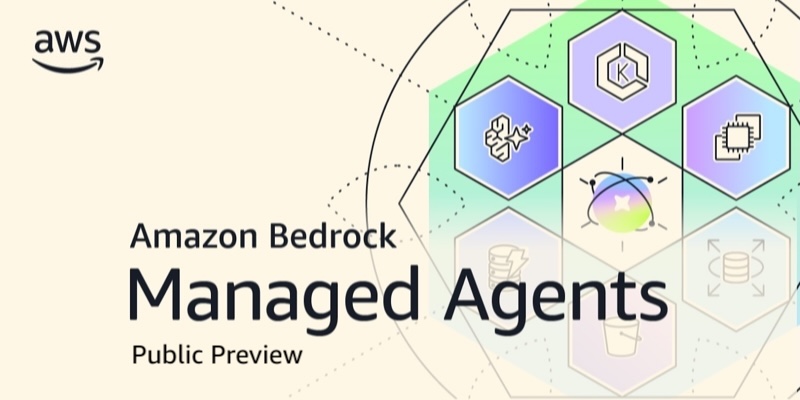
Amazon Web Services (AWS) has officially entered a new phase of generative artificial intelligence development with the public preview of Amazon Bedrock Managed Agents powered by OpenAI. This strategic integration represents a significant shift in how enterprises deploy high-performance large language models (LLMs) while maintaining strict adherence to AWS’s native governance, identity, and security frameworks. By leveraging a customized iteration of OpenAI’s Agents API, the service allows developers to build sophisticated, autonomous agents that function entirely within the AWS environment, effectively bridging the gap between proprietary model innovation and cloud-native operational security.
The Evolution of Bedrock Managed Agents
The announcement, which occurred in late September 2026, marks the culmination of months of intensive collaboration between AWS engineering teams and OpenAI developers. The primary goal of this initiative is to remove the friction typically associated with cross-platform model deployment. Previously, organizations utilizing OpenAI’s technology often faced architectural challenges when attempting to reconcile external model calls with internal AWS Identity and Access Management (IAM) roles and data sovereignty requirements.
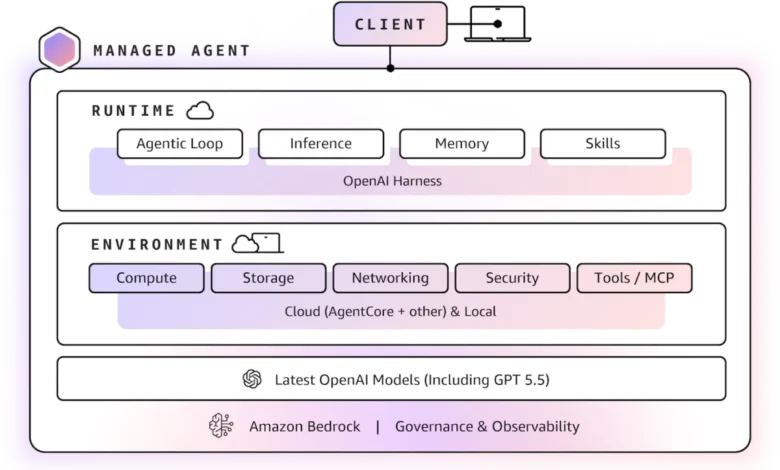
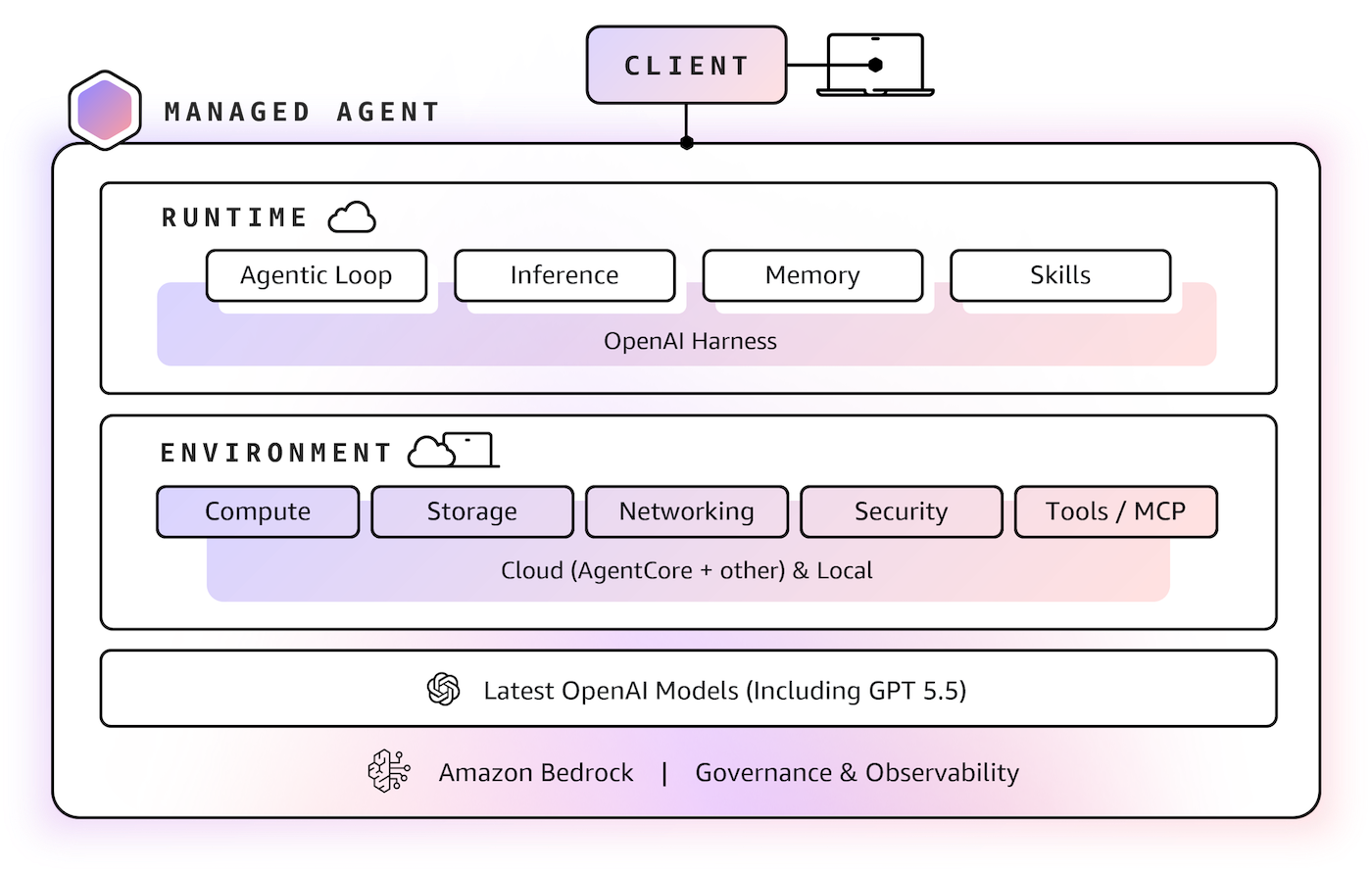
With the introduction of Bedrock Managed Agents, these organizations can now utilize an AWS-native execution layer for OpenAI models. The system offers two primary modes of operation. The first is a self-hosted compute environment, which grants developers maximum flexibility by allowing them to run agents on existing development machines, containerized workloads, or customized compute clusters. The second is the Amazon Bedrock AgentCore Runtime, a fully managed service that provides automated session management and configurable storage options directly within the user’s AWS account. This tiered approach is designed to accommodate a broad spectrum of users, ranging from agile startups requiring rapid prototyping to large-scale enterprises that demand rigorous compliance and managed infrastructure.
Architectural Significance and Security Integration
From an architectural standpoint, the Bedrock Managed Agents framework is engineered to treat OpenAI models as first-class citizens within the AWS ecosystem. By routing agent logic through Bedrock’s managed infrastructure, AWS ensures that data transmission between the agent and the model is protected by the same encryption standards that guard other critical AWS services.
This integration is particularly notable for its handling of resource access. Agents can now interface with AWS resources—such as Amazon S3 buckets, DynamoDB tables, or Lambda functions—using the standard IAM permission sets that are already configured for the environment. This minimizes the risk of credential leakage and simplifies the auditing process for security teams. By localizing the agent’s logic within the Bedrock environment, developers can maintain a centralized view of all agentic interactions, ensuring that observability tools like Amazon CloudWatch can effectively monitor performance, latency, and error rates in real-time.
The Broader Context of Generative AI Strategy
The launch of these managed agents follows a broader trend within the cloud computing industry toward "agentic workflows." Industry analysts have noted that the next wave of AI adoption will not be driven by simple chat interfaces, but by autonomous agents capable of performing complex multi-step tasks across disparate software systems.
AWS’s decision to integrate OpenAI models directly into Bedrock underscores the company’s "model-agnostic" philosophy. By offering a platform that supports models from Anthropic, Cohere, Meta, Mistral, and now an OpenAI-optimized pathway, AWS is positioning itself as the central operating system for the enterprise AI stack. This strategy is essential for attracting enterprise customers who are wary of vendor lock-in and prefer the ability to switch models based on specific use cases, cost requirements, or performance benchmarks.

Service Lifecycle Management and Operational Stability
As AWS continues to expand its feature set, it has simultaneously refined its approach to service lifecycle management. On September 29, 2026, the company issued updated guidance regarding service availability, signaling a shift in how it manages older, legacy features. This update is part of a broader commitment to operational transparency. AWS maintains a dedicated product lifecycle policy that provides customers with clear timelines for when a service or feature will move into maintenance mode, sunset, or full end-of-support status.
This structured approach is designed to mitigate the risks associated with legacy software debt. For instance, when a service is moved to "Maintenance," it generally means that new customers can no longer provision the resource, though existing users retain support until a transition plan is finalized. By clearly delineating these phases—Maintenance, Sunset, and End of Support—AWS allows IT managers to plan their migration strategies months in advance, avoiding the sudden outages that often plague less mature cloud environments.
Market Implications and Future Outlook
The introduction of OpenAI-powered managed agents on Bedrock is expected to have a profound impact on the competitive landscape of the AI development market. For many businesses, the barrier to entry for building intelligent agents has been the complexity of integrating external APIs into a secure, scalable cloud architecture. By abstracting away the underlying infrastructure, AWS is essentially lowering the "tax" of building AI applications.
Furthermore, this development signals a cooling of the rivalry between the major cloud hyperscalers and model providers. Rather than attempting to force customers to use proprietary, single-source models, the industry is moving toward a model where the cloud provider acts as the essential infrastructure layer for any model of the customer’s choosing. This benefits the end-user by increasing the speed at which new features can be deployed into production.
Community and Developer Engagement
Looking toward the remainder of 2026, AWS is maintaining a heavy emphasis on community building and developer education. With the upcoming re:Invent conference and various Community Day events scheduled globally, the company is doubling down on its efforts to train a new generation of developers in the nuances of agentic AI. The AWS Builder Center, in particular, has become a focal point for this effort, providing documentation, code samples, and collaborative spaces for users to troubleshoot their Bedrock implementations.
The success of the Bedrock Managed Agents will largely be determined by how quickly the developer community adopts the new runtime environment. If the promise of simplified IAM integration and native cloud performance holds true, it is likely that many organizations currently running fragmented AI stacks will migrate toward a more consolidated, AWS-centric architecture.
Conclusion
The recent updates from AWS reflect a company that is acutely aware of the shifting demands of the enterprise market. By prioritizing security, integration, and service lifecycle management, AWS is attempting to make the transition from experimental AI to production-grade AI as seamless as possible. The public preview of the OpenAI-powered Bedrock Managed Agents is not merely a feature release; it is a strategic maneuver that reinforces the role of the cloud provider as the essential foundation for the next decade of software engineering. As stakeholders monitor the adoption rates of these new tools, the primary focus for developers will remain on balancing the rapid pace of model innovation with the foundational requirements of data security and system reliability. With the industry’s eyes turned toward the next wave of re:Invent announcements, the roadmap for 2027 appears to be centered on the maturation of these agentic systems and the continued optimization of the generative AI lifecycle.