LitmusChaos Shines at KubeCon + CloudNativeCon India 2026, Marking a Milestone with Flipkart’s Keynote Win and Enhanced Community Engagement.

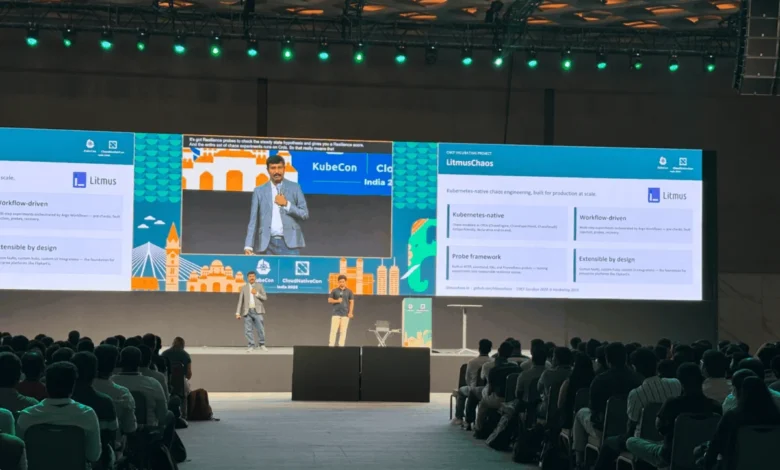
The vibrant city of Mumbai played host to KubeCon + CloudNativeCon India 2026 on June 18-19, an event that drew the cloud-native community from across the subcontinent and beyond. For LitmusChaos, a prominent Cloud Native Computing Foundation (CNCF) project focused on chaos engineering, the conference transcended a typical industry gathering, solidifying its standing as a pivotal moment in its growth trajectory. The project achieved a significant keynote slot, experienced overwhelming interest at its project booth, and engaged in profound discussions that are poised to influence its strategic direction for community expansion in India and globally. This confluence of achievements underscores the increasing maturity and real-world applicability of chaos engineering within enterprise-scale cloud-native environments, particularly in a market as dynamic and rapidly evolving as India.
KubeCon + CloudNativeCon India 2026: A Hub for Cloud-Native Innovation
KubeCon + CloudNativeCon, organized by the CNCF, is the flagship event for the cloud-native ecosystem, bringing together developers, users, and vendors to share knowledge, collaborate, and advance the state of cloud-native computing. The India edition, held annually, has grown significantly, mirroring the nation’s burgeoning digital economy and its rapid adoption of cloud infrastructure. With an estimated 60% of Indian enterprises reportedly leveraging cloud services by 2025, and a projected CAGR of over 20% for the cloud computing market in India, the regional KubeCon serves as a critical forum for addressing the unique challenges and opportunities presented by this accelerated digital transformation. Attendees, predominantly practitioners, arrive seeking practical solutions, best practices, and direct engagement with the projects and maintainers shaping the future of distributed systems. The 2026 event attracted thousands of attendees, making it one of the largest gatherings of cloud-native professionals in the APAC region.
Flipkart’s Triumph: A Testament to Real-World Chaos Engineering
The zenith of LitmusChaos’s participation arrived even before the formal sessions commenced. Flipkart, India’s leading e-commerce giant, was announced on June 17, 2026, as the prestigious winner of the CNCF End User Case Study Contest India. This remarkable achievement highlighted Flipkart’s pioneering implementation of Kubernetes and chaos engineering at an unprecedented scale, with LitmusChaos serving as a foundational technology. The recognition not only bestowed a coveted keynote slot upon Flipkart but also elevated LitmusChaos to the main stage of KubeCon India 2026, showcasing its impact before an audience of thousands.
This accolade is far more than an award; it represents a powerful validation of LitmusChaos’s efficacy in real-world, high-stakes production environments. It underscores the project’s capacity to empower organizations to proactively build resilient systems, moving beyond reactive incident response. Flipkart’s narrative exemplified this paradigm shift, demonstrating how a large-scale enterprise can not only adopt but also significantly contribute to an open-source project, sharing invaluable learnings back with the global community. The estimated value of India’s e-commerce market is projected to reach over $150 billion by 2026, making Flipkart’s operational resilience a critical component of the nation’s digital infrastructure. Their success story with LitmusChaos serves as a benchmark for other enterprises navigating similar challenges.
Keynote Spotlight: "From Afterthought to Practice"
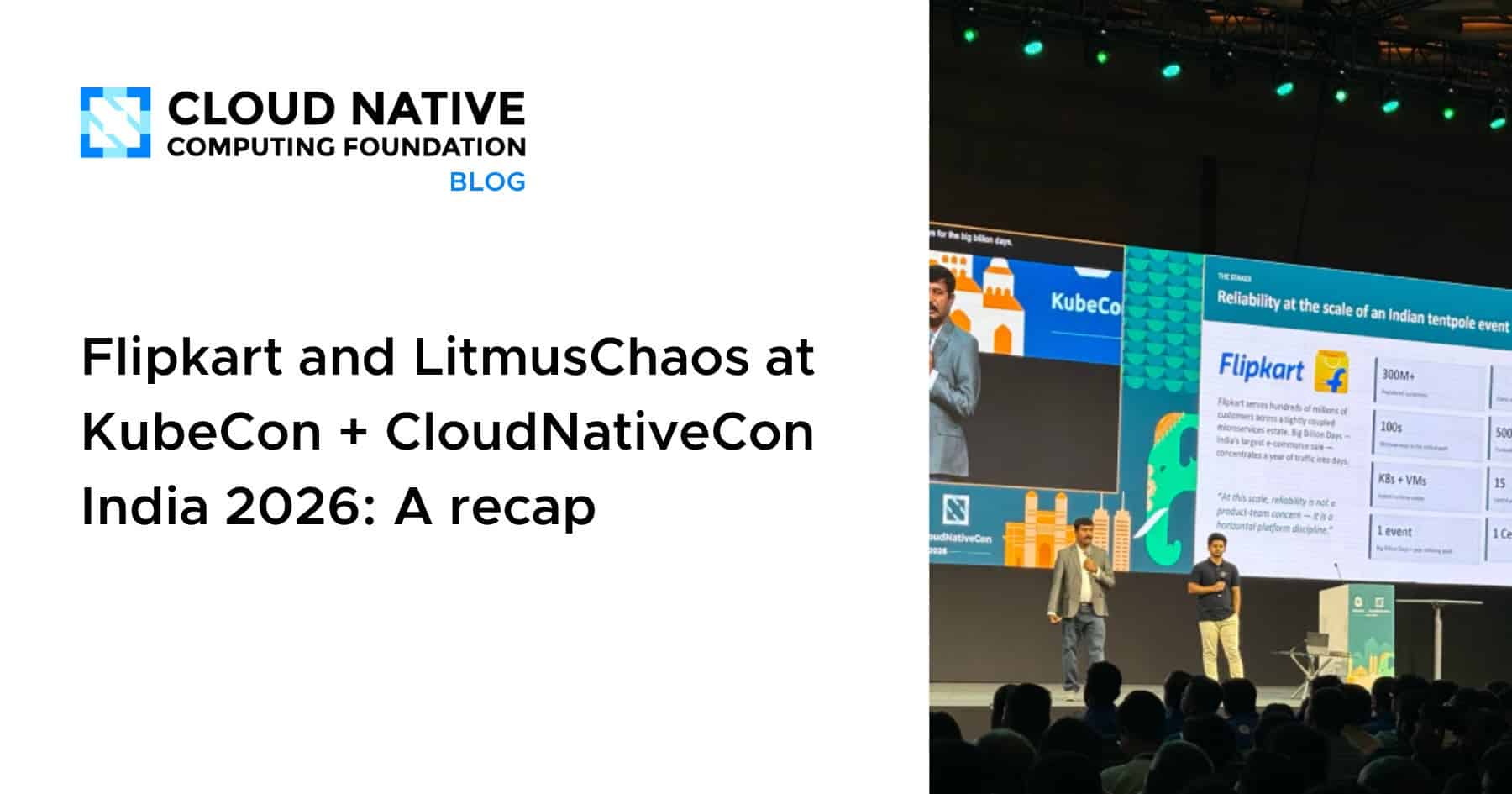
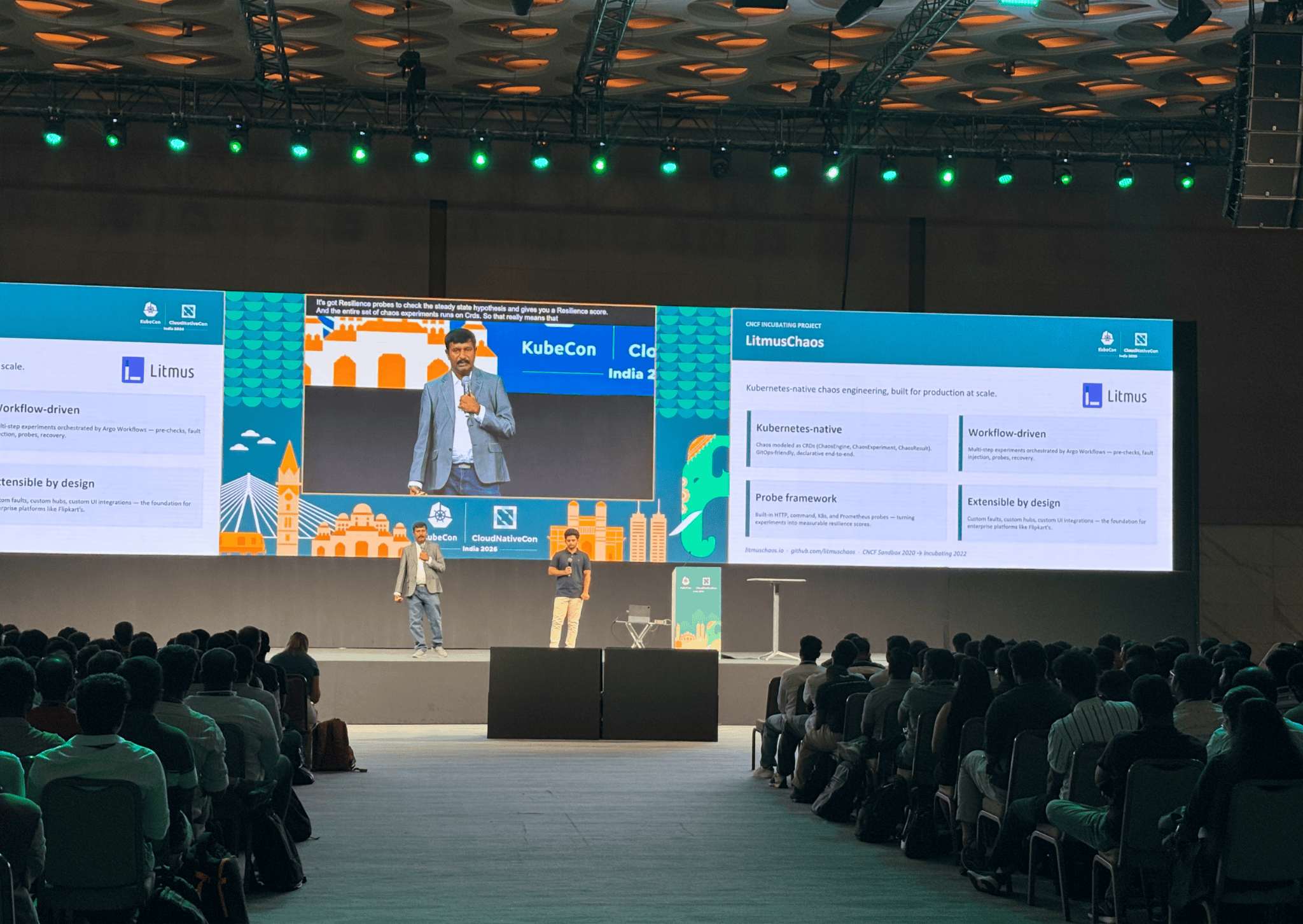
The highly anticipated keynote, titled "From Afterthought to Practice: How Flipkart Built a Multi-tenant Chaos Platform on LitmusChaos," was delivered by Aditya Sridasyam, Software Development Engineer at Flipkart, alongside Uma Mukkara, Head of Resilience Testing (and a key figure in LitmusChaos). The presentation captivated the audience, offering an unparalleled glimpse into the intricacies of operating a massive e-commerce platform during peak traffic events like the "Big Billion Days" and various festive sales. Flipkart’s challenge was formidable: managing hundreds of tightly coupled microservices, each critical to the customer experience, under extreme load. Historically, resilience had been an issue addressed post-outage, rather than being ingrained in the development lifecycle. This keynote meticulously detailed Flipkart’s transformative journey to embed resilience proactively.
Aditya Sridasyam’s presentation distinguished itself through its granular specificity, detailing four concrete customizations that Flipkart implemented to operationalize LitmusChaos at their immense scale. These bespoke solutions are critical examples of how a powerful open-source tool can be adapted and extended to meet unique enterprise requirements:
- Hybrid Multi-tenancy Architecture: Flipkart devised an innovative architecture that skillfully balanced cluster-wide and namespace-wide installations of LitmusChaos. This hybrid approach enabled flexible resource isolation and management, crucial for a platform hosting numerous teams and services, each with distinct resilience testing needs, without compromising security or operational efficiency.
- DaemonSet-based High-Availability Model for Chaos Injection: To ensure the reliability and continuous operation of chaos experiments themselves, Flipkart implemented a DaemonSet-based high-availability model for chaos injection. This guaranteed that chaos agents were consistently available across their Kubernetes clusters, minimizing the risk of experiment failures and providing robust, always-on resilience testing capabilities.
- Script Runner Fault with Dynamic Target Selection and Context Chaining: A significant innovation was the development of a "Script Runner" fault. This custom fault enabled dynamic target selection for chaos experiments, allowing teams to precisely target specific services or pods based on real-time conditions. Furthermore, it facilitated "context chaining," where the outcome of one fault could inform or trigger subsequent faults, enabling the creation of complex, multi-stage chaos scenarios that mirrored realistic cascading failures.
- Hybrid VM Chaos Extension: Recognizing that not all workloads reside exclusively on Kubernetes, Flipkart extended LitmusChaos’s capabilities to include a hybrid VM chaos extension. This critical addition allowed them to inject chaos into virtual machine-based workloads, providing a comprehensive resilience testing strategy across their heterogeneous infrastructure, a common challenge in large-scale enterprise environments.
These production-hardened decisions, born from the crucible of Flipkart’s operational scale, represent invaluable contributions that extend beyond their internal use. Uma Mukkara elaborated on how such enterprise-driven innovations are channeled back upstream into the LitmusChaos project. This mechanism of community contribution ensures that the project continuously evolves, incorporating battle-tested features and best practices that benefit the entire LitmusChaos user base. The full reference architecture, platform design, and measurable impact numbers, including significant improvements in system uptime and reduction in mean time to recovery (MTTR), are thoroughly documented in the official CNCF Flipkart case study, offering a blueprint for other organizations.
Engaging the Community: The LitmusChaos Project Pavilion
Beyond the keynote stage, the LitmusChaos project booth at the pavilion was a bustling hub of activity, attracting between one hundred and two hundred visitors daily. The interactions spanned a wide spectrum, from initial introductions to the concept of chaos engineering for newcomers to in-depth technical dialogues with seasoned practitioners on architectural patterns and integrations. These candid conversations provided invaluable feedback and insights, directly connecting the project maintainers with their user base and potential adopters.
Several key themes dominated the discussions at the booth:
- Resilience Testing and Reliability in the Age of AI: A significant portion of conversations revolved around the nascent field of AI inference workloads. These workloads often present unique fragility characteristics not seen in traditional microservices, prompting discussions on how chaos engineering methodologies and LitmusChaos specifically could be adapted to test and enhance the reliability of AI systems. This emerging area highlights the forward-looking nature of the cloud-native community.
- ChaosHub: The Default Fault Library: Many visitors expressed surprise and enthusiasm upon discovering ChaosHub, LitmusChaos’s extensive, ready-to-use fault library. This comprehensive repository covers a broad spectrum of targets, including Kubernetes, Linux, AWS, GCP, and more. For many, it was their first realization of the sheer breadth of out-of-the-box capabilities available, significantly lowering the barrier to entry for implementing chaos experiments.
- Automating Chaos in CI/CD: A recurring inquiry concerned the "shift-left" approach to chaos engineering – integrating chaos experiments earlier into the software development lifecycle. The LitmusChaos team demonstrated how to embed chaos into CI/CD pipelines using tools like LitmusCTL, various SDKs, and Terraform. The emphasis was on seamless integration without necessitating a complete overhaul of existing delivery processes, making it practical for teams to adopt.
- Tool Comparisons and Ecosystem Positioning: Given the growing landscape of chaos engineering tools, discussions often included side-by-side comparisons. The LitmusChaos team articulated the project’s unique value proposition, emphasizing its CNCF backing and community-driven development model as critical differentiators for long-term sustainability, trustworthiness, and broad adoption within the cloud-native ecosystem.
- Custom Chaos and Best Practices: For advanced users with highly specialized infrastructure patterns not fully covered by the default ChaosHub library, detailed discussions ensued on building custom experiments. The team provided guidance on best practices for designing, implementing, and maintaining a mature chaos engineering practice across different organizational stages, from initial adoption to advanced resilience strategies.
- LitmusChaos MCP (Model Context Protocol): A forward-looking feature introduced was the LitmusChaos MCP, a Model Context Protocol integration. This innovative feature enables engineers to interact with and learn about chaos engineering through natural language, powered by AI. This dramatically lowers the barrier to entry, making complex concepts more accessible and accelerating the onboarding process for teams new to resilience testing.
- New Adopters and Validation: The booth served as a platform to announce new official adopters, including Canonical and Intertech, further expanding the project’s global footprint. Flipkart’s keynote victory on the same day provided powerful, independent validation of LitmusChaos’s production-readiness and reliability, adding significant weight to these conversations with prospective users.
Beyond the technical discourse, the booth fostered community engagement through interactive elements. The "Chaos Bird" game, a leaderboard-based twist on the popular Flappy Bird, offered a fun, competitive element, with top scorers winning exclusive LitmusChaos swag. A separate random giveaway throughout both days ensured broad participation, creating a lively and memorable experience for visitors. This blend of technical depth and engaging interaction underscored the project’s commitment to building a vibrant and welcoming community.
Broader Impact and Community Significance
KubeCon + CloudNativeCon India 2026 undeniably marked a significant milestone for LitmusChaos. The audience, largely composed of practitioners actively building and managing complex systems in India, brought a level of interest that was profoundly genuine and grounded in real-world challenges. The specific and detailed nature of the questions posed at the booth and during the keynote reflected a community deeply invested in practical solutions and robust implementations. This quality of engagement is invaluable for any open-source project, as it directly fuels improvements, feature development, and community-driven innovation.
Sharing Flipkart’s compelling story, culminating in their win of the CNCF End User Case Study Contest, represents a crowning achievement not only for the LitmusChaos project but also for the broader Indian cloud-native community. It showcases India’s capacity for innovation at scale and its leadership in adopting cutting-edge technologies like chaos engineering. The LitmusChaos team expressed profound gratitude to Aditya Sridasyam and the entire Flipkart team for their willingness to share their groundbreaking work and to Uma Mukkara for her insightful anchoring of the keynote session. Equally, appreciation was extended to the CNCF and the event organizers for creating such a dynamic platform for recognition and collaboration. This event reinforced the idea that open-source collaboration, especially when driven by large-scale enterprise adoption, is a powerful engine for technological advancement.
The implications of these developments extend beyond the immediate success of LitmusChaos. Flipkart’s case study provides a robust blueprint for other enterprises, particularly those in emerging markets, to implement sophisticated resilience engineering practices. The customizations developed by Flipkart highlight the flexibility and extensibility of LitmusChaos, demonstrating its suitability for diverse and complex operational environments. Furthermore, the strong interest in chaos engineering for AI workloads signals a new frontier for resilience testing, positioning LitmusChaos at the forefront of this evolving domain. The event firmly established India as a vital innovation hub for cloud-native technologies, showcasing a community that is not just consuming but actively contributing to and shaping the global cloud-native landscape.
Staying Connected with LitmusChaos
For those whose introduction to LitmusChaos occurred at KubeCon + CloudNativeCon India 2026, or for anyone interested in delving deeper into chaos engineering, the project offers numerous avenues for engagement: joining the LitmusChaos Slack channel for real-time discussions, exploring the comprehensive documentation, contributing to the project on GitHub, attending community meetings, or following their updates on social media. The collective effort and dedication of the community members who stopped by the booth, attended the keynote, and actively participated made KubeCon + CloudNativeCon India 2026 an exceptionally memorable and impactful event for the entire LitmusChaos community, solidifying its role in shaping the future of resilient cloud-native systems.