Modern marketing leaders operate in an era of unprecedented operational abundance, boasting access to an expansive array of sophisticated content creation tools, granular impression tracking, and real-time engagement data. Yet, despite possessing more technological leverage than at any point in industry history, securing genuine and lasting audience attention increasingly resembles a moving target. This dichotomy formed the operational backdrop of a highly anticipated panel discussion at the September MarTech Conference, titled "The engagement illusion: What actually gets attention and what gets ignored."
The session convened a distinguished roster of industry executives, featuring Shiv Gupta, chief solutions and analytics officer at The Loop Group; John Miller, president of Scribewise; and Julie Swisser, global CMO at Office Beacon. The conversation was expertly moderated by Jessica Hawthorne-Castro, CEO of Hawthorne Advertising. Together, the panel unpacked a harsh reality for contemporary marketing operations and strategy teams: the historical playbook of relying on high-volume output to drive visibility is broken. In the current ecosystem, volume can no longer substitute for value.
The Dilution of Channels and the Rise of AI-Generated Noise
The core friction point eroding modern marketing efficacy is the democratization and subsequent explosion of generative artificial intelligence content. As automated text, image, and video generators have lowered the barriers to creation, every digital channel has experienced an unprecedented flood of material. Consequently, buyer attention—long treated as a renewable resource—has become fragmented, exhausted, and fiercely guarded.

Navigating this climate means contending with persistent algorithm volatility and predictable, formulaic marketing experiences. Modern audiences have grown hyper-aware of standard marketing plays, developing an acute sensitivity to generic messaging that forces them to tune out automated campaigns almost instinctively.
Compounding this complexity is a fundamental evolution in buyer behavior and vendor validation. Rather than relying solely on outbound sales pitches or vendor-supplied collateral, prospective B2B and enterprise customers now routinely leverage conversational AI engines—such as ChatGPT, Claude, and Gemini—to independently research vendor track records. Buyers use these tools to surface authentic peer reviews, cross-reference third-party media coverage, and audit corporate histories before ever engaging a sales representative. Consequently, maintaining absolute brand consistency across every digital and physical touchpoint has transformed from a routine operational preference into an uncompromising foundational requirement.
Redefining Credibility: Why Expertise Demands Proof
When prospective buyers evaluate potential corporate partners, demonstrating deep, verifiable expertise remains the single most effective catalyst for building durable trust. However, the panel emphasized that merely claiming market authority via corporate slide decks, polished landing pages, or marketing jargon is no longer sufficient. Brands are now required to actively prove their authority across both owned properties and third-party validation channels.
In this transformed landscape, attention functions as a high-value currency. Just as corporate procurement teams demand rigorous financial audits before committing enterprise budgets, modern buyers demand unambiguous signals of trust before allocating their scarce time. These signals of credibility must be immediate, transparent, and consistent across every interaction to validate that a brand is genuinely worthy of consideration.

The Metrics Trap: Moving Beyond Output Volume
A central warning issued during the conference session focused on the danger of measuring marketing performance strictly through the lens of production output. Organizations that evaluate success by tracking the sheer volume of content published, campaigns launched, or impressions purchased are falling into a classic strategic trap that prioritizes internal effort over actual market impact.
To illustrate this disconnect, industry experts frequently draw a simple parallel: professional competence is never judged by counting how much hair falls on the floor during a haircut, but rather by the quality of the final styling. Similarly, digital visibility detached from institutional trust is nothing more than expensive noise. Furthermore, no amount of advertising spend or programmatic campaign scale can compensate for a fundamentally flawed product or a subpar customer experience. As AI-driven search and recommendation engines become increasingly adept at indexing authentic customer sentiment and real-world feedback, genuine execution will invariably outweigh artificial promotion.
Frequency Versus Relationship: Redefining Touchpoints
Another critical theme addressed by the panel was the persistent misconception that repeated touchpoints automatically equate to meaningful customer relationships. Many enterprise marketing strategies still rely on aggressive cadences—such as high-frequency email blasts, relentless retargeting ads, and automated outreach sequences—under the assumption that persistent exposure builds affinity.
However, the panel argued that increasing communication frequency does not create inherent value for the buyer. Instead of structuring customer journeys around internal reporting milestones, quarterly key performance indicators (KPIs), or marketing automation triggers, strategists must ask a more rigorous foundational question: Does this specific interaction give the customer a compelling, rational reason to choose our brand over the competition?
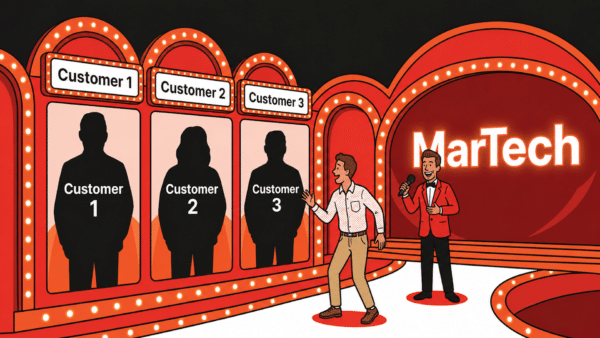
Building sustainable engagement requires looking far beyond isolated, single-touch campaigns and focusing instead on continuous, value-driven enablement throughout the entire lifecycle.
Evolving Performance Measurement: The Role of Non-Linear Metrics
While traditional quantitative metrics—such as click-through rates, page views, and form submissions—retain operational utility for tracking micro-interactions, relying on them as isolated barometers of overall marketing success is increasingly obsolete.
Modern B2B and consumer buyers rarely follow linear paths down a traditional marketing funnel. Instead, they navigate complex, non-linear journeys spanning social networks, peer review forums, independent media outlets, and AI-driven synthesis engines. The cumulative, multi-channel impression left across this broader ecosystem carries far more predictive weight than a single click on a digital asset.
To achieve clearer visibility into true market performance, organizations must embrace qualitative engagement indicators, such as brand sentiment shifts, community participation depth, organic word-of-mouth referral patterns, and qualitative feedback from sales and customer success teams.

Organizational Alignment: Trust as a Cross-Functional Mandate
A recurring consensus among the conference speakers was that marketing departments cannot build and sustain brand trust in an organizational vacuum. Delivering an exceptional, frictionless buyer experience requires seamless alignment across historically siloed internal divisions, including marketing, sales, product development, customer success, and operations.
To the modern buyer, a company does not present itself as a collection of separate departments; it is experienced as a single, unified entity. A single point of friction or a broken promise in customer support can instantly neutralize months of successful brand marketing initiatives. Establishing and protecting institutional trust must therefore be treated as a shared organizational mandate, where every department acts as an active partner in sustaining buyer confidence.
Strategic Implications and the Road Ahead
As digital content generation becomes increasingly automated and commoditized, authentic human experiences, verified expertise, and transparent business practices are appreciating rapidly in value. While cultivating deep trust, fostering genuine community, and demonstrating undeniable subject-matter expertise may not always fit neatly into a rigid, single-dashboard KPI spreadsheet, these intangible assets represent a modern enterprise’s most formidable competitive advantage.
Overcoming the engagement illusion is an entirely solvable challenge for organizations willing to adapt their operational models. The definitive path forward does not lie in accelerating the volume of noise, but rather in giving target audiences every objective reason to trust the brand. For marketing leaders navigating this volatile landscape, the September MarTech Conference delivered a clear, actionable directive: focus less on how much content you produce, and focus entirely on the verifiable value you deliver.