Vercel Integrates Amazon S3 Directly into Development Workflow to Streamline Cloud Storage Provisioning

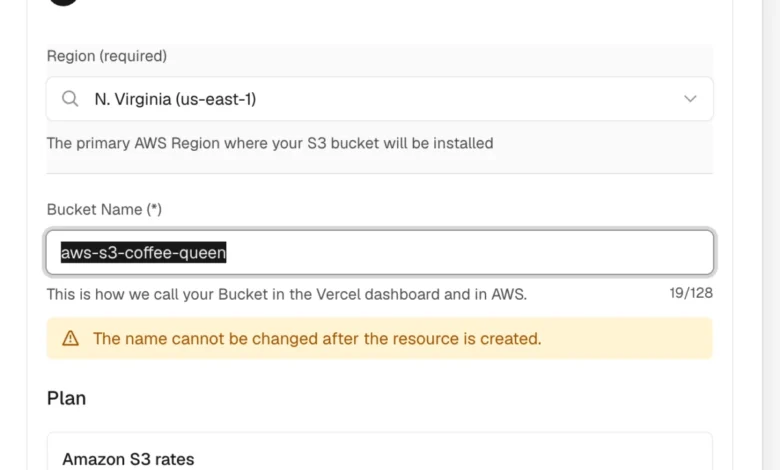
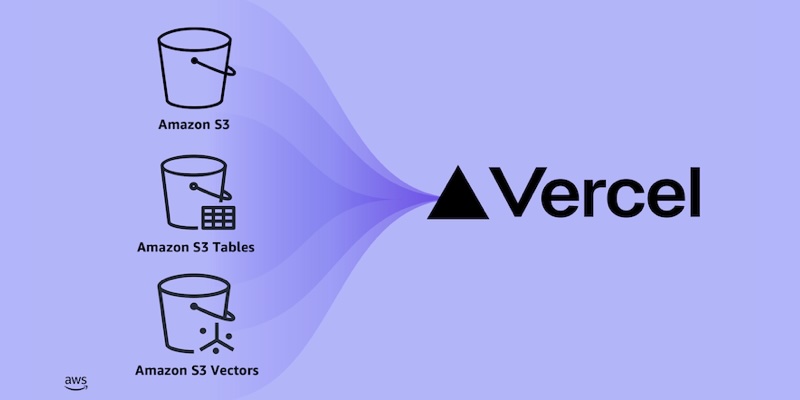
The landscape of modern web development underwent a significant transformation today as Vercel announced a native integration of Amazon Simple Storage Service (Amazon S3) directly into the Vercel Marketplace and its AI-powered interface, v0. This strategic partnership bridges the gap between Vercel’s high-performance frontend deployment environment and the robust, scalable infrastructure of AWS. By enabling developers to provision S3 buckets, S3 Tables, and S3 Vectors directly from the Vercel dashboard, the integration eliminates the traditional friction associated with cross-platform configuration, including manual policy management and credential handling.
The Evolution of Cloud-Native Workflows
For years, the separation between application hosting and cloud storage services served as a barrier to rapid iteration. Developers building on Vercel frequently found themselves toggling between the Vercel dashboard and the AWS Management Console to establish the necessary infrastructure. This process, while secure, introduced administrative overhead that could stall the deployment of data-intensive applications.
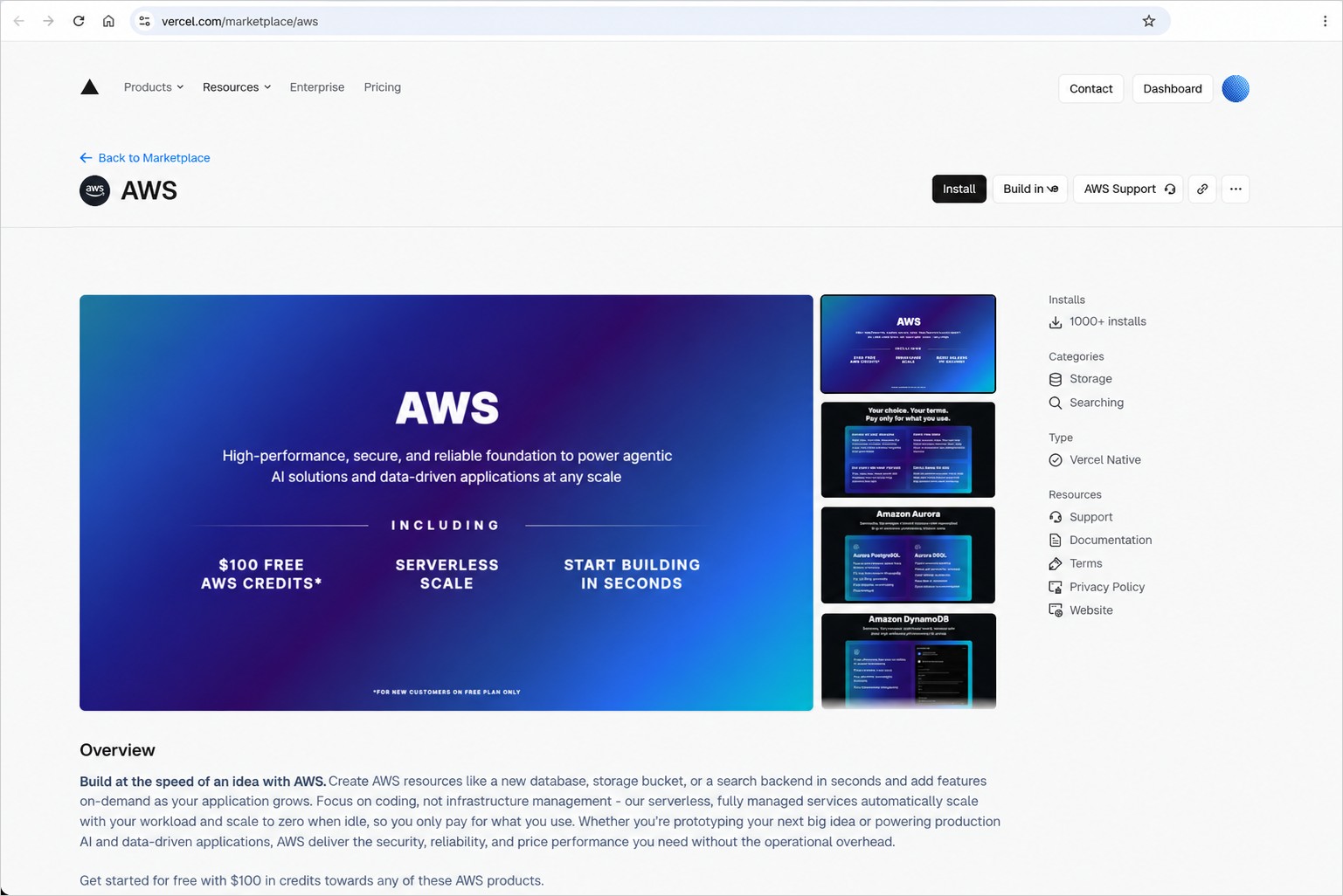
The new integration is the latest milestone in a multi-year effort to harmonize the Vercel and AWS ecosystems. This follows previous successful integrations for Amazon Aurora, Amazon DynamoDB, and Amazon OpenSearch Serverless. With the addition of S3, Vercel now offers a comprehensive, unified application stack that allows developers to manage database layers, object storage, and vector search capabilities within a single billing and management interface. This consolidation is expected to reduce the "context switching" that often leads to configuration errors or security vulnerabilities in cloud-based architectures.
Functional Scope: Storage, Analytics, and AI
The integration is not merely a shortcut to bucket creation; it supports three distinct, high-demand workload categories essential to contemporary software engineering.
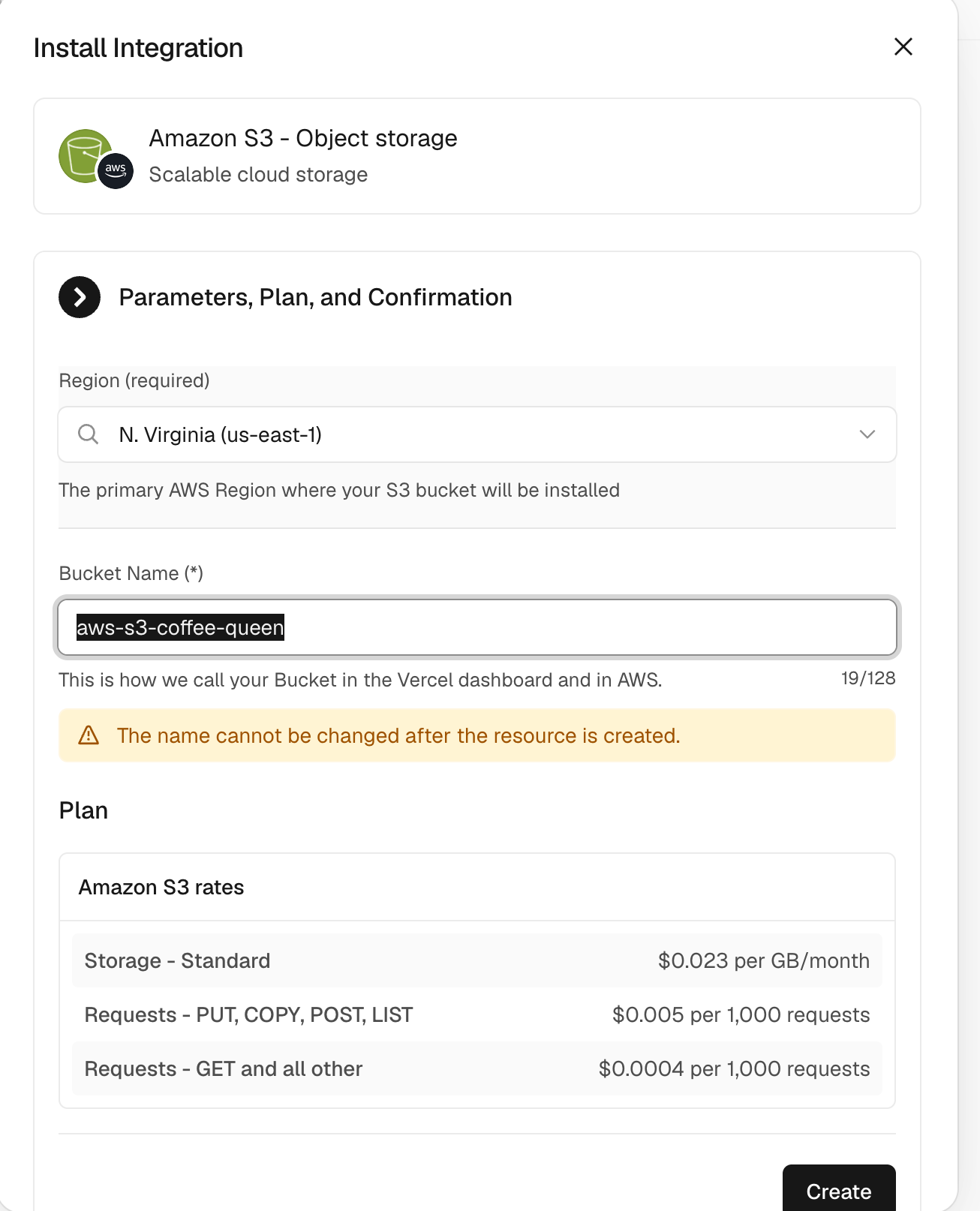
First, it provides seamless access to general-purpose S3 object storage. By automating the injection of environment variables—such as AWS_REGION and AWS_ROLE_ARN—the integration allows developers to interact with storage buckets immediately upon project initialization. The use of temporary, short-lived OIDC tokens via the @vercel/functions/oidc library ensures that no static access keys are stored within the codebase, adhering to the principle of least privilege.
Second, the support for S3 Tables represents a sophisticated approach to data analytics. Designed for high-performance query execution, S3 Tables utilize the Apache Iceberg format. By enabling Vercel functions to query these tables directly—often using high-performance libraries like DuckDB—developers can build real-time analytics dashboards that scale alongside their data. This removes the need for complex ETL pipelines, as the storage layer itself performs the heavy lifting of data compaction and maintenance.
Third, the inclusion of S3 Vectors directly addresses the explosion of generative AI and RAG (Retrieval-Augmented Generation) applications. By allowing developers to store and query vector embeddings within their existing S3 infrastructure, Vercel enables the creation of intelligent agents that can perform semantic searches across massive document sets without requiring the overhead of a dedicated, standalone vector database.

Technical Implementation and Security
Security remains the cornerstone of this integration. The underlying architecture leverages the AWS Security Token Service (STS) to manage temporary credentials. When a developer links their AWS account to Vercel, the platform establishes a trust relationship. At runtime, the Vercel infrastructure requests short-lived credentials that are scoped specifically to the required S3 resources.
This model is a significant departure from traditional practices where developers might hardcode credentials or manage long-term IAM users. For a typical web application, the implementation requires minimal boilerplate. In a Next.js environment, a developer can instantiate an S3 client with a few lines of code, pointing the client to the AWS_REGION and using the awsCredentialsProvider to handle the authentication handshake. This standardization allows teams to focus on business logic rather than cloud plumbing.
Impact on Developer Productivity and AI-Assisted Building
The integration with v0, Vercel’s generative AI interface, marks a shift toward intent-based infrastructure provisioning. In this model, a developer does not need to know the specifics of bucket policies or table schemas. Instead, they can express a business requirement in natural language—such as "create a support bot that answers questions from my PDF documents"—and the AI agent will provision the appropriate S3 Vector resources, configure the necessary connections, and generate the corresponding boilerplate code.
Industry analysts observe that this capability significantly lowers the barrier to entry for complex AI development. Small teams or individual developers can now deploy sophisticated, cloud-native applications that would have previously required a dedicated DevOps engineer to architect. By surfacing these capabilities through a chat-based interface, Vercel is democratizing access to enterprise-grade AWS services.
Market Context and Strategic Implications
The timing of this integration is notable. As organizations look to consolidate their tech stacks to control costs and improve operational efficiency, the "all-in-one" approach offered by Vercel and AWS becomes increasingly attractive. By keeping the storage resource within the user’s existing AWS account, Vercel ensures that enterprises do not lose the benefit of AWS-native tooling, compliance auditing, or existing enterprise agreements.
Furthermore, the offering of $100 in AWS credits for new accounts created via the integration serves as a powerful incentive for startups to choose this stack early in their lifecycle. This strategy aligns with the broader industry trend of "platform-as-a-service" providers attempting to capture the entire lifecycle of an application, from the initial prompt to the final, high-scale production deployment.
Broader Economic and Operational Considerations
Beyond the developer experience, the integration carries implications for cloud cost management. By centralizing the management of these resources, teams are better positioned to monitor their usage patterns and optimize for cost. Because every AWS service managed through Vercel shares the same account and authentication model, the complexity of cost attribution is reduced. Organizations can utilize standard AWS billing dashboards to track expenditures across their Vercel-deployed applications, ensuring transparency and accountability.
The integration also addresses the "scaling gap." Historically, moving from a prototype to a production-grade application often involved a "re-platforming" phase where the developer had to move from local mock storage to actual cloud infrastructure. With this new workflow, the transition is seamless. The code written during the prototype phase in v0 uses the same credentials and client libraries as the production deployment, effectively eliminating the "it works on my machine" phenomenon.
Looking Ahead
As the integration rolls out, the developer community is expected to provide feedback via the AWS re:Post forums and the AWS MCP (Model Context Protocol) servers. The move signals a broader trend toward "invisible infrastructure," where the underlying complexity of cloud architecture is abstracted away by AI and integrated development environments.
While this integration streamlines the process for many, it also highlights the growing importance of IAM governance. As infrastructure becomes easier to provision, organizations must ensure that their internal policies regarding resource creation remain robust. The integration provides the tools, but the responsibility for organizational security and governance remains with the user.
In conclusion, the partnership between Vercel and AWS regarding S3 storage represents a significant leap forward in reducing the friction of cloud-native development. By blending the flexibility of a modern web framework with the durability and scale of AWS, Vercel has provided a pathway for developers to build faster, iterate more frequently, and focus on the delivery of value rather than the orchestration of infrastructure. As AI-assisted development continues to mature, this model of integrated, intent-driven cloud provisioning is likely to become the industry standard for both startups and established enterprises alike.