Amazon S3 Vectors Introduces Metadata Pre-Filtering to Enhance Semantic Search Recall and Performance

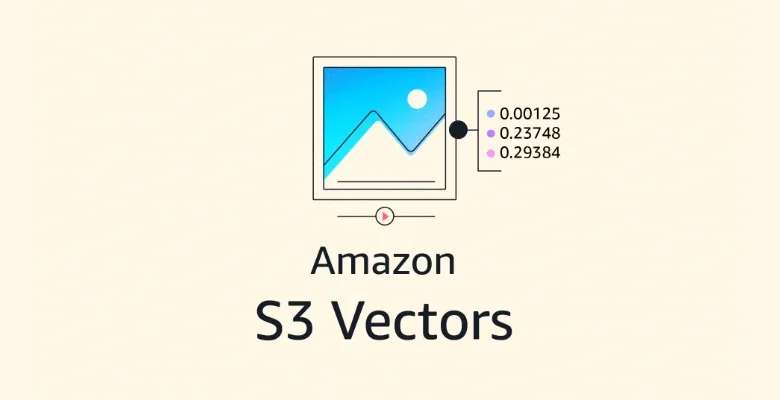
Amazon has officially announced the implementation of metadata pre-filtering for its Amazon S3 Vectors service, a technical update designed to significantly improve the precision and recall of filtered vector searches. By resolving metadata filters—such as tenant identifiers, categories, or timestamps—before initiating a similarity search, the update ensures that vector operations are performed only on the relevant subset of data. This architectural shift addresses a common bottleneck in Retrieval-Augmented Generation (RAG) and semantic search applications, where broad index scanning often leads to diluted result sets.
The Evolution of Vector Search in Cloud Infrastructure
The integration of vector capabilities into Amazon S3 represents a strategic expansion of the object storage service into the domain of artificial intelligence and machine learning infrastructure. Traditionally, S3 was utilized for static data storage, but the rise of generative AI necessitated a more dynamic approach to data retrieval. Vector databases allow machines to interpret data not by keyword matching, but by mathematical proximity, or "similarity."
Before this update, Amazon S3 Vectors operated primarily in a "Classic" mode, where filter evaluation and vector similarity searches occurred concurrently. In this model, the system would calculate similarity scores for a vast array of candidates, only to discard many of them if they failed to meet metadata criteria post-search. This process often resulted in "recall drift," where the most relevant matches for a specific user or category were pushed out of the "top-k" results by unrelated documents from the broader index. The introduction of the "Enhanced" index mode resolves this by enforcing filters at the ingestion or query stage, ensuring that the search engine only evaluates the data space pertinent to the user’s specific request.
Technical Mechanics: From Classic to Enhanced Indexing
The transition to Enhanced indexing is designed to be seamless for existing users. The system now supports up to 100 filter constraints per query, with each vector capable of carrying up to 2 KB of associated metadata. A notable addition to this feature set is the inclusion of the $startsWith operator, which allows for hierarchical filtering. This is particularly useful for enterprise environments that organize documents in complex folder structures, URLs, or nested logical hierarchies.
For organizations managing massive datasets—such as a support knowledge base containing millions of tickets—the impact of this update is substantial. In the previous model, a query for a specific customer’s history might have been statistically overwhelmed by the noise of millions of other tickets. By filtering for a customer_id prior to the similarity calculation, the system effectively shrinks the search space, ensuring that the top-k results are truly representative of that specific customer’s interaction history rather than a global sample. Data indicates that for highly selective filters, this pre-filtering approach can return up to five times more relevant matching vectors than the previous methodology.
Chronology of Implementation
The rollout of this feature follows a broader trend within the cloud industry to optimize vector search for multi-tenant architectures.
- Initial S3 Vectors Launch: Amazon introduced S3 Vectors to enable developers to store and query high-dimensional vector embeddings directly within the S3 ecosystem, reducing the need for separate, specialized vector database clusters.
- The Scaling Challenge: As early adopters pushed the service to handle millions of vectors across diverse user bases, the limitations of post-filtering became apparent. Engineers noted that as indices grew, query latency remained acceptable, but the quality of the "relevant" results began to suffer in multi-tenant environments.
- Development of Pre-Filtering: AWS developers spent the latter half of the fiscal year optimizing the index structure to support metadata-first evaluation.
- Deployment: The current deployment allows users to opt-in to the Enhanced mode, ensuring backward compatibility while providing a pathway for performance optimization.
Strategic Implications for RAG and Agentic AI
The deployment of metadata pre-filtering is poised to impact the development of agentic AI applications. Modern AI agents are increasingly tasked with retrieving highly specific information from vast, heterogeneous document stores. In a RAG pipeline, the quality of the "context window" provided to the Large Language Model (LLM) is entirely dependent on the quality of the retrieved vectors.
If the retrieval process pulls irrelevant data—or fails to find the most relevant data because it was filtered out by the sheer size of the index—the resulting output from the AI agent will suffer from hallucinations or lack of depth. By ensuring that the retrieval process is strictly scoped to the correct metadata, Amazon is providing a more reliable foundation for AI agents to operate within secure, multi-tenant boundaries.
Economic and Operational Efficiency
One of the most critical aspects of this update is its cost-neutral nature. Amazon has stated that there is no additional cost for implementing metadata pre-filtering, nor is there a requirement for re-ingestion of existing vector data. Users can simply update the index mode from CLASSIC to ENHANCED via the UpdateIndexMode API call.
This is a significant operational win for cloud architects who manage massive storage volumes. In traditional database migration scenarios, changing an index architecture often requires a full rebuild, which involves costly compute cycles and potential downtime. By allowing an in-place upgrade, AWS is lowering the barrier to entry for high-performance vector search. The ability to set the default index mode to ENHANCED for an entire vector bucket further simplifies the management of new data, ensuring that future-proofing is baked into the storage lifecycle.
Analytical Outlook: The Path Forward
The move to integrate metadata pre-filtering directly into the S3 storage layer reflects a maturation of the AI infrastructure market. As companies transition from "proof-of-concept" AI projects to production-grade applications, the focus has shifted from mere functionality to operational efficiency and accuracy.
Industry analysts observe that the "recall gap" was a major hurdle for enterprises attempting to use S3 as a primary data store for AI. With this update, AWS effectively competes more aggressively with standalone vector databases by offering a unified storage and retrieval experience that does not sacrifice performance for convenience.
Looking ahead, the inclusion of hierarchical path matching through the $startsWith operator suggests that Amazon is preparing for a future where document management systems are increasingly automated. As more developers utilize S3 to house unstructured data that is indexed for semantic search, the demand for sophisticated, granular filtering will only increase.
Getting Started and Best Practices
For developers looking to integrate this feature, the process is straightforward:
- IAM Policy Review: Ensure that the relevant AWS Identity and Access Management (IAM) roles have the updated permissions to handle the
UpdateIndexModeandQueryVectorsAPI actions. - Schema Preparation: While S3 Vectors allows for flexible, schema-less metadata, organizations should standardize their
tenant_idandcategoryfields to maximize the efficiency of the filtering logic. - Performance Testing: Before rolling out the change to production workloads, teams should use the
list-indexesandget-indexcommands to audit their current infrastructure and perform A/B testing on query recall.
By providing a clear path to update existing indices without data loss or re-ingestion, Amazon has provided a frictionless transition. The ability to use standard JSON-based syntax for complex filtering—including logical operators like $and, $or, and $gt—ensures that the system remains accessible to developers who are already familiar with modern NoSQL query patterns.
Conclusion
The addition of metadata pre-filtering to Amazon S3 Vectors marks a significant technical milestone for AWS. By addressing the fundamental challenge of query recall in high-volume vector indices, the company is reinforcing the viability of its object storage service as a cornerstone for AI development. As enterprises continue to scale their RAG applications and agentic workflows, the ability to perform high-precision, filtered searches will be essential. With this update, AWS has successfully bridged the gap between raw object storage and the rigorous requirements of modern, semantic-aware data retrieval.