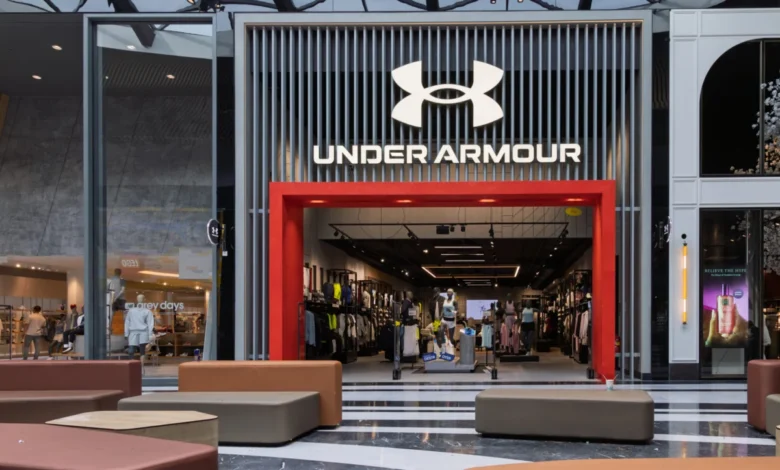
The current fiscal climate for Under Armour is defined by a rigorous internal assessment of its wholesale and direct-to-consumer (DTC) channels. CEO Kevin Plank, who returned to the helm to guide the company through this transitional period, characterized the recent performance as a demonstration of the company’s ability to meet revenue expectations while surpassing initial operating income outlooks. However, the path forward involves significant hurdles, including sluggish retail traffic and the ongoing recalibration of product offerings to better align with contemporary market preferences.
A Chronology of Financial Headwinds and Strategic Pivots
The fiscal year 2025 has been a period of introspection and adjustment for the Baltimore-based brand. Following a period of inconsistent growth, Under Armour initiated a comprehensive restructuring plan earlier this year. The company has already incurred approximately $13 million in costs specifically tied to these initiatives during the second quarter. The executive team expects these restructuring efforts to continue through the remainder of the current fiscal year and reach a state of "substantial completion" by the end of 2026.
This timeline is critical for investors, as the company projects a full fiscal year revenue decline in the mid-single-digit percentage range. This forecast reflects a cautious approach to inventory management and a strategic decision to exit certain unprofitable wholesale accounts in favor of more high-margin, brand-building partnerships. The company’s recent history has been marked by a transition from a volume-heavy strategy to one that emphasizes brand premiumization, yet the transition has proven difficult in an environment where consumers are increasingly price-sensitive and selective.
Dissecting Q2 Performance: Wholesale vs. DTC
A granular look at the second-quarter results reveals the breadth of the challenges facing the company’s distribution channels. Wholesale revenue, which remains a primary pillar of Under Armour’s operations, fell 6% to $725 million. This decline was largely attributed to softer sell-through rates at full price and continued pressure on distributor partners. The company has acknowledged that its reliance on wholesale has led to inventory bloat in the past, and it is now working to improve the quality of its distribution to ensure that its products are positioned in retail environments that better reflect the brand’s identity.
Simultaneously, the direct-to-consumer segment—the engine of modern retail growth for many apparel brands—faced an 8% decline in revenue to $494 million. Within this sector, the company saw a 7% drop in its owned and operated brick-and-mortar stores and a more pronounced 12% decline in e-commerce sales. During the earnings call, management underscored that traffic, particularly within the North American market, remained the most significant inhibitor to growth. While conversion rates and targeted digital initiatives provided some buffer against these losses, they were insufficient to offset the broader decline in foot traffic and online engagement.
The Integration of Artificial Intelligence as a Strategic Lever
Perhaps the most forward-looking component of Under Armour’s turnaround strategy is its embrace of artificial intelligence. Recognized as No. 285 in the Digital Commerce 360 and ReFiBuy AI Commerce Rankings, the company is positioning AI as a central tool for operational refinement. CEO Kevin Plank has explicitly stated his belief that the athletic apparel industry is uniquely positioned to benefit from the predictive and analytical capabilities of AI, specifically citing three primary domains: supply chain, merchandising, and marketing.
In the context of the supply chain, the goal is to optimize the flow of goods and reduce the "bullwhip effect" that has historically plagued fashion retailers. For Under Armour, the priority is to solve fundamental fulfillment issues—specifically ensuring that the company ships what was ordered with higher accuracy and efficiency. Plank’s emphasis on "delivering on time and full" suggests that the company’s technical investment is not merely about consumer-facing personalization, but about fixing the foundational plumbing of its logistics network.
Merchandising efforts are also expected to lean heavily on AI to better predict consumer demand, thereby reducing the need for aggressive discounting that erodes brand equity. By analyzing vast datasets on regional preferences and purchase patterns, Under Armour hopes to create a more agile supply chain that responds to market signals in real-time rather than relying on long-lead-time forecasting models that have left the company with excess inventory in previous cycles.
Market Implications and Future Outlook
The broader implications of Under Armour’s current strategy extend beyond its own balance sheet. As a major player in the global sportswear sector, Under Armour’s struggle to regain its footing reflects a larger narrative within the retail industry: the "middle-of-the-road" apparel brand is increasingly squeezed by high-performance competitors on one side and fast-fashion, value-oriented retailers on the other.
To succeed, Under Armour must achieve a delicate balance. It must maintain its heritage as a performance-driven brand—the "tough, gritty" identity it built its reputation on—while modernizing its digital presence and logistics. The shift in focus toward more efficient, data-driven operations suggests that the leadership team understands that growth will no longer come from mass-market saturation but from operational excellence and brand loyalty.
Analysts observing the sector have noted that while the transition is painful in the short term, the company’s focus on the Fiscal 2025 Restructuring Plan is a necessary prerequisite for any long-term recovery. The market’s reaction to the Q2 results suggests a wait-and-see approach. Investors are looking for tangible signs that the cost-cutting measures are not just improving margins on paper, but are actually creating a more resilient business model capable of scaling once the macroeconomic environment stabilizes.
Operational Efficiency and the Road Ahead
As the company looks toward 2026, the focus will remain on "sharpening" the product offering. This involves reducing the number of stock-keeping units (SKUs) to focus on high-performing core categories, which allows for better inventory management and more effective marketing spend. The amplification of global marketing is intended to reconnect the brand with its core demographic, moving away from the fragmented messaging that has characterized its recent past.
The challenge of "traffic" in North America remains the most immediate hurdle. With consumer discretionary spending under pressure due to inflationary factors and interest rate environments, the appetite for premium athletic wear remains volatile. Under Armour’s ability to drive traffic through digital innovation and brand storytelling will be the ultimate test of its transformation.
In conclusion, Under Armour is currently in the "heavy lifting" phase of its corporate lifecycle. The combination of a disciplined restructuring, a pivot toward AI-driven logistics and merchandising, and a return to its brand roots represents a high-stakes effort to reclaim its position as a dominant force in athletic retail. Whether these changes are sufficient to reverse the revenue decline and capture new market share remains a central question for analysts and stakeholders alike as the company moves into the latter half of its fiscal year. The company’s ability to deliver on its promise of operational efficiency—"shipping everything that was ordered" on time—will be the most visible metric of its success in the coming quarters.