India’s Open Network for Digital Commerce Poised to Reshape E-commerce While Empowering Local Merchants

India, now home to the world’s largest population, stands on the cusp of an unprecedented e-commerce boom, despite its current online commerce penetration lagging significantly behind global economic powerhouses like China and the United States. With over half its population under the age of 25 and approximately 840 million consumers actively using smartphones, the demographic dividend is ripe for digital transformation. This impending surge, however, presents a unique policy challenge for the Indian government: how to aggressively promote digital growth without undermining the vast network of small, physical mom-and-pop merchants, known locally as kiranas, which collectively drive an estimated 75% of national consumer goods sales and form the backbone of local economies.
The E-commerce Imperative: India’s Digital Horizon
The sheer scale of India’s market is staggering. With a population exceeding 1.4 billion, the potential for digital commerce is immense. The country’s internet user base has soared, driven by affordable smartphones and cheap data plans, making digital access a reality for hundreds of millions. According to various industry reports, including those from Statista and the India Brand Equity Foundation (IBEF), India’s e-commerce market, valued at around $80 billion in 2022, is projected to grow to over $300 billion by 2030, reflecting a compound annual growth rate (CAGR) of over 20%. This robust growth trajectory is fueled by increasing disposable incomes, evolving consumer preferences, and a widespread embrace of digital technologies.
Despite this rapid expansion, India’s e-commerce penetration, often measured as a percentage of total retail sales, remains in the single digits, considerably lower than China’s estimated 25-30% and the U.S.’s 15-20%. This disparity highlights a significant untapped potential, particularly in Tier 2 and Tier 3 cities and rural areas, where internet connectivity is improving, but digital commerce adoption is still nascent. The youthful demographic is a critical accelerator; digital natives are more likely to adopt online shopping, driving demand for a seamless and accessible e-commerce experience.
Navigating the Dual Mandate: Protection and Progress
The Indian government’s approach to digital transformation is inherently complex, balancing the imperative for technological advancement with the socio-economic reality of its traditional retail sector. The kirana stores are more than just points of sale; they are often community hubs, offering credit, personalized service, and employment to millions. Their continued viability is a significant concern for policymakers, who recognize the potential for large, capital-intensive e-commerce platforms to displace these smaller businesses, leading to job losses and disruption of local supply chains.
This dual mandate has led to a series of strategic interventions. On one hand, the government has championed initiatives that encourage digital adoption and financial inclusion. The United Payments Interface (UPI) stands as a prime example of this success. On the other hand, regulations have been introduced to level the playing field, particularly concerning foreign e-commerce players. These regulations often limit foreign direct investment (FDI) in multi-brand retail and prohibit e-commerce marketplaces with foreign investment from operating on an inventory-based model, effectively preventing them from directly selling goods and requiring them to function purely as platforms connecting buyers and sellers. Such policies aim to prevent market dominance by a few large players and ensure a competitive environment where local businesses can thrive.
United Payments Interface (UPI): A Precedent for Digital Success
Launched by the National Payments Corporation of India (NPCI) in 2016, UPI revolutionized digital payments in the country. It provides a real-time, peer-to-peer payment system that allows users to link multiple bank accounts into a single mobile application, facilitating instant money transfers and merchant payments. UPI’s success has been phenomenal, becoming one of the fastest-growing digital payment systems globally. In March 2024, UPI processed over 13.4 billion transactions, valued at approximately ₹19.78 lakh crore (about $237 billion).
The widespread adoption of UPI demonstrated India’s capability to build robust, scalable public digital infrastructure that is inclusive and user-friendly. Its success paved the way for other government-backed digital initiatives, proving that a well-designed, open-access platform could drive significant behavioral change and economic transformation. UPI’s framework of interoperability, low transaction costs, and ease of use set a powerful precedent for future digital public goods, directly influencing the conceptualization and development of the Open Network for Digital Commerce (ONDC).
Open Network for Digital Commerce (ONDC): A Paradigm Shift
Building on the principles of UPI, the Open Network for Digital Commerce (ONDC) was launched in 2021 by the Department for Promotion of Industry and Internal Trade (DPIIT), under the Ministry of Commerce and Industry. ONDC is not an e-commerce platform or a marketplace in the traditional sense, like Amazon India or Flipkart. Instead, it is envisioned as an open-source commerce framework, a "network of networks," designed to democratize digital commerce by enabling buyers and sellers to transact irrespective of the specific platform or application they use.
The core idea behind ONDC is interoperability. It aims to connect various e-commerce applications, payment providers, and logistics companies through open standards and protocols, creating a decentralized digital ecosystem. This framework seeks to break down the "walled gardens" of proprietary marketplaces, which often lock merchants into their ecosystems with high commissions and restrictive terms. By doing so, ONDC empowers kirana owners and independent merchants to establish an online presence and participate in digital commerce without being beholden to a single dominant platform.
How ONDC Works: A Decentralized Ecosystem
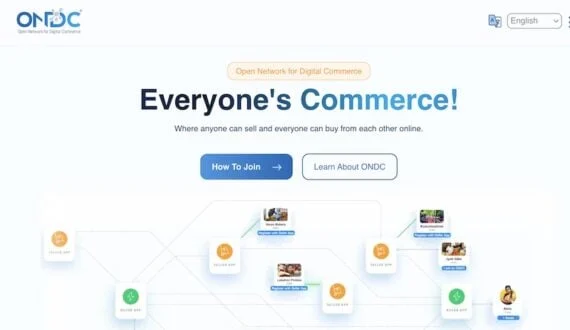
The operational model of ONDC is distinct. It functions through a network of buyer apps, seller apps, and logistics providers.
- Seller Apps: These applications enable merchants to onboard onto the ONDC network. Through seller apps, businesses can list their products, manage inventory, process orders, and connect with logistics partners. Examples of leading seller apps include Mystore, CostBo, and GoFrugal. These apps provide the digital tools necessary for even the smallest kirana to manage an online storefront.
- Buyer Apps: These are consumer-facing applications that allow shoppers to browse products and services available across the entire ONDC network, regardless of which seller app the merchant is using. Popular buyer apps include Paytm, Bajaj Finserve, and Magicpin. The critical innovation here is that a shopper using, for instance, the Paytm buyer app, can discover and purchase products from a merchant listed on the Mystore seller app, fostering true interoperability.
- Logistics and Payment Gateways: ONDC integrates various logistics service providers and payment gateways into its network, offering sellers and buyers a range of choices for delivery and transaction processing. This ensures that the entire commerce cycle, from discovery to delivery and payment, can be completed within the open network.
This architecture ensures that products listed by a merchant on one seller app are immediately discoverable and accessible to shoppers across all buyer apps integrated with ONDC. This vastly expands the reach of small businesses, allowing them to tap into a much larger customer base than they could independently or through a single marketplace.
Advantages for Merchants and Consumers
ONDC offers several compelling advantages that could significantly alter India’s e-commerce landscape:
- Lower Commission Fees: One of the most attractive features for merchants is the significantly lower commission structure. While traditional e-commerce marketplaces typically charge commissions ranging from 18% to 40% (depending on the product category), ONDC’s fees generally range from a much more modest 3% to 10%. This substantial reduction in overhead costs can dramatically improve profit margins for small businesses, making online selling more viable and sustainable.
- Greater Control and Transparency: Unlike proprietary platforms where algorithms often dictate product visibility and pricing, ONDC promises a transparent algorithm and non-discriminatory sorting. This means sellers have more control over their digital presence, product visibility, and customer interactions. Additionally, "portable ratings" allow merchants to carry their reputation across different buyer apps, fostering trust and fairness within the network. This empowers sellers by reducing their dependency on a single platform’s rules and preferences.
- Wider Reach for Kiranas: ONDC directly addresses the digital divide faced by kiranas. By providing an accessible, low-cost entry point into online commerce, it helps these traditional merchants overcome barriers such as technological literacy, initial investment in platform development, and marketing reach. They can leverage the collective network effect to compete more effectively with larger online retailers.
- Enhanced Consumer Choice: For consumers, ONDC translates to a broader selection of products and services, often from local businesses they might not otherwise discover online. This fosters local economies and provides consumers with competitive pricing and potentially faster local deliveries.
Government officials have consistently emphasized ONDC’s role in democratizing digital commerce, articulating a vision where every small business in India can participate in the digital economy on equitable terms. Small business owners, particularly in pilot cities, have expressed optimism about the platform’s potential to reduce their operational costs and expand their customer base without losing their independent identity.
Adoption and Growth Trajectory
Since its launch, ONDC has steadily gained traction across India, though its adoption has not yet reached the ubiquitous level of UPI. Initially rolled out in a few cities, the network has expanded to cover a growing number of urban centers and is steadily onboarding more sellers and buyers. While specific granular data on total transactions and merchant onboarding varies, reports indicate a consistent upward trend in daily order volumes, particularly in categories like food delivery and groceries.
The network spans a diverse range of categories, including retailers, logistics service providers, restaurants, and hotels. Categories such as grocery, food delivery, and home and kitchen items have seen faster scaling due to their higher order frequency and essential nature. Fashion, pharmaceuticals, and hospitality are also growing, albeit at a slower pace, as the network matures and infrastructure solidifies.
Crucially, ONDC is not exclusively for small and medium-sized businesses (SMBs). Larger local brands are increasingly utilizing it as an additional distribution channel, complementing their existing marketplace presence or direct-to-consumer (D2C) strategies. Furthermore, foreign companies that comply with India’s regulatory framework can also access the ONDC seller app ecosystem. Several prominent international brands, including Red Bull, Unilever, Nestle, PepsiCo, Procter & Gamble, L’Oréal, and Johnson & Johnson, are already leveraging ONDC. Many of these global food and consumer goods brands, already integrated with India’s burgeoning quick commerce platforms like Blinkit, Swiggy Instamart, and Zepto, find accessing ONDC to be a minimal additional cost and a strategic avenue for broader market penetration.
Challenges and Future Outlook
Despite its promising trajectory and innovative design, ONDC faces several significant challenges in achieving its ambitious goals:
- Mass Merchant Onboarding: The sheer scale of onboarding millions of kiranas across the country presents a formidable task, requiring extensive digital literacy initiatives, robust technological support, and localized training. Many small merchants may lack the digital skills or resources to effectively manage an online store, even with simplified apps.
- Logistics and Fulfillment: Ensuring efficient and reliable logistics and last-mile delivery across a decentralized network, especially in diverse geographical terrains, will be critical. While ONDC integrates logistics providers, coordinating them effectively for seamless fulfillment remains a complex operational challenge.
- Quality Control and Dispute Resolution: In an open network, maintaining consistent product quality, ensuring service standards, and establishing effective mechanisms for dispute resolution will be crucial for building consumer trust and preventing fraud.
- Achieving UPI-level Scale and User Stickiness: While conceptually sound, replicating the phenomenal user adoption and stickiness of UPI for a transactional commerce network will require sustained effort, aggressive marketing, and continuous user experience improvements.
- Competition from Established Players: ONDC operates in a market dominated by well-entrenched e-commerce giants. While its model is different, it will still need to demonstrate superior value and efficiency to attract and retain both merchants and consumers who are accustomed to existing platforms.
Despite these challenges, ONDC holds immense potential to fundamentally reshape India’s e-commerce landscape. Analysts suggest that if successful, it could create a more equitable, competitive, and inclusive digital economy, serving as a global model for public digital infrastructure in commerce. Its success could not only empower millions of small businesses but also spur innovation in logistics, payments, and consumer-facing applications within the network. The government’s continued focus on building and nurturing such digital public goods signals a long-term commitment to a digitally empowered India.
Foreign Entry and Regulatory Considerations
For foreign brands eyeing the Indian market, ONDC represents a new and potentially lucrative channel. However, it is imperative for these brands to first thoroughly understand India’s complex regulatory environment. As previously detailed, India’s e-commerce policies include specific norms regarding foreign investment, sourcing, and operational models for marketplaces. Foreign companies must ensure full compliance with these regulations before engaging with ONDC or any other selling option in India. The various paths to market entry – including traditional marketplaces, engaging with local distributors, establishing direct-to-consumer (D2C) sites, or pursuing cross-border e-commerce – each come with their own set of compliance requirements and strategic considerations. ONDC adds another layer of opportunity, particularly for brands looking for a lower-cost, broader-reach distribution channel that is aligned with India’s vision of democratized digital commerce. Its open architecture could allow foreign brands to integrate more flexibly into the Indian digital ecosystem, provided they navigate the regulatory landscape adeptly.