Introducing Amazon CloudWatch Omni: A Unified AI-Powered Observability Experience for Modern Engineering Teams

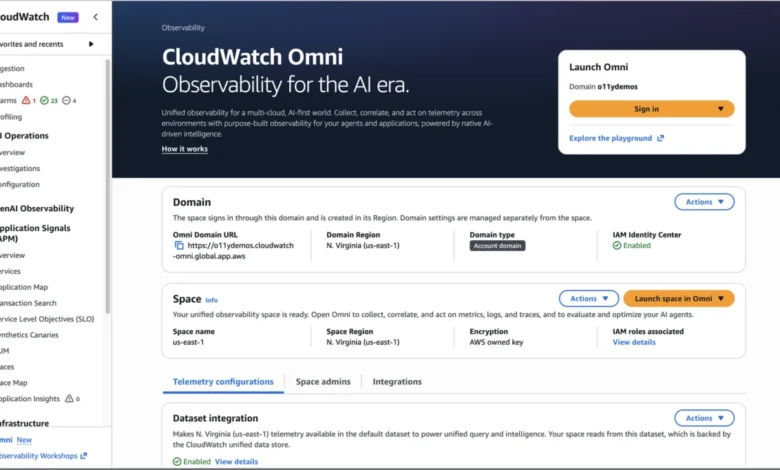
Amazon Web Services (AWS) has officially launched Amazon CloudWatch Omni, a transformative observability platform designed to unify the monitoring of traditional software applications and emerging generative AI agentic workloads. This new offering shifts the paradigm of system monitoring from fragmented infrastructure-level metrics to an application-centric, collaborative workspace. By integrating with existing OpenTelemetry standards and leveraging the Amazon DevOps Agent, the service aims to reduce the "mean time to resolution" (MTTR) that has long plagued DevOps and Site Reliability Engineering (SRE) teams.
The Evolution of Observability Challenges
For the past decade, the rapid adoption of microservices, serverless functions, and distributed cloud architectures has created a significant "observability tax" on engineering departments. Research from industry analysts suggests that SRE teams spend nearly 40% of their working hours manually maintaining dashboards, configuring threshold alerts, and navigating between disparate monitoring tools during incident response.
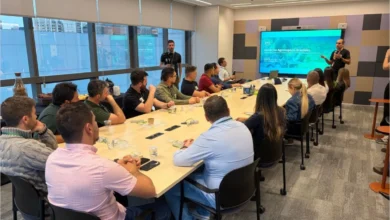
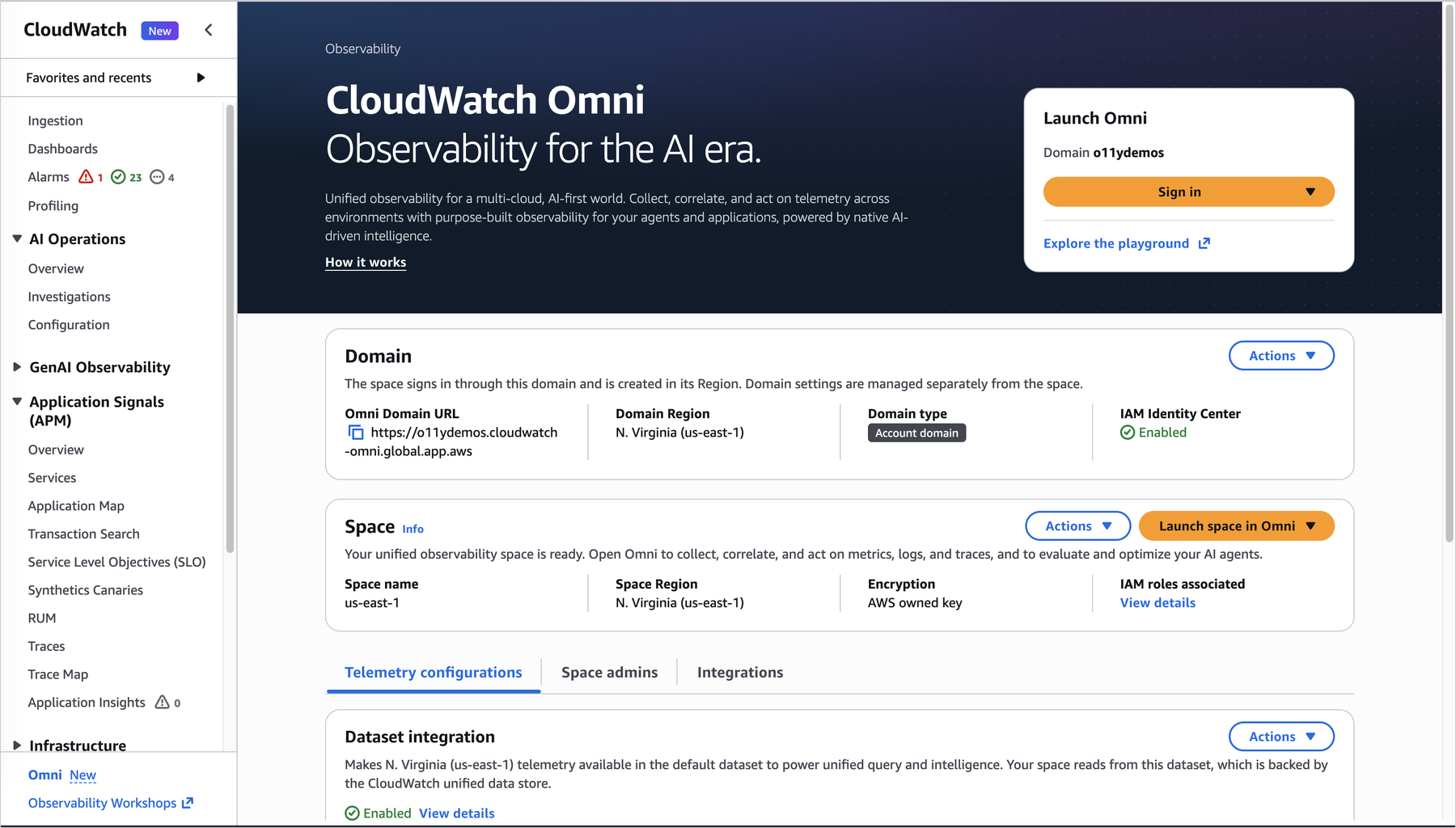
The traditional workflow—often characterized by siloed information—frequently results in critical context being lost as an issue moves across organizational boundaries. When an application fails, developers, database administrators, and SREs often find themselves analyzing different data sources, leading to miscommunication and delayed mitigation. CloudWatch Omni is designed to dissolve these silos by providing a single, enterprise-ready portal that operates independently of the standard AWS Management Console, using established corporate identity providers for secure access.
Core Architecture and Technical Integration
At its technical foundation, CloudWatch Omni is built on the OpenTelemetry (OTel) framework. This is a critical design choice, as it ensures that organizations do not need to re-architect their existing logging or tracing pipelines. Telemetry data currently flowing into Amazon CloudWatch is automatically surfaced within Omni. For non-AWS workloads, the platform utilizes an OpenTelemetry Protocol (OTLP) endpoint, allowing for a seamless ingestion of data from on-premises servers, edge devices, or multi-cloud environments.
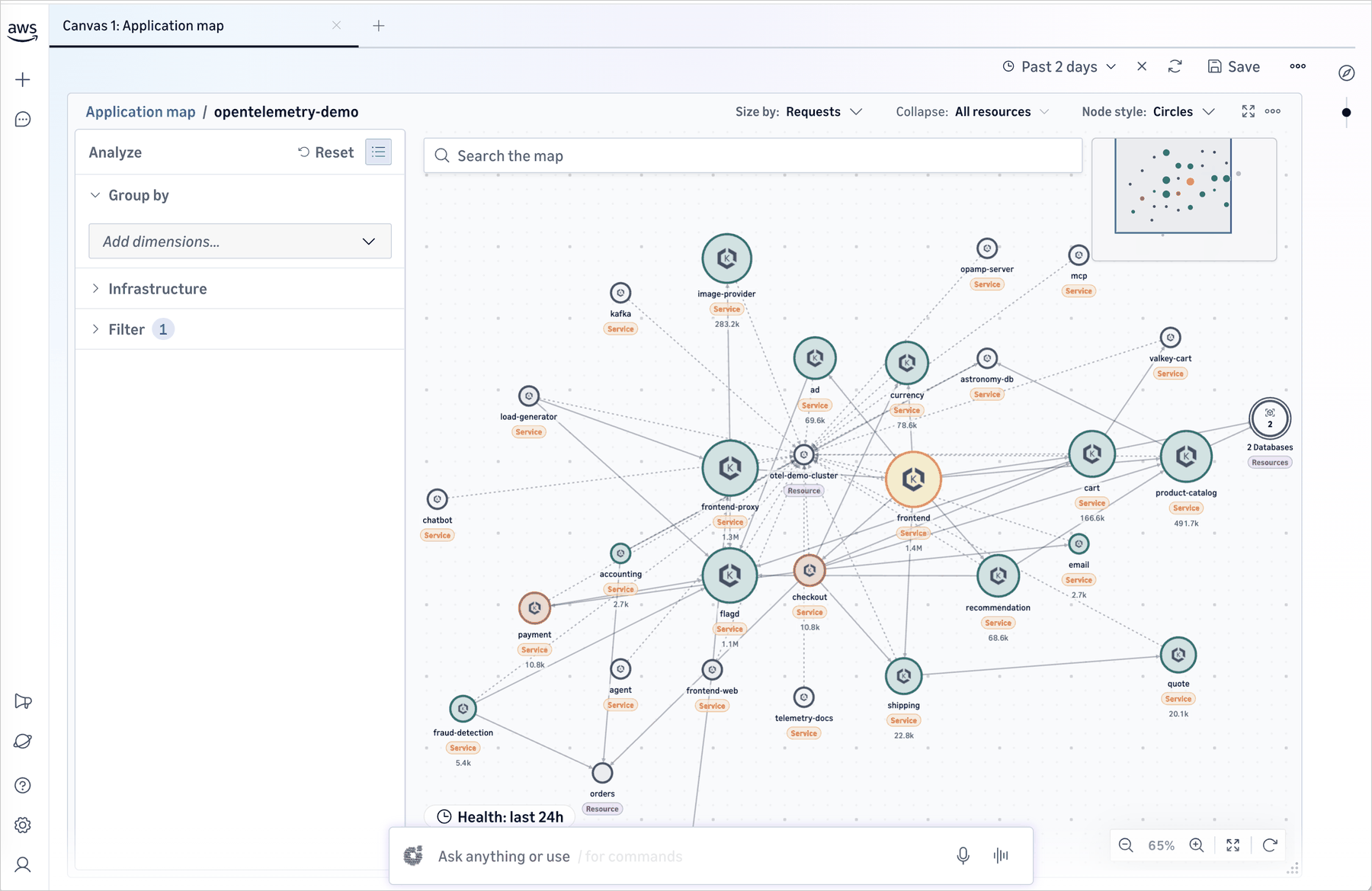
The platform introduces the concept of a "Space," a dedicated workspace where a specific team can aggregate the applications they own. Within this space, the system automatically discovers services and maps dependencies without requiring manual configuration. By leveraging AWS Config and existing telemetry, Omni renders a real-time topology map, allowing engineers to visualize how a failure in a downstream payment gateway, for instance, might impact a frontend checkout service.

The Role of Amazon DevOps Agent
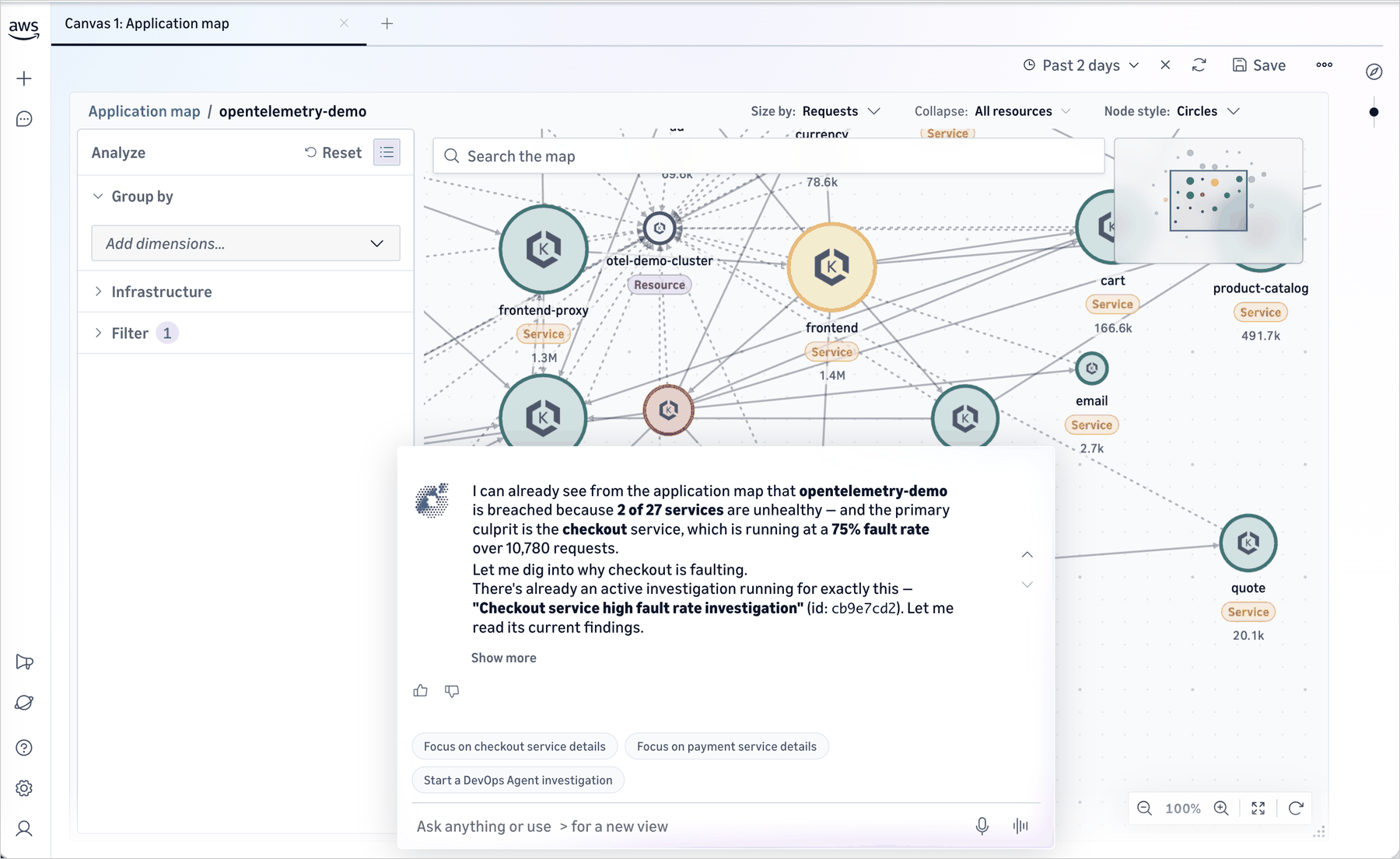
A significant component of the Omni experience is the integration of the Amazon DevOps Agent. This AI-powered assistant functions as a collaborator within the investigation session rather than merely a diagnostic tool. Unlike generic LLM-based assistants, the DevOps Agent is "grounded" in the organization’s specific telemetry data.
During an incident, the agent performs three primary functions:
- Correlation: It automatically scans logs, metrics, and traces to identify connections between seemingly unrelated events, such as a recent deployment and a spike in API latency.
- Contextual Analysis: It maps the path of a request through the dependency graph, highlighting the exact node where a failure originated.
- Historical Documentation: It maintains a comprehensive record of the investigation session, which can serve as a post-incident report, effectively eliminating the need for manual write-ups following an outage.
Incident Workflow: A Practical Application
To understand the utility of CloudWatch Omni, consider a common production incident: an elevated error rate in a high-traffic checkout service. In a legacy environment, the on-call engineer would likely spend several minutes searching for recent deployments, checking downstream service health, and verifying database connection pools.
In the Omni environment, the investigation begins with a pre-loaded session. The interface presents the service topology, highlights the specific deployment that occurred ten minutes prior to the error spike, and shows the DevOps Agent’s initial findings. If the issue is complex, the engineer can invite a specialist from another team to the same session. Because the session state is preserved, the incoming specialist has immediate access to all previously performed analysis, trace views, and the agent’s findings. This continuity is designed to reduce the "hand-off" friction that typically occurs during escalations.
Strategic Implications for Enterprises
The introduction of CloudWatch Omni signals a broader shift in the observability market toward "AI-native" workflows. By removing the requirement for AWS Console access, AWS is positioning Omni as a tool that can be used by non-AWS specialists, such as product managers and application developers who might not have deep infrastructure expertise.
Industry observers note that this move directly addresses the "dashboard fatigue" prevalent in large-scale enterprises. By shifting focus from static metrics to dynamic, AI-assisted investigation, companies can move toward "service-level objective" (SLO) monitoring. Instead of setting thousands of individual alarms—many of which result in alert fatigue—teams can define high-level targets like latency budgets and error rate thresholds, letting the system handle the underlying complexity.
Implementation and Adoption
The deployment process for CloudWatch Omni is designed to be low-friction. For existing AWS customers, the service is accessible directly from the CloudWatch console. The setup involves:
- Identity Integration: Connecting the organization’s identity provider (e.g., Microsoft Entra ID, Okta) via AWS IAM Identity Center.
- Space Creation: Grouping relevant applications and telemetry into dedicated team-based workspaces.
- Automated Discovery: Allowing the system to scan the environment to generate the initial service map.
For organizations with multi-cloud requirements, CloudWatch Omni offers connectors that integrate telemetry from external environments into the same central dashboard, ensuring that the "single pane of glass" philosophy holds true even for hybrid infrastructure.
Addressing the Generative AI Workload
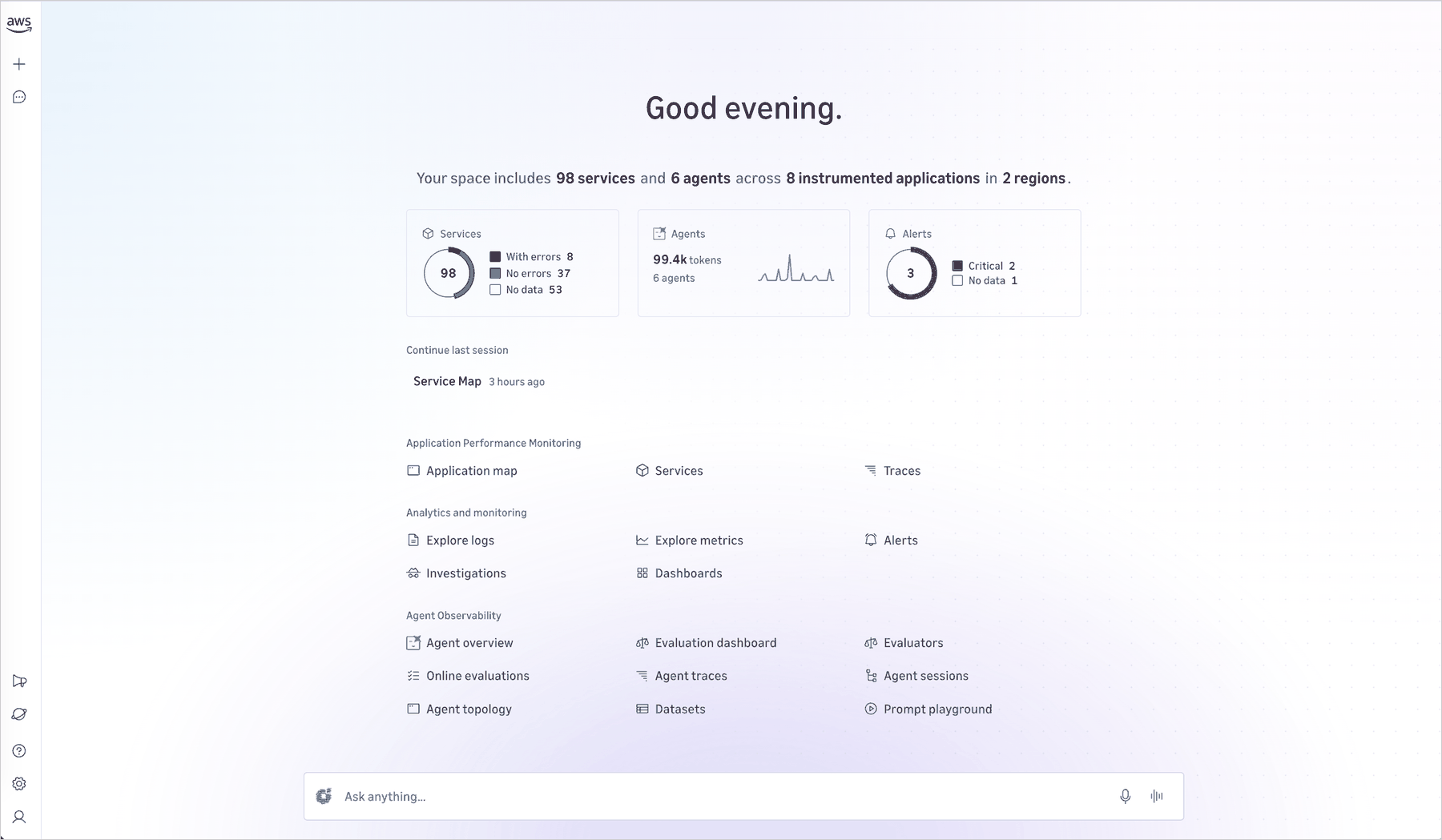
The platform is also specifically optimized for the rise of generative AI. Because AI agents often operate with non-deterministic behavior, observing them requires more than standard request-response tracing. CloudWatch Omni provides specific capabilities for AI agent observability, including trace exploration for LLM invocations, evaluation frameworks for monitoring output quality, and real-time monitoring of agent-specific metrics. This dual-focus on both standard software and AI workloads makes Omni a unique offering in the current landscape of cloud-native tooling.
Market Context and Future Outlook
As of September 2026, the observability market continues to be highly competitive, with established players like Datadog, New Relic, and Dynatrace facing increased pressure from cloud providers. By integrating advanced AI capabilities directly into the monitoring layer, AWS is raising the bar for what constitutes a standard observability platform.
The emphasis on "no re-configuration" is a calculated strategic move. By minimizing the migration effort for existing CloudWatch users, AWS effectively lowers the barrier to entry for its new AI-powered features. Future updates to the platform are expected to further refine the Amazon DevOps Agent’s ability to perform automated mitigation, such as triggering rolling back deployments or adjusting auto-scaling groups based on real-time diagnostic outcomes.
Conclusion and Accessibility
Amazon CloudWatch Omni is available immediately to all existing CloudWatch customers. Pricing is aligned with the existing consumption-based model of AWS, though users are encouraged to visit the official CloudWatch pricing page for specific regional breakdowns. The service represents a significant step toward the "self-healing" infrastructure of the future, where the primary role of the human engineer is not to manually parse data, but to review and approve the strategic insights provided by intelligent, automated systems.
For organizations looking to streamline their incident response and improve the developer experience, the transition to an application-centric observability model via Omni may provide the necessary leverage to maintain stability as their systems grow in complexity. As engineering teams continue to grapple with the demands of high-scale cloud environments, the ability to unify data, AI, and team collaboration into a single, cohesive workflow will likely become a competitive necessity.
Related posts: