U.S. Intelligence Memo Alleges Chinese State Security Recruited Executive to Target Nvidia CEO Jensen Huang

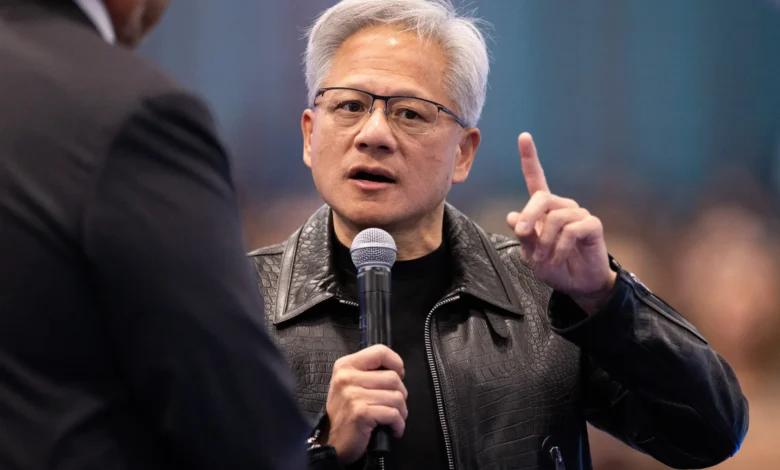
An intelligence memo circulated earlier this year has ignited intense scrutiny across the technology and geopolitical landscapes, alleging that technology executive Alice Huang was recruited by China’s Ministry of State Security to act as a spy targeting Nvidia Chief Executive Officer Jensen Huang. The explosive document, which has since drawn the attention of major international news organizations, underscores the escalating espionage concerns surrounding critical semiconductor supply chains, artificial intelligence hardware dominance, and the high-stakes technological rivalry between the United States and China.
The existence of the memo first came to public light following investigative reporting by The New York Times, which revealed that U.S. intelligence assessments flagged Jensen Huang as a deliberate target of Chinese intelligence operations. Shortly thereafter, The Financial Times published additional details from the document, asserting that the alleged espionage effort involved a personal dimension, claiming that Jensen Huang had maintained a romantic relationship with Alice Huang, an executive associated with Megaspeed, a Singapore-based technology firm.
The disclosures arrive at a time of unprecedented sensitivity for Nvidia, whose advanced graphics processing units (GPUs) serve as the indispensable backbone for the global artificial intelligence boom. As the primary enabler of modern generative AI models, Nvidia and its visionary leader have found themselves at the epicenter of both commercial triumph and fierce geopolitical competition.
Context and Intelligence Background
The allegations detailed in the intelligence memo highlight a sophisticated shift in how foreign intelligence agencies operate within the modern tech ecosystem. Rather than relying solely on traditional cyber intrusions or conventional industrial espionage, state-backed actors increasingly target key corporate leadership through human intelligence (HUMINT) operations.
Jensen Huang, who co-founded Nvidia in 1993 and has steered it to become one of the most valuable corporations in the world, represents a prime target for foreign states seeking insight into advanced semiconductor roadmaps, supply chain dependencies, and U.S. technological capabilities. The involvement of Alice Huang—an executive operating out of Singapore, a critical international trade and technology hub—illustrates the transnational complexity of contemporary corporate networks and the fluid movement of executives across international boundaries.
Megaspeed, the Singapore-based entity where Alice Huang held an executive role, operates within a region that frequently serves as a bridge for commerce between Western tech giants and Asian markets. However, the intelligence assessment suggests that these commercial bridges can be exploited by foreign intelligence services to cultivate high-level access and extract sensitive strategic intelligence.
Corporate and Official Responses
In the wake of the media reports, representatives for Nvidia have moved quickly to address the implications of the memo while managing the company’s public relations narrative. A spokesperson for Nvidia addressed The New York Times, characterizing Jensen Huang’s interactions with Alice Huang as "not unusual" given his extensive professional engagements across the global technology sector. Furthermore, the spokesperson firmly emphasized that Nvidia maintains rigorous compliance protocols and does not share classified or proprietary proprietary information with its customers or external associates.
Regarding the broader context of export controls and international sales, the Nvidia representative reiterated the company’s commitment to compliance with U.S. federal regulations. "We sell the first, best and most of our technology in America," the spokesperson stated, highlighting Nvidia’s alignment with national security directives designed to keep cutting-edge hardware within domestic borders or allied jurisdictions.

The Broader Ecosystem: Front Companies and Export Controls
The allegations surrounding the intelligence memo do not exist in a vacuum; they coincide with broader regulatory challenges regarding how Nvidia chips reach restricted markets. In a separate investigative report published by The New York Times, journalists scrutinized New Matrix, a Chinese corporate entity that had received authorization from the U.S. Commerce Department to purchase advanced Nvidia semiconductors.
However, when reporters visited the official office address registered by New Matrix, they discovered little more than a vacant commercial space described as "a hollow gray shell." This disquieting discovery has raised alarm bells among lawmakers and regulatory watchdogs, amplifying fears that authorized entities may function as proxy front companies for blacklisted private equity firms or sanctioned military-industrial concerns in China.
The intersection of the intelligence memo regarding Jensen Huang and the scrutiny over front companies like New Matrix paints a comprehensive picture of the immense pressure facing the semiconductor industry. As the U.S. government implements stringent export controls to restrict Beijing’s access to advanced artificial intelligence chips, foreign intelligence services and intermediary commercial actors are reportedly deploying multi-pronged strategies—ranging from human intelligence cultivation to shell corporations—to bypass these barriers.
Implications for the Global Technology Sector
The convergence of corporate espionage allegations and regulatory loopholes carries profound implications for the semiconductor industry and multinational technology firms operating at the geopolitical fault lines.
First, the incident forces technology executives and corporate boards to re-evaluate their security postures. High-profile leaders like Jensen Huang are increasingly treated not merely as corporate innovators, but as geopolitical assets whose personal security and professional networks require heightened vigilance against foreign state interference.
Second, the revelations are likely to prompt renewed scrutiny from U.S. national security agencies, including the Federal Bureau of Investigation (FBI) and the Department of Commerce, regarding how foreign entities infiltrate or mimic legitimate commercial supply chains. The discovery of hollowed-out corporate fronts authorized to receive advanced hardware suggests that existing vetting mechanisms for export licenses may require more rigorous on-the-ground verification.
Finally, the situation threatens to intensify regulatory frictions between Washington and Beijing. As technological supremacy becomes synonymous with national security power, incidents involving alleged intelligence targeting of critical CEOs will only harden political resolve in the United States to decouple critical supply chains and enforce even stricter compliance frameworks on artificial intelligence hardware developers.
As investigations continue and regulatory bodies weigh the integrity of current export control regimes, the unfolding narrative surrounding Nvidia, its leadership, and its international network serves as a stark reminder of the high-stakes environment defining the modern digital age.