The Soaring Costs and Rising Friction of the AI Power Hungry Data Center Gold Rush

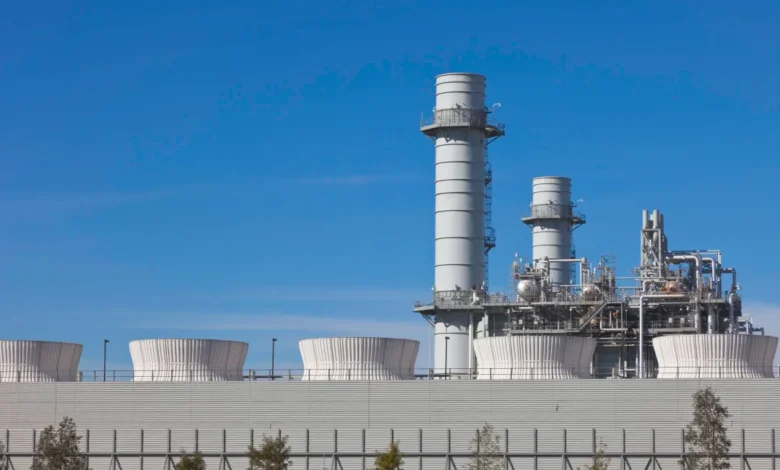
The massive expansion of artificial intelligence infrastructure is hitting a significant financial and logistical wall, as the race to secure reliable electricity leads tech giants toward an increasingly expensive and contentious reliance on natural gas. For years, companies like Microsoft, Meta, and Amazon favored renewable energy credits and grid-connected power purchase agreements (PPAs) to meet their sustainability goals. However, the sheer energy requirements of modern AI models—which demand constant, high-density power—have forced a pivot toward "behind-the-meter" fossil fuel generation. This shift has not only triggered public backlash but has also revealed a harsh economic reality: the cost of building the infrastructure required to power this digital revolution is ballooning at an unsustainable rate.
According to a comprehensive new report from BloombergNEF, the capital expenditure required to construct a new combined cycle gas turbine (CCGT) power plant has surged by 66% over the last two years. In 2023, the industry standard for such construction hovered at roughly $1,500 per kilowatt of generating capacity. By the end of last year, that figure had climbed to $2,157 per kilowatt. Beyond the raw financial outlay, the timeline for project delivery has also suffered, with the average completion time for a new facility stretching by 23%. This delay is compounded by a global shortage of key components, specifically the heavy-duty gas turbines that serve as the engines of these facilities.
The Anatomy of a Supply Chain Crisis
The current crisis in power plant construction is driven by a convergence of high demand and manufacturing limitations. Gas turbines represent up to 30% of the total cost of a new power plant, and their market value has skyrocketed. By the end of this year, industry analysts at Wood Mackenzie project that prices for these essential components will have increased by 195% compared to 2019 levels.
The manufacturing process for these turbines is notoriously complex. It involves specialized metallurgical engineering and precision fabrication that does not lend itself to rapid scaling. As tech companies scramble to reserve capacity, manufacturers are reporting order backlogs that extend well into the early 2030s. This creates a bottleneck that threatens to derail the aggressive deployment schedules of data center operators. Because these components are essential for the conversion of natural gas into the consistent baseload power that AI systems require, the current supply-demand mismatch acts as a de facto tax on the entire artificial intelligence sector.
Explosive Growth in Energy Demand
To understand why tech companies are so desperate for gas-fired power, one must look at the trajectory of data center energy consumption. The energy intensity of the next generation of AI is orders of magnitude higher than the traditional web-hosting facilities of the last decade. Current data center energy demand sits at approximately 40 gigawatts. Projections from BloombergNEF indicate that this figure is expected to surge to 106 gigawatts by 2035—a nearly 300% increase in just over a decade.
The scale of individual facilities is also changing. Currently, only about 10% of global data centers are classified as "large," defined as 50 megawatts or more. However, the design phase of the next generation of infrastructure suggests that the average data center will soon exceed 100 megawatts. This shift toward "hyperscale" facilities means that local utility grids are frequently unable to provide the necessary power without massive, multi-year infrastructure overhauls. Consequently, the Trump administration has encouraged data center operators to "bring their own power," effectively shifting the burden of generation from the public utility to the private enterprise.

Public Backlash and Regulatory Pressure
This "bring your own power" model is proving to be a lightning rod for public opposition. In many regions, the construction of private power plants has sparked intense local resistance. Residents often fear the environmental impacts of localized gas combustion, as well as the diversion of local resources to support global tech infrastructure that offers little direct benefit to the local community.
Furthermore, the economic model of utilities often involves passing the costs of grid upgrades—made necessary by these massive new data centers—onto the general public. When a utility spends billions to modernize transmission lines to accommodate a new AI server farm, those costs are typically socialized across the entire ratepayer base. As energy bills for average households rise in tandem with the rapid expansion of AI, the political and social appetite for supporting new data center developments is rapidly souring. This has created a "NIMBY" (Not In My Backyard) sentiment that is beginning to influence local planning commissions and zoning boards, further complicating the path to site development.
The Renewable Alternative: Google’s Pivot
Not every tech leader is convinced that natural gas is the only path forward. Google has emerged as a vocal proponent of a different strategy, emphasizing a combination of grid-connected renewables and long-duration energy storage. In March 2026, the company began outlining a new infrastructure playbook that prioritizes technologies like iron-air batteries, pioneered by firms such as Form Energy.
These storage solutions are designed to release electricity over the course of 100 hours, effectively bridging the intermittency gaps that have historically plagued solar and wind power. Unlike gas turbines, which are subject to the volatility of fossil fuel markets and supply chain constraints, solar panels and battery technologies have followed a steady, downward trend in costs. As the levelized cost of energy (LCOE) for renewables plus storage continues to drop, it is becoming an increasingly attractive, and perhaps more stable, alternative to the volatile gas market.
Chronology of the Power Dilemma
- 2019–2022: Tech companies rely heavily on power purchase agreements (PPAs) and renewable energy credits (RECs) to satisfy sustainability requirements, leveraging the existing grid.
- Late 2023: The rapid adoption of generative AI models creates a surge in data center power density requirements, exceeding the capacity of many legacy grid connections.
- 2024: The "bring your own power" strategy gains political momentum, encouraging tech firms to build captive power plants.
- Early 2025: Supply chain issues emerge in the power generation sector; gas turbine lead times begin to stretch significantly.
- Late 2025: BloombergNEF releases data showing a 66% spike in CCGT power plant construction costs.
- 2026: Public opposition to data center energy consumption peaks; major tech players begin to diverge in their energy strategies, with some leaning into gas and others experimenting with long-duration storage.
Implications and Economic Outlook
The implications of these rising costs are twofold. First, they act as a natural brake on the speed of AI deployment. If the cost of powering a server exceeds the profit margin of the AI services it provides, the expansion of that hardware will naturally slow. Second, it forces a reckoning regarding the true cost of "zero-carbon" or "sustainable" tech ambitions. If the current power grid cannot support the energy density required for AI, and if natural gas is the only immediate, scalable solution despite its rising costs and public opposition, then the entire industry faces a fundamental conflict between its environmental pledges and its operational requirements.
The transition to high-density, AI-driven computing is likely to be defined by a multi-year period of high energy prices and supply constraints. For companies that chose to double down on natural gas, the next few years will be a test of their financial reserves and their ability to navigate complex regulatory landscapes. For those, like Google, that are betting on long-duration storage and renewables, the goal is to bypass the fossil fuel trap entirely. Whether these alternative technologies can scale fast enough to meet the 106-gigawatt demand projected for 2035 remains the single most critical question facing the tech sector today.
As the industry continues to evolve, the narrative has shifted from one of limitless growth to one of constrained resources. The "love affair" with natural gas, once seen as a quick fix for a pressing infrastructure problem, is now looking like a precarious, expensive, and increasingly unpopular strategy. The path forward will likely require a hybrid approach—a delicate balancing act between the immediate, raw power of natural gas and the long-term, stable potential of emerging storage and renewable technologies. Regardless of the path chosen, the cost of the digital age is no longer just measured in hardware and software; it is being paid in megawatts, and the bill is coming due.