The Evolution of Big-Box Beauty: How Mass Retailers Are Reshaping the Personal Care Playbook

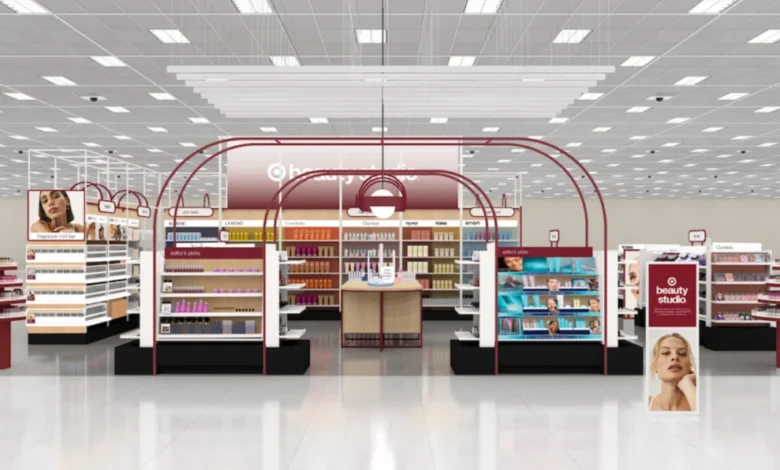
Mass-market retail heavyheads Target and Walmart are fundamentally transforming their beauty, wellness, and personal care aisles to compete directly with specialty powerhouses like Sephora and Ulta Beauty, as well as each other. This strategic pivot has created a massive ripple effect across the consumer packaged goods (CPG) landscape, forcing both multinational conglomerates and independent beauty labels to overhaul their traditional retail playbooks.
As physical retail aisles become increasingly competitive, brands are finding themselves compelled to elevate their visual aesthetics, rethink their distribution footprints, and reallocate their media budgets to align closely with the evolving priorities of their big-box partners. For brands that lack robust direct-to-consumer (DTC) digital infrastructure, mastering the mass retail environment is no longer just a luxury—it is an absolute operational necessity for driving sales volume and building brand equity on a national scale.
The Shift from Traditional Retail to Integrated Media Partnerships
For decades, the relationship between legacy CPG manufacturers and mass-market retailers was straightforward: brands supplied products, retailers provided shelf space, and consumers made transactions. Today, however, that transactional dynamic has evolved into a deeply integrated partnership where retail media networks (RMNs) play a pivotal role.
Veronique Mura, senior vice president and general manager of sun and skin at Edgewell Personal Care—whose brand portfolio includes household staples such as Hawaiian Tropic, Schick, and Wet Ones—highlights the critical nature of this shift.
"Except for a couple of our brands, we don’t have DTC," Mura explained. "Target and Walmart are very important to us, so we’re trying to adapt and work with those retailers from a footprint perspective—but they’re also media partners now, and that’s the big evolution."
With traditional digital advertising costs rising and consumer privacy regulations tightening, major retailers have turned their websites, apps, and in-store digital displays into lucrative media channels. For CPG brands operating on restrained marketing budgets, leveraging these retail media networks ensures that advertising dollars are directly tied to point-of-sale data.
"Retail media is a big part of what we are trying to do: always integrating our plans back into commerce," Mura noted. "With a smaller budget, that’s really important."
Elevating the Look and Feel of Mass-Market Aisles
Historically, mass-market retail beauty aisles were characterized by fluorescent lighting, utilitarian plastic shelving, and a heavy focus on functional utility over emotional branding. Specialty beauty stores, conversely, prioritized experiential merchandising, premium packaging, and curated brand storytelling.
As Target and Walmart aggressively upgrade their beauty departments—with Target famously partnering with Ulta Beauty for shop-in-shop concepts while simultaneously enhancing its proprietary beauty aisles—mass brands are realizing they can no longer afford to look utilitarian.
This modernization has driven companies like Edgewell to reposition legacy lines. Mura points to Hawaiian Tropic as a prime example of a brand breaking free from its historical pigeonholing.
"A lot of these big retailers are really attuned to beauty and wellness, and they’re really amping up the agenda here, so we’re looking at that," Mura said. "I very much see our Hawaiian Tropic brand as a beauty brand and not as a clinical SPF brand; it’s leaning into the territory of beauty."
To support this elevated positioning, brands are entirely rethinking their physical presentation on store shelves. Upgrading packaging materials, investing in higher-quality corrugated merchandising displays, and refining typography are becoming standard operational procedures for brands entering big-box footprints.
"We are exploring updates to our packaging across our brands," Mura added. "That’s something I’m always telling my team: Just because you’re a mass brand, it doesn’t mean you can’t look good." By commissioning superior materials for displays and structural packaging, brands are signaling to consumers that mass-market shopping can deliver a prestige unboxing experience.
The Independent Brand Dilemma: Balancing Big-Box Scale with Niche Identity
While multinational corporations navigate retail media networks and packaging overhauls, independent beauty brands face a distinct set of strategic challenges. The modernization of mass-market merchandising has introduced a new generation of buyers—younger, trend-aware, and digitally native—who are actively scouting for innovative indie brands to populate big-box shelves.
James Thomas, U.S. chief commercial and operations officer at No7 Beauty Company, emphasized the immense growth potential unlocked by aligning with mass retail giants. In an official statement, Thomas noted that No7 sees "tremendous opportunity for continued growth" at Walmart, adding that the retail giant is "uniquely positioned to help us reach new audiences and serve as a key growth driver for the brand."
However, entering the mass market is not without its operational hurdles. According to several independent beauty executives speaking on background, scaling up to meet the demands of national retail chains requires significant capital expenditure.
"Our channel focus is changing. We’re in Walmart now—we have an awesome Gen-Z buyer for Walmart now, and she rocks," shared the head of marketing for a growing independent beauty brand. "Plus, we’re in Publix now. We’re in places we didn’t think we would ever be because the innovation is there, and it’s changing how the shopper shops for your day-to-day stuff."
Despite the excitement of nationwide expansion, financial realities quickly set in. Securing prominent promotional real estate, such as holiday end caps or high-traffic front-of-store displays, often triggers bidding wars that smaller brands simply cannot afford.
Furthermore, expanding into big-box retailers can strain existing relationships with independent, "mom-and-pop" specialty stores. When indie brands land major contracts with national chains like Target, localized boutique owners frequently view the move as direct competition, occasionally dropping the brand in protest.
To mitigate this friction, indie brands are adopting nuanced distribution strategies. Many are reserving their core, best-selling product lines for mass-market retailers while offering exclusive, seasonal, or experimental product lines exclusively to their independent boutique partners. This dual-track approach allows brands to capture the massive sales volume of big-box stores without alienating the foundational retail partners that helped launch their businesses.
The Halo Effect: How Mass Retail Exposure Lifts the Entire Ecosystem
Far from cannibalizing niche sales, industry experts argue that a successful big-box rollout can create a powerful "halo effect" that ultimately benefits a brand’s entire retail ecosystem.
An executive from a prominent subscription-based beauty box company explained that entering mass retail doors fundamentally alters consumer perception. "Entering mass doors makes a brand feel more established," she noted, pointing out that national visibility builds baseline consumer trust. When shoppers discover a brand on the shelves of Target or Walmart, that awareness frequently trickles down, driving increased web traffic and higher sales velocities at smaller, independent boutiques.
Recognizing the immense potential of this dynamic, retailers and aggregators are finding innovative ways to bridge the gap between emerging indie labels and risk-averse mass-market buyers. One such strategy involves curated product collections and multi-brand formats that lower the barrier to entry for shoppers.
"Our company is showing up in Walmart this holiday season with a mystery box of beauty products," the beauty box executive revealed. "That’s because the reality is that they want more beauty brands, but not every beauty brand is ready to enter that space. We’re sort of the umbrella that keeps them safe but also allows the retailer to have these more interesting curations within the shop."
These curated formats serve as an incubator within the mass retail environment. They allow major retailers to test consumer appetite for emerging indie trends without committing to full-scale permanent shelf distribution for unproven labels. For the brands involved, it provides invaluable exposure to millions of daily shoppers, serving as a stepping stone toward a permanent, standalone presence in the beauty aisle.
Background and Industry Context
The rapid transformation of big-box beauty aisles did not happen overnight. Over the past decade, the beauty and personal care sector has experienced a profound democratization driven by social media platforms like TikTok and Instagram. Consumers—particularly Gen-Z and Millennial cohorts—have grown accustomed to discovering indie brands online, eroding the long-held dominance legacy conglomerates once enjoyed through traditional television and print advertising.
Simultaneously, traditional mass-market retailers suffered declining foot traffic as e-commerce giants like Amazon captured a larger share of household goods purchases. To combat this trend, brick-and-mortar giants realized they needed to transform their stores into experiential destinations. Beauty and wellness emerged as the ideal categories to drive this transformation, offering high profit margins, frequent repeat purchase cycles, and strong visual appeal.
Target’s strategic partnership with Ulta Beauty, initiated in 2021, served as a watershed moment for the industry. By embedding prestige beauty experiences within a mass-market footprint, Target proved that consumers were willing to purchase prestige and mass products under the same roof. Walmart quickly responded by upgrading its own beauty aisles, revamping its digital beauty ecosystem, and actively courting trend-driven independent brands.
Broader Implications and Future Outlook
As the battle for beauty dominance between mass-market heavyweights intensifies, the implications for the broader retail and CPG landscape are profound.
For major consumer goods manufacturers, success will increasingly depend on agility. Companies can no longer rely solely on brand heritage or massive marketing budgets; they must actively integrate their supply chains and promotional calendars with the retail media networks of their distribution partners. The traditional wall separating product manufacturing from retail media execution is rapidly dissolving.
For independent brands, the mass-market gold rush presents a high-stakes balancing act. While the allure of national scale and the associated brand halo are undeniable, indie founders must carefully weigh the capital requirements of retail competition against the risk of alienating core specialty accounts. Innovative distribution models—such as curated multi-brand boxes and exclusive tiering—will likely become standard strategies for brands looking to scale sustainably.
Ultimately, the modernization of the mass-market beauty aisle represents a win-for-all proposition that elevates consumer expectations. As big-box stores continue to blur the lines between mass and prestige, shoppers are gaining access to higher-quality formulations, elevated packaging designs, and more engaging retail experiences—all within the convenient aisles of their local neighborhood supercenter.