Macy’s Capitalizes on Tariff Refunds to Accelerate Flagship Revamp Amid Positive Q2 Earnings

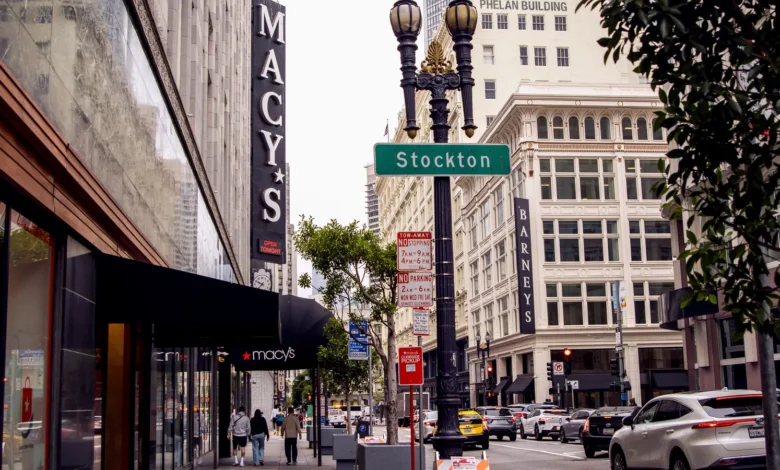
Macy’s Inc. is charting a distinct path for its unexpected financial windfalls, choosing to pour a lucrative $116 million in tariff refunds directly into long-term strategic growth rather than engaging in a destructive margin-eroding price war. As major retailers across the consumer goods and softlines sectors increasingly route regulatory refunds into aggressive short-term price cuts—fearing a consumer pullback in an intensely competitive marketplace—Macy’s leadership has elected a different route. The department store giant plans to deploy the capital to modernize its physical storefronts ahead of schedule, insulate operations against supply chain and fuel cost volatilities, and build out its brand equity, marking a critical philosophical pivot for a legacy retailer long plagued by perception struggles.
This strategic choice arrives on the heels of a surprisingly resilient second-quarter earnings report. For years, financial analysts approached earnings day for Macy’s with cautious trepidation, routinely bracing for tales of steady decline and foot-traffic erosion. Yet, the narrative surrounding the historic department store chain has undergone a remarkable metamorphosis. The latest quarterly metrics reveal a company finding its footing, stringing together a sequence of positive indicators that demonstrate genuine operational momentum across its diverse retail portfolio, which spans luxury, department store, and off-price channels.
A Sustained Turnaround Strategy Yields Results
The second-quarter financial disclosures highlighted a streak that would have seemed improbable just a few years ago. Macy’s Inc. CEO Tony Spring confirmed to analysts and investors that the company has now delivered six consecutive quarters of better-than-expected financial results. More impressively, the retailer has notched five straight quarters of comparable sales growth and two consecutive quarters of overall net sales growth.
Crucially, average unit retail prices have risen across the enterprise. This pricing power is not an accident of inflation, but rather the direct result of a calculated merchandising overhaul. Executive leadership has methodically replaced underperforming inventory with relevant, high-demand national brands, carefully curated private labels, and fresh product assortments that resonate with contemporary shoppers.
This cross-portfolio strength has been a crucial stabilizer. While the namesake Macy’s banner has historically been viewed as a complex work in progress requiring continuous restructuring, the company’s broader ecosystem—most notably the upscale department store Bloomingdale’s and the specialized beauty retailer Bluemercury—has consistently performed well. Together, these complementary banners provide a sturdy multibrand, multicategory, and multichannel foundation, insulating the parent corporation from localized retail downturns and capturing consumers across vastly different income brackets.
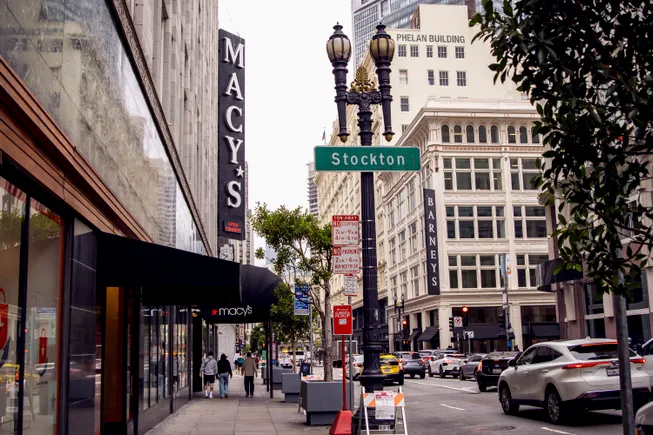
Retail analysts have taken note of the culture shift within the organization. Neil Saunders, managing director at GlobalData, pointed out the stark contrast between historical sentiment and current operational realities in emailed commentary following the earnings release. Saunders emphasized that the absence of gloom on Macy’s earnings day is, in its own right, a major victory and a clear testament to the diligent execution of the retailer’s transformation strategy.
Similarly, Suzy Davidkhanian, vice president at Emarketer, observed that the continuous comparable sales growth proves Macy’s is successfully cultivating momentum independent of Bloomingdale’s and Bluemercury’s upscale halo. Davidkhanian noted that today’s intentional, value-conscious shopper demands a compelling reason to make a purchase, and Macy’s strategic mix of product newness, targeted national brands, and disciplined operational execution is successfully driving customer demand.
Strategic Deployment of Tariff Refunds
The cornerstone of Macy’s recent financial announcements involves the full collection of $116 million in anticipated tariff refunds. Rather than following the playbook of numerous competitors who are instantly passing similar windfalls down to consumers via aggressive markdowns—a trend market observers have labeled a potential "race to the bottom" in the softlines and apparel sectors—Macy’s has engineered a disciplined capital allocation plan.
Of the total $116 million recovered, approximately $20 million will flow directly into reported earnings to bolster immediate bottom-line performance. The remaining majority of the funds will be sequestered for transformative investments. Chief among these priorities is the acceleration of the company’s ongoing "Reimagine" transformation agenda. This means that Macy’s will revamp more department stores, and do so more quickly, than originally scheduled in its corporate roadmap.
Furthermore, a portion of the capital will be utilized to mitigate fuel volatility and protect supply chain margins against unpredictable macroeconomic shifts. In a minor nod to pricing pressures, a strictly limited fraction of the refund capital will be funneled into selective price adjustments on slower-moving or highly elastic categories, specifically fine jewelry and home furnishings, where strategic price optimization can drive volume without sparking a broader margin-destroying discount cycle.
Wall Street has largely applauded this conservative, forward-looking deployment of capital. In a research note issued immediately following the earnings presentation, a team of Evercore ISI analysts led by Michael Binetti endorsed management’s restraint. Binetti warned that reinvesting tariff windfalls into sweeping, indiscriminate price cuts risks triggering destructive price competition across the entire softlines landscape during the fall and upcoming holiday shopping seasons. Consequently, the analyst firm explicitly praised Macy’s decision to prioritize its capital expenditure agenda and pull forward structural store revamps.

Historical Context and the Road to Recovery
To fully understand the significance of Macy’s current trajectory, one must evaluate the arduous chronology of its corporate turnaround. For over a decade, traditional department stores faced a multi-pronged crisis characterized by the relentless ascent of e-commerce giants, changing consumer preferences favoring experiential spending over apparel, and the slow erosion of traditional mall traffic.
Macy’s, as the nation’s premier department store operator, bore the brunt of these secular headwinds. The company cycled through various strategic initiatives, leadership changes, and restructuring programs under titles like "North Star" and various fleet rationalization plans. These programs typically involved painful choices, including the large-scale closure of underperforming stores, workforce reductions, and attempts to right-size inventory levels.
By 2024 and 2025, however, the strategy began to crystallize around a more focused philosophy: closing weaker mall-based locations while aggressively upgrading flagship destinations, scaling the high-margin Bluemercury beauty footprint, expanding the off-price concept known as Macy’s Backstage, and investing heavily in digital capabilities and omnichannel fulfillment.
The implementation of these initiatives coincided with broader macroeconomic volatility, including shifting tariff policies and regulatory disputes that temporarily impacted corporate cash flows. The successful recovery of the $116 million tariff refund represents a vindication of the company’s legal and financial compliance strategies during a period of complex international trade friction. By channeling these recovered funds into the physical and digital transformation of the remaining store fleet, management is attempting to break the historical cycle of deferred maintenance that plagued department store chains for decades.
Implications for the Upcoming Holiday Season
As Macy’s looks toward the remainder of the fiscal year, the convergence of steady comparable sales growth, a revitalized brand assortment, and a cash infusion from regulatory refunds positions the retailer advantageously for the critical holiday shopping window.
The fourth quarter is historically the make-or-break period for department stores, which traditionally capture a disproportionate share of their annual revenue and profitability during the autumn and winter holiday season. Adding to the cultural significance of the upcoming months, Macy’s is preparing to host its landmark 100th Thanksgiving Day Parade this year. CEO Tony Spring noted during the earnings call that the milestone event is fast approaching, serving as a powerful national marketing platform that reinforces the brand’s cultural ubiquity just as holiday shopping reaches its fever pitch.

Emarketer’s Davidkhanian emphasized that Macy’s current operational discipline and improving product relevance bode exceptionally well for the holiday season, noting that department stores have historically excelled as primary gift destinations when they successfully combine tradition with modern merchandise curation.
Despite these positive tailwinds, executive leadership remains realistic about the challenges ahead. The namesake Macy’s banner is still widely characterized internally and externally as a work in progress. While the bleeding has stopped and positive comparable sales indicate structural stabilization, the long-term viability of the traditional urban and suburban department store model requires continuous innovation, superior customer service, and flawless execution during peak volume periods.
By resisting the temptation to squander its tariff refunds on short-term promotional discounting, Macy’s has signaled a maturation in its corporate strategy. Rather than buying temporary top-line revenue at the expense of long-term profitability, the retailer is using its windfalls to physically rebuild its retail environment, signaling to both Wall Street and Main Street that the storied department store is playing the long game.