The Cloud Native Computing Foundation Launches Certified Kubernetes Network Engineer Credential to Address Growing Infrastructure Complexity

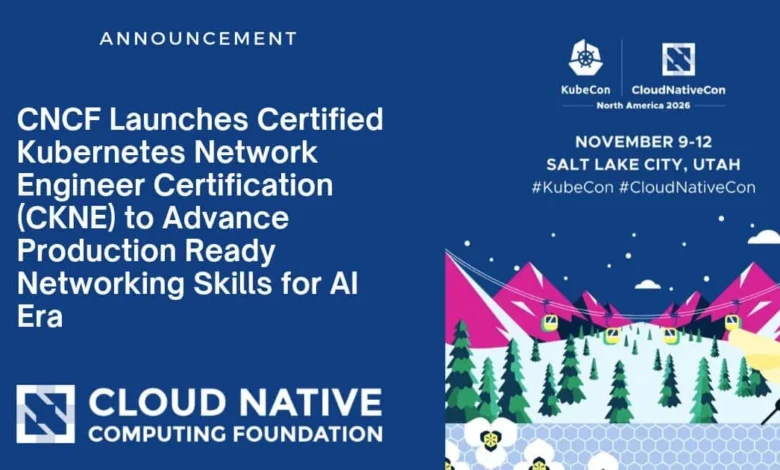
The Cloud Native Computing Foundation (CNCF), the governing body responsible for sustaining the world’s most critical open-source cloud infrastructure, has officially announced the global availability of the Certified Kubernetes Network Engineer (CKNE) certification. Unveiled at the KubeCon + CloudNativeCon North America conference on November 10, 2026, in Salt Lake City, this new credential represents a strategic expansion of the CNCF’s professional development portfolio. Developed in rigorous collaboration with Linux Foundation Education, the CKNE certification aims to bridge the widening skill gap in high-stakes areas such as Kubernetes networking, security, and complex system troubleshooting.
The Evolution of Cloud Native Networking
As organizations transition from monolithic architectures to highly distributed, microservices-based environments, the role of the network has evolved from a static connectivity layer to a dynamic, programmable fabric. Kubernetes, while providing a powerful orchestration platform, introduces significant networking overhead. With the proliferation of multi-cluster, hybrid, and edge computing environments, the requirement for deep, specialized knowledge has reached a critical inflection point.
The CKNE is specifically engineered to validate hands-on expertise. Unlike theoretical examinations, the CKNE is a performance-based, 120-minute assessment conducted within a Linux-based remote desktop environment. This format requires candidates to navigate real-world scenarios, testing their ability to secure, connect, and optimize traffic in production-grade Kubernetes clusters. The curriculum covers five fundamental pillars: Core Infrastructure and CNI (15%), Service Networking and DNS (25%), Advanced Traffic Management (20%), Network Security and Policy (25%), and Observability (15%).
A Chronology of CNCF Educational Expansion
The launch of the CKNE is the latest milestone in a long-standing initiative by the CNCF to standardize cloud native expertise. Since the inception of the Certified Kubernetes Administrator (CKA) exam, the foundation has sought to provide clear benchmarks for professionals operating at scale.
- 2017-2018: The early stages of Kubernetes adoption were marked by the success of the CKA and Certified Kubernetes Application Developer (CKAD) certifications, which established the baseline for administrative and development proficiency.
- 2020-2023: As the ecosystem matured, the CNCF pivoted toward security and specialized roles, introducing the Certified Kubernetes Security Specialist (CKS) to address the industry’s heightened focus on supply chain security and container runtime protection.
- 2024-2025: The rise of Platform Engineering led to the launch of the Certified Cloud Native Platform Engineer (CNPE), recognizing the need for professionals who could build and maintain internal developer platforms (IDPs).
- 2026 (Current): The introduction of CKNE addresses the "networking bottleneck" identified by site reliability engineers (SREs) and platform architects who struggle with the complexity of Service Meshes, ingress controllers, and cross-cluster communication.
- 2027 (Forward-Looking): The CNCF has already signaled its roadmap for the next calendar year, which includes the introduction of the Kubernetes AI Associate (KAIA) and the Certified Kubernetes Inference Engineer (CKIE) to support the integration of AI-driven workloads.
Supporting Data and Industry Context
Industry research consistently highlights that networking and security are the two most cited "pain points" for enterprises adopting Kubernetes. According to recent CNCF survey data, over 60% of organizations operating at scale report that they lack the in-house expertise to effectively manage multi-cluster networking, often resulting in performance degradation or security vulnerabilities.
The complexity of these environments is compounded by the rapid adoption of AI workloads, which require high-throughput, low-latency network configurations. By creating the CKNE, the CNCF provides a vendor-neutral standard that allows organizations to filter for talent capable of managing these specialized demands. The development of the certification involved technical contributions from industry leaders, including Dojobits, Ericsson, Infosys, Isovalent (a Cisco company), Kong, Microsoft, RX-M, and Solo.io, ensuring the exam reflects modern, enterprise-ready best practices.
Official Perspectives on Professional Competency
Chris Aniszczyk, Chief Technology Officer at the CNCF, underscored the necessity of this certification during the announcement at KubeCon. "Networking is fundamental to running Kubernetes reliably at scale, yet it remains one of the most complex areas for teams operating production environments," Aniszczyk stated. He emphasized that as AI-driven workloads increase the stress on cloud infrastructure, the need for engineers who can secure and troubleshoot these systems becomes paramount.
Clyde Seepersad, Senior Vice President and General Manager of Linux Foundation Education, added that the certification is designed to provide a "practical approach to expanding expertise." He noted that the accompanying CKNE Certification Pathway—a structured training program—is essential for professionals looking to master the intricacies of the Kubernetes network stack. The pathway is modular, allowing engineers to focus on specific competencies before testing, thereby increasing the pass rate for qualified practitioners.
Christophe Sauthier, the Cloud Native Training and Certification lead at the CNCF, highlighted the dual nature of the certification’s audience. "We are serving two vital audiences: helping network professionals bridge their expertise into the cloud native ecosystem, while enabling Kubernetes engineers to master advanced networking challenges," Sauthier noted. This cross-pollination of skills is viewed as a key strategy for the long-term sustainability of the cloud native workforce.
Broader Impact and Organizational Implications
The introduction of the CKNE has significant implications for both individual career paths and enterprise strategy. For engineers, the certification serves as a verifiable badge of competence, distinguishing them in a crowded job market. For enterprises, the credential acts as a risk mitigation tool. By hiring or training staff to the CKNE standard, organizations can reduce the incidence of downtime, minimize security misconfigurations in network policies, and optimize resource utilization—ultimately leading to a lower Total Cost of Ownership (TCO) for their Kubernetes investments.
Furthermore, the shift toward a "specialized credential" model indicates a maturation of the cloud native industry. The initial era of generalist Kubernetes knowledge is transitioning into an era of functional specialization. This mirrors the trajectory of other established IT domains, such as cloud architecture or network engineering, where specialized certifications have long been the gold standard for quality assurance.
As the industry looks toward 2027, the inclusion of AI-focused certifications (KAIA and CKIE) suggests that the CNCF views the convergence of AI and cloud native as the next major growth area. The CKNE is the bedrock upon which this next phase will be built, as robust, secure networking is the prerequisite for the high-data-transfer requirements of modern inference models.
Accessing the Certification
The CKNE certification and the associated training pathway are currently available via the Linux Foundation Education portal. The program includes five specialized modules that align directly with the core competencies tested in the exam. These resources are designed to be accessible to anyone with a foundational understanding of Kubernetes administration, such as that provided by the CKA certification.
By formalizing these skills, the CNCF is not only elevating the capabilities of the individual engineer but is also reinforcing the integrity and reliability of the global cloud native ecosystem. As organizations continue to move critical business logic onto Kubernetes, the ability to effectively manage the "plumbing" of the cloud—networking—will remain a decisive factor in organizational success. The CKNE marks a definitive step toward professionalizing this critical domain, providing a clear path forward for those tasked with maintaining the backbone of the digital economy.