Richard Harrison, Star of Spaghetti Westerns and Sword-and-Sandal Flicks, Dies at 90

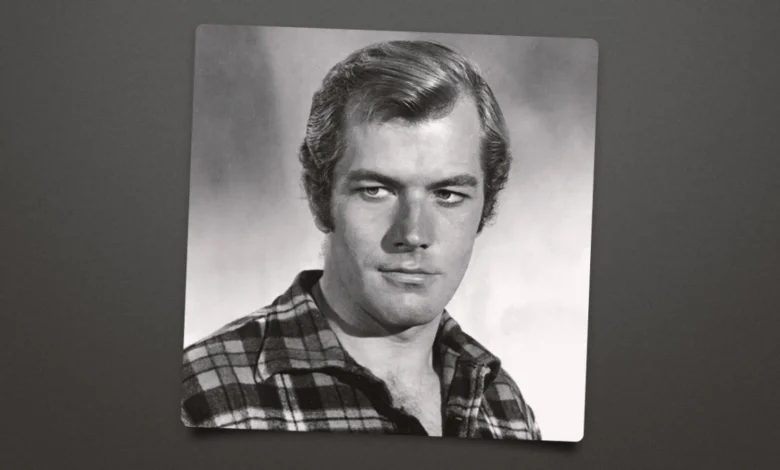
The passing of the quintessential B-movie icon, who died of natural causes in Los Angeles on Friday, was confirmed by his longtime friend and producer Joan Borsten. Harrison’s death marks the end of a prolific, globalized career that spanned over five decades, characterizing the mid-century migration of American talent to the European film industry and later the international boom of low-budget genre cinema.
A Life Defined by Global Mobility
Born in Salt Lake City on May 26, 1935, Harrison’s trajectory was far from the traditional Hollywood path. He arrived in Los Angeles at 17, a young man eager to break into the industry. His early years were defined by physical transformation; he worked at gyms owned by legendary bodybuilders Vic Tanny and Bert Goodrich, becoming a fixture in the fitness culture of the era. His physique served as his entry point, leading to work in “beefcake” magazines—a precursor to his eventual casting in the muscular, heroic roles that would define his international stardom.
Harrison honed his craft at the Fox studio’s acting school under the tutelage of the renowned Sandy Meisner. While he managed to secure bit parts in notable Hollywood features throughout the late 1950s—including Kronos (1957), Jeanne Eagels (1957) alongside Kim Novak, and South Pacific (1958)—he remained a peripheral figure in the American studio system. Recognizing that his window for leading-man status in the U.S. was closing, Harrison made the strategic decision to move to Italy, a move that would ultimately secure his legacy.
The Italian Renaissance and the Sword-and-Sandal Era
In the early 1960s, Italy was experiencing a cinematic golden age, characterized by the “Peplum” or sword-and-sandal genre. Harrison became an instant leading man, filling the void left by icons like Steve Reeves. With the 1962 release of The Invincible Gladiator, Harrison became a household name across Europe. His ability to project strength while navigating the often-theatrical requirements of mythological epics made him a reliable box-office draw.
He continued this momentum with Avenger of the Seven Seas (1963) and Gladiator 7 (1963). However, Harrison’s versatility became evident as he transitioned into the burgeoning spaghetti Western market. His 1963 film Gunfight in the Red Sands (Duello Nel Texas) remains a significant artifact of the era, not only for his performance but for featuring a score by the legendary Ennio Morricone, who was then just beginning his ascent to global prominence.
The Role of a Lifetime—and the One He Gave Away
Perhaps the most enduring piece of cinematic trivia involving Richard Harrison is his connection to Sergio Leone’s A Fistful of Dollars (1964). Harrison was offered the role of the “Man with No Name,” the character that would ultimately transform Clint Eastwood into an international superstar. Harrison famously turned the role down, but his influence on the film’s success remained significant; he recommended his fellow expat, Eastwood, for the part.
This anecdote highlights the insular but interconnected nature of the American actor community abroad during the 1960s. For Harrison, the decision was not one of regret but of professional philosophy. He viewed his career as an adventure, prioritizing location and experience over the potential for mainstream American prestige.
Evolution into the Ninja Boom
As the appetite for spaghetti Westerns waned in the late 1970s, Harrison demonstrated a remarkable capacity for professional reinvention. He pivoted toward the low-budget, high-octane world of Hong Kong action cinema, specifically the burgeoning “ninja” subgenre. For a decade, Harrison became the face of various Z-grade ninja films, a niche market that allowed him to maintain his status as a working actor.
Over the course of his career, Harrison appeared in more than 100 motion pictures. His work ethic was described by peers as relentless, and he eventually stepped behind the camera to direct a handful of projects, proving his utility to production houses that valued his efficiency and recognition factor.
A Life Beyond the Screen
Harrison’s personal life was as cosmopolitan as his filmography. In 1961, he married Loretta Nicholson, daughter of American International Pictures producer James H. Nicholson, after meeting her on the set of Master of the World. His social circle was a tapestry of mid-century artistic talent, including George Cukor, Gore Vidal, and Tab Hunter. According to Borsten, Harrison’s dinner parties were legendary, characterized by late-night pasta and a rotating cast of international luminaries.
His role in historical events also extended beyond the film set. During the height of the Cold War in 1985, Harrison played a pivotal part in the defection of Soviet actor Oleg Vidov—often called the “Russian Robert Redford”—at the U.S. embassy in Rome. This act of courage demonstrated a depth of character that many of his colleagues noted went far beyond his movie-star persona.
In 1986, Harrison returned to Los Angeles with his second wife, Francesca, whom he had married in 1978. They invested in a property in Malibu, constructing a home they dubbed “Villa Francesca.” The residence, known for its expansive views of the Pacific, became a symbol of his life’s journey, though it was tragically lost during the 2023 Palisades Fire—a final, sobering chapter in his connection to the Southern California landscape.
Analysis of a Career Legacy
The death of Richard Harrison prompts a reflection on the “expat actor” phenomenon. In the 1960s and 70s, many American actors found that the rigid hierarchy of the Hollywood studio system could be bypassed by moving to markets like Rome, Madrid, or Hong Kong. Harrison was a pioneer of this model. He did not seek to change the system; he sought to exist outside of it, finding freedom in the lack of expectations that come with B-movie production.
Economically, actors like Harrison provided a crucial bridge for international co-productions. His name on a poster ensured a level of quality and professionalism that allowed European production companies to sell their films to American distributors. His career serves as a case study in the globalization of the film industry, predating the modern era of international co-productions by decades.
Tributes and Reflections
Joan Borsten, speaking on his legacy, noted that Harrison never allowed his fame—particularly his overwhelming popularity in Italy, where he was often mobbed in public—to dictate his ego. “He saw his unexpected career as an opportunity to see the world and meet interesting people,” Borsten stated.
Perhaps the most telling insight into Harrison’s character came from his own criteria for selecting roles. When asked how he chose his next project, he famously noted that he would inquire about the location first. If it was a place he had never visited, he would sign on. He famously claimed he would only read the script once he was already on the plane.
This approach to life and work—prioritizing the journey over the destination—defined his existence. Richard Harrison leaves behind a wife and three of his four children, as well as a sprawling, eclectic filmography that stands as a testament to a man who lived his life in the pursuit of the next great adventure. His career remains a fascinating footnote in the history of cinema, reminding us that success is not always found in the spotlight of the Academy Awards, but often in the grit and global reach of the genre film.