RAMDeck Promises to Solve Home AI Memory Constraints by Pooling RAM Across Disparate Devices

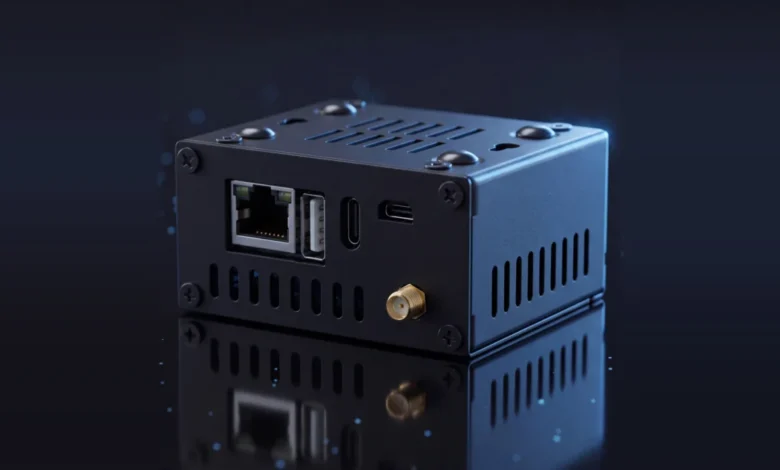
As the cost of high-performance DDR5 memory continues to climb, reaching levels nearly five times higher than those observed in mid-2025, the barrier to entry for running sophisticated local artificial intelligence models has become increasingly prohibitive. For enthusiasts and small-scale developers, the traditional route—upgrading individual workstations with massive amounts of expensive RAM—is becoming financially unsustainable. Into this volatile market steps TradeMAV, a startup currently seeking funding on Indiegogo for its “RAMDeck” device, a hardware-based solution designed to aggregate memory resources from multiple disparate machines into a single, unified pool.
The core premise of the RAMDeck project is simple yet ambitious: instead of purchasing new, high-capacity memory kits, users can leverage the underutilized RAM already present in their existing fleet of devices. By connecting a Windows PC, a MacBook, a Linux workstation, and even an Android device to a home network via the RAMDeck hub, the system attempts to distribute large AI models across the collective memory of these devices. This approach aims to allow users to run inference on models that would otherwise cause a single-machine system to crash due to out-of-memory (OOM) errors.
A Perfect Storm: The Memory Crisis of 2025-2026
The launch of the RAMDeck campaign, which features a modest funding goal of $10,000 and a closing date of November 8, 2026, arrives at a time of significant instability in the global semiconductor market. Data from German retail analysts at 3DCenter indicate that by mid-August 2026, DDR5 prices had surged to 486% of their July 2025 baseline. This sharp increase is not merely a temporary fluctuation; major industry players have issued long-term warnings regarding the supply chain.
Samsung has cautioned analysts that the current “RAM-pocalypse” could persist through 2028, as production capacities struggle to keep pace with the voracious demand from the data center and consumer AI sectors. Echoing these concerns, the chairman of SK Group has warned that the crisis could potentially extend until 2030, citing a projected 20% shortfall in wafer production. For the average consumer, this translates to a daunting economic reality: a 64GB DDR5 kit, which cost approximately $191 in August 2025, ballooned to over $1,100 by the same time in 2026. This environment provides a compelling, if desperate, context for hardware solutions that promise to maximize the utility of older or cheaper components.
Technical Mechanics: How RAMDeck Functions
While the concept of “pooling” memory may sound like a hardware-level integration, the reality of the RAMDeck system is more grounded in software orchestration. The device does not physically merge memory modules across different machines. Instead, it utilizes a distributed computing model.
According to technical documentation available on the TradeMAV GitHub repository, the system functions by dividing an AI model’s layers across the available nodes on a local network. Each node acts as an independent processor, holding its assigned portion of the model in its local memory. When a user prompts the AI, intermediate results are passed across the network as each token is generated.
Under the hood, the system is an implementation of the llama.cpp project’s Remote Procedure Call (RPC) protocol. The RAMDeck node agent initializes the llama.cpp ggml RPC server on each connected device. TradeMAV’s proprietary value-add lies in the automation layer: the device manages discovery of new nodes, optimizes layer placement based on the speed of the hardware (prioritizing fast GPUs over slower system RAM), handles failure recovery, and provides an OpenAI-compatible API to ensure ease of use for end-users.
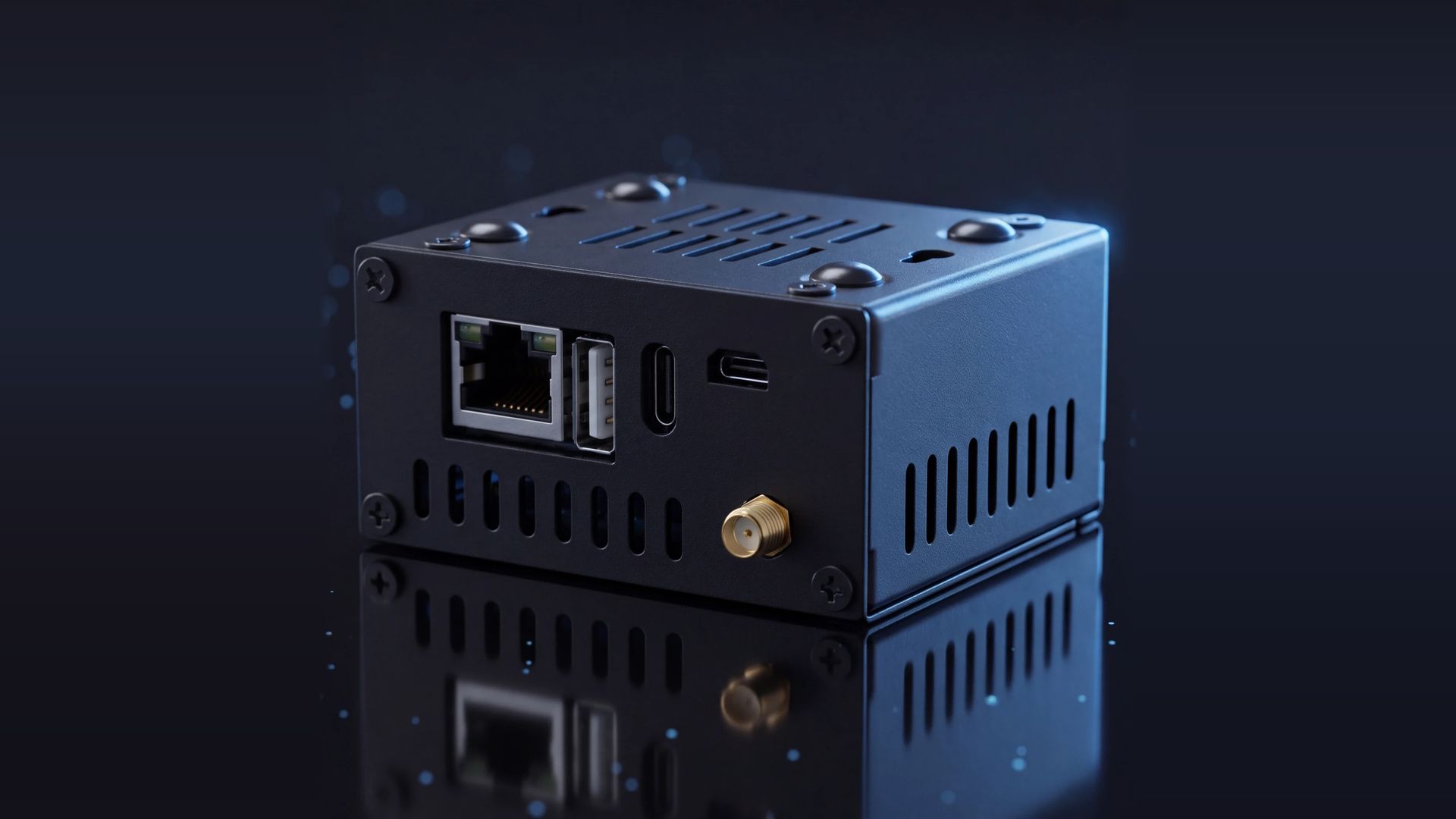
However, the lack of transparency regarding the hub’s internal specifications—such as its processor, memory capacity, or power requirements—has led some observers to question its utility. TradeMAV itself concedes in its own documentation that users comfortable with command-line interfaces could achieve similar results using open-source tools without the need for the $109 hardware hub.
The Competitive Landscape and Precedents
The idea of distributed inference is not entirely novel. The open-source community has been iterating on this concept for some time. Projects like "exo," developed by Exo Labs, have been available since early 2025, offering similar capabilities for automatic device discovery and cross-platform API integration across PCs, phones, and single-board computers like the Raspberry Pi.
At the high end of the market, hardware manufacturers are addressing the same bottleneck with proprietary solutions. Apple’s M5 Ultra-based Mac Studio, for instance, allows for clustering via Thunderbolt 5 with Remote Direct Memory Access (RDMA). Apple claims that a cluster of four such machines can achieve three times the inference speed of a single unit, providing a professional-grade alternative for those with the necessary capital.
What differentiates RAMDeck is its emphasis on heterogeneity. The company’s FAQ claims that it can successfully bind a Windows-based CUDA machine, an Apple Silicon Mac, an legacy Intel-based Mac, and an Android handset into a single cluster. While this highlights the flexibility of the llama.cpp backend, it also introduces significant potential for latency issues, as the performance of the entire cluster is dictated by the slowest link in the network chain.
Performance Trade-offs and Practical Implications
TradeMAV has been remarkably candid about the limitations of its product. The company’s marketing materials explicitly warn that “pooled memory trades speed for capacity.” For users prioritizing raw inference speed, the company advises purchasing higher-capacity VRAM GPUs rather than attempting to cluster lower-tier hardware.
Benchmark results provided by the developers illustrate this trade-off clearly. When running mixture-of-experts models—which typically activate only a fraction of their total parameters—a cluster consisting of a Beelink mini-PC (equipped with an RTX 3060) and an M4 Mac mini managed 39 tokens per second for a 30B parameter model. However, when moving to denser, more complex models, performance plummeted. A 27B dense model running across four devices crawled at just 1.92 tokens per second, while a 120B parameter model struggled to maintain 1.37 tokens per second on a six-device cluster.
While these speeds are significantly slower than what a modern, high-end GPU workstation would achieve, they do represent a functional path toward executing large-scale models that would otherwise be impossible to run on consumer-grade hardware. The seven-minute initialization time required for the 120B model further underscores the reality that this is a system built for convenience and accessibility rather than high-performance computing.
Industry Outlook and Risk Assessment
The RAMDeck project serves as a microcosm of the current AI hardware landscape: a mix of high demand, supply constraints, and a desperate search for creative workarounds. As the industry continues to push the boundaries of model size, the pressure on consumer memory hardware will likely intensify.
For the target demographic—hobbyists, small developers, and tinkerers—the decision to back a project like RAMDeck involves weighing the cost of entry against the technical convenience provided by the device. Those with strong technical proficiency may find that existing open-source solutions provide a more transparent and cost-effective route. Conversely, those seeking a "plug-and-play" experience for their home lab may find value in the abstraction layer provided by the hub.
As with any crowdfunded hardware initiative, potential backers must remain cognizant of the risks. Crowdfunding campaigns often face challenges related to manufacturing scalability, software refinement, and fulfillment timelines. The promise of the hardware is, as of now, a projection rather than a verified consumer product. As the market continues to evolve, the success of RAMDeck—or the failure of its approach—will likely be determined by whether the convenience of its software orchestration can outweigh the inherent latency and performance limitations of distributed, heterogeneous hardware.
For now, the project remains an interesting case study in how developers are attempting to democratize access to AI, turning to a "pile of old computers" as a makeshift alternative to the increasingly expensive, top-tier memory solutions that currently dominate the market. Whether this represents a sustainable model or a niche solution remains to be seen as the broader memory crisis continues to unfold through the remainder of the decade.