Russia Adapts Soviet-Era Yak-52 and An-2 Aircraft for Airborne FPV Interceptor Drone Launch Platforms in Counter-UAV Strategy

The Russian military has officially begun the integration of First-Person View (FPV) interceptor drone technology into its legacy aviation fleet, specifically modifying Yak-52 trainer aircraft and An-2 utility biplanes to serve as airborne launch platforms. This development, confirmed through visual evidence released by the Russian volunteer unit BARS-Sarmat, represents a significant tactical shift in how the Russian Aerospace Forces and paramilitary units address the growing threat of Ukrainian unmanned aerial vehicles (UAVs). By repurposing Cold War-era airframes to carry modern loitering munitions and interceptors, the Russian defense apparatus is attempting to create a cost-effective, layered aerial defense system capable of neutralizing reconnaissance and strike drones without exhausting expensive surface-to-air missile stockpiles.
The transition toward using manned, propeller-driven aircraft as "drone carriers" marks a new chapter in the ongoing conflict in Ukraine, which has become a primary laboratory for rapid military innovation. The BARS-Sarmat footage highlights two distinct operational configurations: a ground-launch system for rapid deployment and a more sophisticated airborne-launch setup designed for mid-air engagement. These modifications allow older aircraft, which were previously relegated to training or transport roles, to assume high-priority roles in the modern electronic and kinetic battlefield.
Technical Configuration of the Yak-52 Interceptor Platform
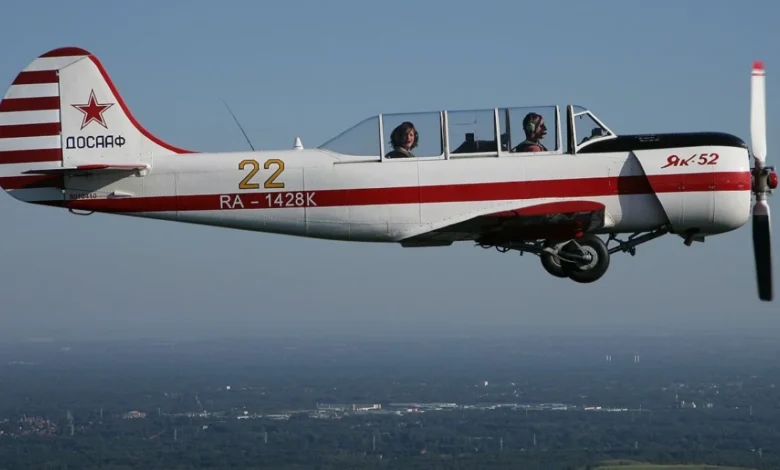
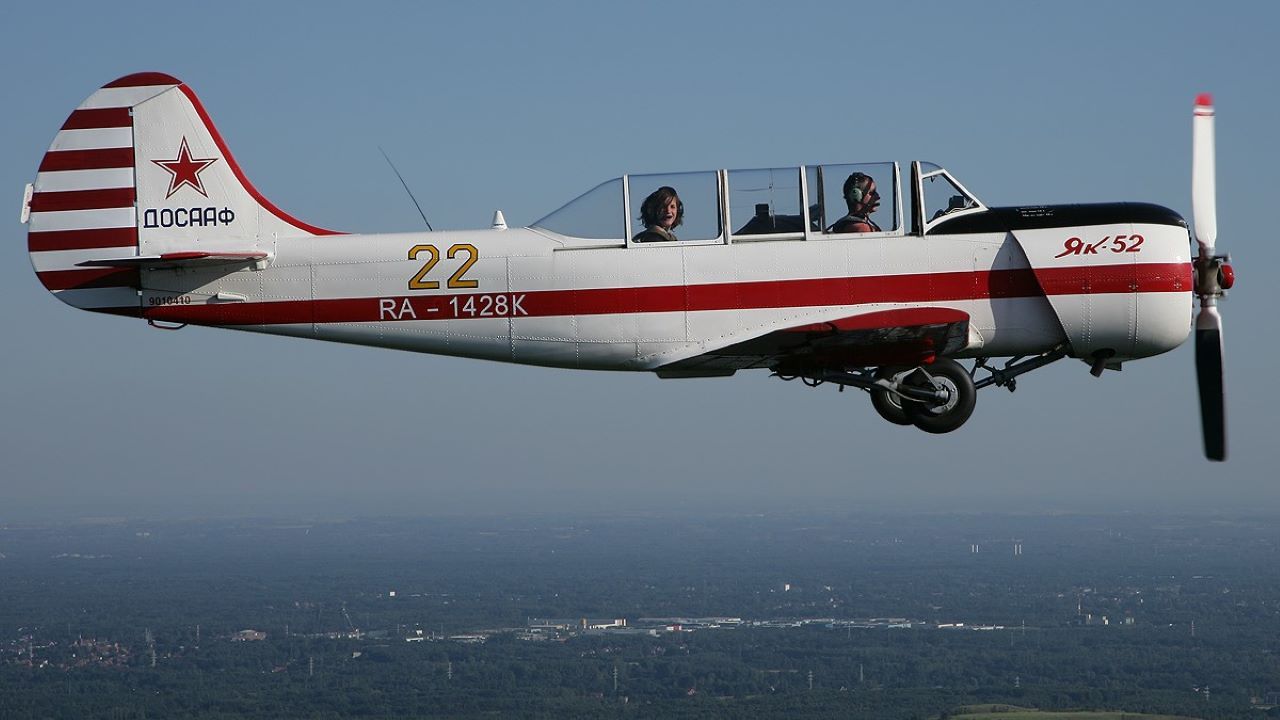
The Yak-52, a Soviet-designed primary trainer that first took to the skies in the mid-1970s, has been re-engineered to carry an armament of FPV interceptor drones. Traditionally used to train generations of Soviet and Russian pilots in basic maneuvers and aerobatics, the aircraft’s nimble handling and sturdy construction make it a candidate for low-altitude drone hunting. In the configurations observed in recent trials, the Yak-52 is equipped with six external launch rails mounted beneath its wings. These rails are designed to hold interceptor drones securely during flight and release them upon the pilot or operator’s command when an enemy target is identified.
During the publicized flight tests, the aircraft was seen carrying four drones despite having the capacity for six. This discrepancy suggests that the program is still in an evaluative phase, possibly testing weight distribution, aerodynamic drag, or the electrical integration required to trigger the launches. One of the primary technical hurdles identified by observers is the Yak-52’s compact, tandem-seat cockpit. Unlike larger utility planes, the Yak-52 offers very little internal volume for the specialized radio equipment, high-gain antennas, and FPV goggles typically required for a drone operator to guide an interceptor to its target.
Analysts suggest that the control mechanism may involve a hand-off system where the aircraft serves merely as the "mother ship" for transport and launch, while a ground-based operator or a second aircraft with more robust communication equipment takes over the terminal guidance of the drone. Alternatively, Russia may be experimenting with simplified control interfaces integrated into the cockpit, though the ergonomic constraints of the Yak-52 make this a difficult engineering feat.
The An-2 "Annushka" and its Role as a Command Hub
While the Yak-52 provides agility, the An-2 utility biplane offers the volume and endurance necessary for a more self-contained drone-interception unit. The An-2, known affectionately as the "Annushka," is a legendary airframe that has remained in production or service for nearly 80 years. Its massive lift capacity and exceptionally low stall speed—allowing it to fly as slowly as 30 miles per hour—make it an ideal platform for tracking slow-moving Ukrainian reconnaissance drones.
The An-2’s larger cabin provides sufficient space for a dedicated drone operator station, complete with monitors, signal boosters, and multiple FPV headsets. In the BARS-Sarmat configuration, interceptor drones are deployed from a fuselage-mounted attachment point. This setup allows the crew to identify a target visually or via radar, maneuver into an advantageous position, and launch an FPV drone that is already within close proximity to the enemy UAV. This significantly reduces the battery life constraints that often limit the range of ground-launched FPV interceptors.
The Russian government has previously signaled its intent to modernize and restore up to 700 Soviet-era An-2 aircraft. While many were intended for agricultural or transport use, the emergence of the drone-carrier program suggests a significant portion of this fleet could be diverted to homeland defense or frontline electronic warfare missions. The An-2’s ability to operate from unprepared grass strips further enhances its utility, allowing these "drone hunters" to be stationed in remote areas where conventional fighter jets cannot operate.
Chronology of the Aerial Drone-on-Drone Evolution
The development of manned aircraft as drone carriers is the culmination of a multi-stage evolution in counter-UAV tactics.
- Early 2022 – Mid 2023: Both sides relied primarily on Electronic Warfare (EW) and traditional Surface-to-Air Missiles (SAMs). However, the high cost of missiles like the S-300 or Tor-M2 created an economic imbalance when used against $20,000 reconnaissance drones.
- Late 2023: Reports emerged of Russian Yak-52 pilots using handheld small arms and shotguns to down Ukrainian drones in the Odessa region and other frontline areas. These were largely improvised efforts by local units.
- Early 2024: Ukraine began successfully using modified An-28 and Yak-52 aircraft to intercept Russian Shahed-type loitering munitions. Ukraine’s P1-SUN interceptor drone, equipped with an optical targeting system, proved that a low-speed aircraft could effectively deploy a "kill drone" in mid-air.
- Late 2024: Russia formalized its own program via the BARS-Sarmat unit, moving from improvised small-arms tactics to integrated underwing launch systems for FPV drones.
The recent video evidence shows Russian interceptor drones engaging several Ukrainian UAV types, including what appeared to be "Maya" decoys. These decoys are designed to look like more expensive drones to draw fire or waste interceptor resources, indicating that the drone-on-drone "dogfight" has already reached a level of tactical complexity requiring sophisticated response measures.
Economic and Strategic Implications
The shift toward legacy aircraft reflects a broader strategic necessity: the need for "asymmetric air defense." A standard air defense missile can cost anywhere from $100,000 to several million dollars. In contrast, an FPV interceptor drone costs approximately $500 to $1,000, and the fuel cost for a vintage Yak-52 or An-2 is negligible compared to a Su-35 fighter jet.
By utilizing these older platforms, Russia is attempting to preserve its high-end interceptors and missiles for more significant threats, such as cruise missiles or manned enemy aircraft, while using the "low-tech" fleet to sweep the skies of the thousands of small UAVs that currently dominate the battlefield. This approach also mitigates the wear and tear on modern airframes, which are subject to strict maintenance schedules and limited spare parts due to international sanctions.
Furthermore, the use of manned aircraft provides a "human-in-the-loop" advantage. A pilot can navigate around complex EW environments that might jam a ground-to-drone signal. By getting the launch platform closer to the target, the signal between the operator (on the plane) and the interceptor drone is much stronger and harder to disrupt.
Analysis of Operational Challenges
Despite the potential benefits, the program faces significant operational hurdles. The first is the vulnerability of the launch platforms themselves. Both the Yak-52 and An-2 are slow, unarmored, and have high radar cross-sections. While they are intended to operate in "safe" airspace to intercept penetrating drones, they remain susceptible to long-range Ukrainian surface-to-air systems or even other interceptor drones.
Secondly, the integration of FPV technology into a cockpit environment requires specialized training. A pilot must maintain flight safety while an operator (or the pilot themselves) focuses on a digital screen or goggles to steer the drone. This creates a high cognitive load and increases the risk of accidents, especially during low-altitude maneuvers.
Finally, there is the issue of "friendly fire" and airspace management. Integrating slow-moving biplanes into a combat zone filled with active air defense batteries and high-speed jets requires precise coordination to prevent the "drone hunters" from being targeted by their own side.
Future Outlook: The Rise of the Mother Ship
The Russian adaptation of the Yak-52 and An-2 is likely the first step toward more sophisticated "mother ship" concepts. Military analysts anticipate that if these trials continue to show success, Russia may look to automate the launch process further, perhaps using AI-assisted targeting to help the FPV drone lock onto its target immediately after release from the wing rail.
This trend is not isolated to Russia. The global defense community is watching these developments closely, as the problem of "cheap drone saturation" is a challenge facing all modern militaries. The successful repurposing of 80-year-old biplanes to carry 21st-century robotics serves as a stark reminder that in modern warfare, the most effective solution is often a blend of the very old and the very new.
As the conflict continues, the frequency of these aerial interceptions is expected to rise. The BARS-Sarmat unit’s work suggests that the Russian military is no longer viewing these modified aircraft as a temporary "stop-gap" measure, but as a permanent fixture of their domestic air defense and frontline operational strategy. The skies over the conflict zone are becoming increasingly crowded, and the "dogfights" of the future may well be fought by vintage trainers launching swarms of disposable robots.