NVIDIA DSX and the Future of AI Factory Efficiency: Solving the Gigawatt Power Constraint

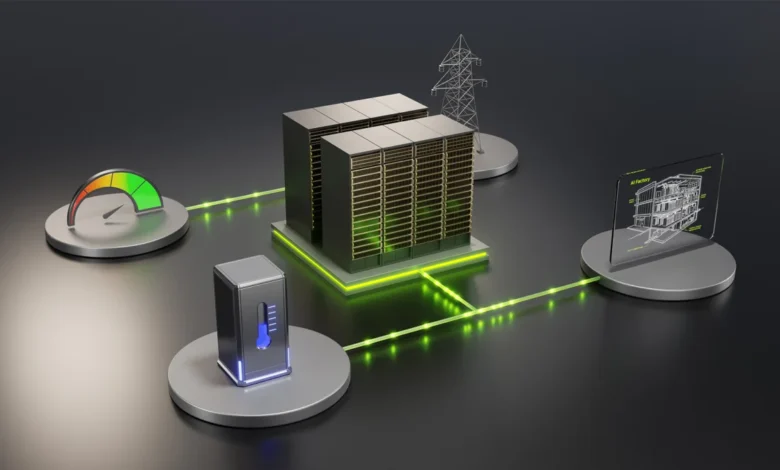
On a sweltering August evening in Silicon Valley, as the sun dipped below the horizon and regional air conditioning loads surged to a peak, Silicon Valley Power (SVP) initiated a test that would prove pivotal for the future of artificial intelligence infrastructure. The utility sent a real-time demand signal to an AI factory—a high-density data center—requesting an immediate adjustment to its power consumption. In a San Francisco conference room, Varun Sivaram and his team at Emerald AI watched a live data feed alongside utility engineers and data center operators. There was no manual intervention; the transition was entirely autonomous. As the signal registered, the facility’s power draw dropped from four megawatts to three megawatts, all while mission-critical AI workloads continued to execute without interruption.
This moment of automated grid participation represents a paradigm shift in how AI-intensive data centers interact with the public energy grid. By utilizing Emerald AI’s Conductor platform, an orchestration tool integrated with NVIDIA’s DSX architecture, the facility demonstrated that AI factories do not need to be passive, static consumers of electricity. Instead, they can function as dynamic, dispatchable resources that provide stability to the grid during times of high stress.
The Power Bottleneck: A New Economic Reality
The global expansion of AI compute capacity is currently facing a physical bottleneck: electricity. As CEO Jensen Huang has frequently noted, a one-gigawatt factory is unlikely to ever double its capacity through simple hardware additions alone. Consequently, the industry has pivoted toward a "whole-factory" design philosophy. The primary metric for modern data center success is no longer just total compute, but rather "useful work per gigawatt."
This transition is driven by the physical limits of existing electrical infrastructure. Building new transmission lines to support the massive energy requirements of AI training clusters can take a decade or more. If AI factories are to scale to meet global demand, they must become hyper-efficient, squeezing every possible unit of performance out of the power they are already allocated.
Chronology of a Breakthrough
The collaboration between NVIDIA, Emerald AI, and Silicon Valley Power is the culmination of years of theoretical research into grid-interactive compute. The progression began with small-scale simulations, followed by lab-based validation, and finally, commercial production deployment.
- May 2024: NVIDIA introduces the DSX platform at GTC Taipei, a comprehensive suite designed to treat the data center as a single, unified machine rather than a collection of disparate racks.
- August 2024: The first successful, high-stakes demonstration occurs in Santa Clara. Silicon Valley Power’s signal successfully triggers an automated load reduction, proving that software can manage the complex power-balancing act between grid availability and GPU uptime.
- September 2024: During the AI Infra Summit, NVIDIA’s vice president of hyperscale and high-performance computing, Ian Buck, elevates AI factory efficiency to the centerpiece of the company’s infrastructure strategy.
- Ongoing: Silicon Valley Power has since issued over 200 demand signals to the facility. Each signal has been met with automated, seamless execution, establishing a track record of reliability.
Data-Driven Efficiency: The DSX MaxLPS Advantage
Efficiency gains within the data center are not merely incremental; they are structural. During the AI Infra Summit, cloud provider Lambda released performance data validating the effectiveness of NVIDIA’s DSX MaxLPS (Maximum Load Power Scheduling). In a test environment consisting of five racks and 19 nodes, Lambda demonstrated that intelligent power management could increase total cluster-wide token throughput by 24%—rising from 4 million to 5 million tokens per second—while remaining within the same power budget previously used for only 16 nodes.
This is achieved by monitoring power consumption at the GPU and rack levels, and then reallocating the "headroom" across nodes. In traditional, static provisioning, power is often stranded because hardware is configured for peak theoretical draw, regardless of the actual intensity of the workload. MaxLPS effectively "reclaims" this stranded capacity. Projections suggest that for next-generation Vera Rubin NVL72 architectures, this approach could enable up to 40% more GPU capacity within the same megawatt envelope.
The Mechanics of Grid Flexibility
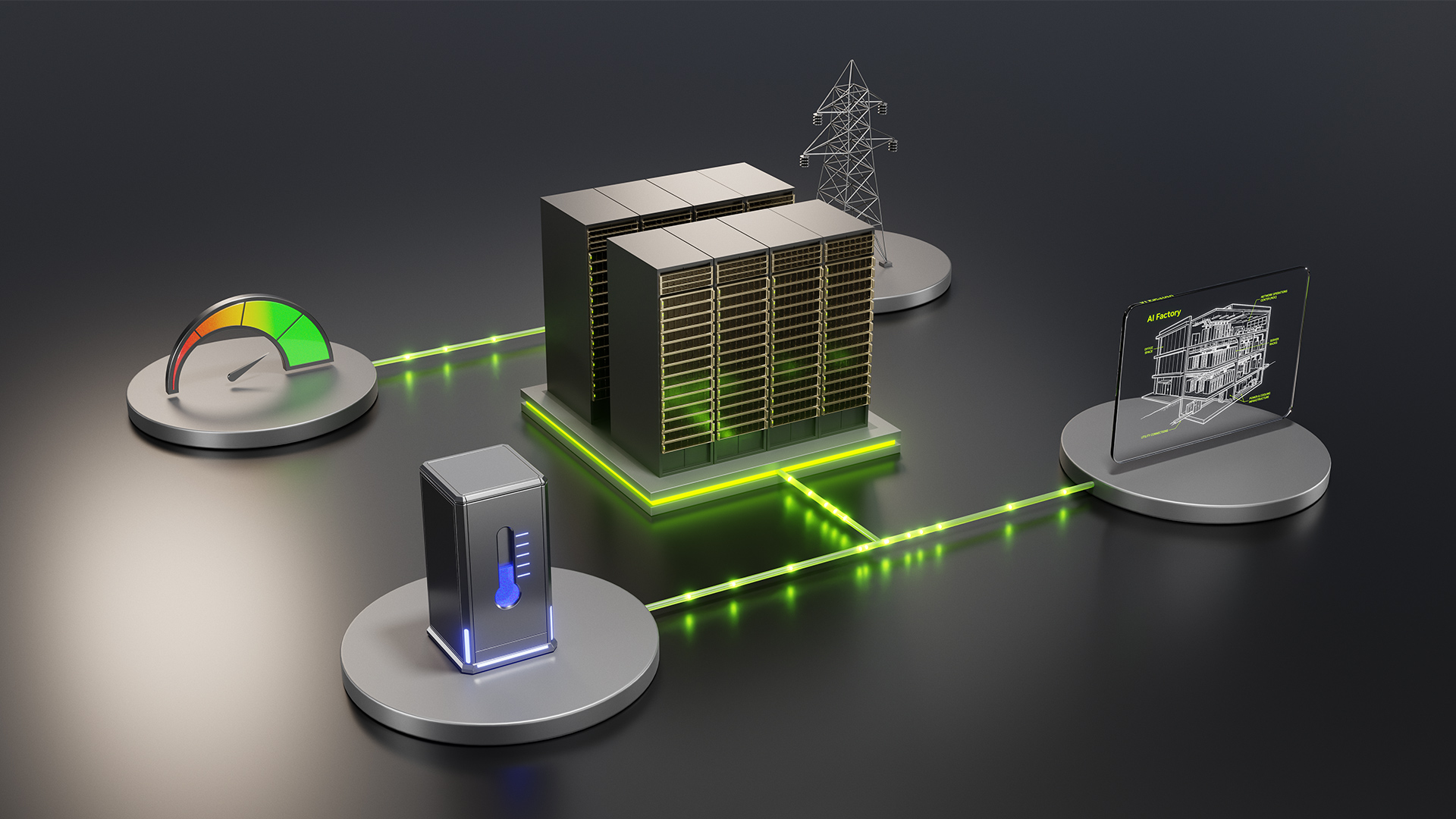
The Santa Clara deployment serves as a real-world case study for the "Flexible Load Interconnect Program." The technology behind this, Emerald AI’s Conductor, operates on a predefined hierarchy of workload priority. When a signal is received from the utility, the platform identifies low-priority background tasks—such as batch processing or non-time-sensitive data indexing—and throttles or reschedules them.
High-priority inference and training tasks are preserved, ensuring that the primary business value of the AI factory remains intact. This is the bedrock of what NVIDIA calls "DSX Flex." The next phase of this deployment is slated for a 96-megawatt facility in Manassas, Virginia, which will serve as the premier research center for proving these concepts at massive, commercial scales.
Infrastructure Evolution: 800V DC Power Architecture
Beyond workload scheduling, NVIDIA is re-engineering the physical delivery of power. Traditional power distribution methods, which involve multiple layers of AC-to-DC conversion, are increasingly inefficient as racks grow denser. NVIDIA is now incorporating 800V DC power architectures into its reference designs. By reducing the number of conversion steps, the facility can minimize energy losses, lower the heat footprint of the power delivery system, and support the increasingly dense power demands of the GB200 NVL72 platform.
Implications for the Energy Landscape
The ability of an AI factory to flex its power consumption in response to grid conditions has profound implications for utility companies. Historically, utilities have struggled to manage the erratic, high-wattage demand of large-scale data centers. If data centers become "dispatchable" resources—essentially acting like large-scale batteries or controllable demand—utilities may be able to defer or eliminate the need for costly, carbon-intensive infrastructure upgrades.
This integration could fundamentally alter the relationship between tech giants and municipal power providers. Instead of being viewed as a burden on the grid, AI factories could be repositioned as essential partners in grid stability. However, this transition requires a regulatory and policy framework that incentivizes such flexibility.
Conclusion: A New Baseline for Industry Standards
The success of the Santa Clara demonstration provides a roadmap for the future. By moving beyond the optimization of individual components—such as faster GPUs or improved cooling—and toward a holistic, software-defined factory architecture, the industry is creating a new baseline for performance.
When the grid required relief that August evening, the factory responded instantly. It did not drop a single critical job, nor did it require additional grid capacity to manage the spike. As the industry looks toward the next generation of AI training and inference at scale, the lessons learned from the NVIDIA DSX deployment suggest that the path forward lies in operational intelligence. By treating the AI factory as a programmable, responsive, and highly efficient machine, the infrastructure sector can continue to support the exponential growth of artificial intelligence without hitting the hard limits of the physical world. For developers and facility operators alike, the message is clear: the most effective way to gain more power is to manage the power you already have with unprecedented precision.
Related posts: