LitmusChaos Shines at KubeCon + CloudNativeCon India 2026 with Flipkart Keynote and Robust Community Engagement

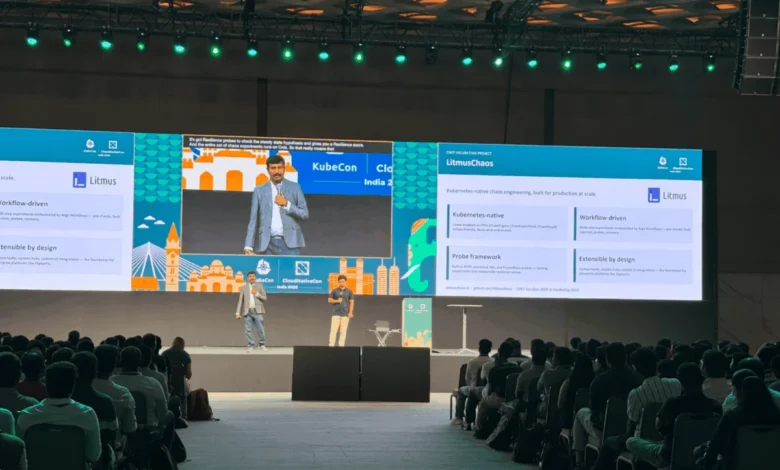
Mumbai, India – KubeCon + CloudNativeCon India 2026, held on June 18-19, 2026, proved to be an exceptionally significant event for LitmusChaos, a prominent Cloud Native Computing Foundation (CNCF) project focused on chaos engineering. The conference, a cornerstone event for the global cloud-native community, saw LitmusChaos achieve unprecedented recognition, including a coveted keynote slot alongside e-commerce giant Flipkart and robust engagement at its project pavilion. This convergence of high-profile validation and deep community interaction signals a pivotal moment for LitmusChaos and the broader adoption of resilience engineering practices within the Indian and international cloud-native ecosystems.
A Premier Gathering for Cloud-Native Innovation
KubeCon + CloudNativeCon, organized by the CNCF, stands as the flagship event for developers, SREs, and architects working with cloud-native technologies, particularly Kubernetes. The India edition of the conference draws a massive audience of practitioners, reflecting the nation’s burgeoning tech sector and its rapid embrace of cloud-native paradigms. Mumbai, as a major economic and technological hub, provided an ideal backdrop for this gathering, bringing together thought leaders, open-source contributors, and enterprise adopters to share insights and foster collaboration. The event’s significance lies not only in its technical sessions and project showcases but also in its ability to connect a diverse community, driving innovation and shaping the future of cloud computing. For a project like LitmusChaos, which thrives on community contributions and real-world adoption, KubeCon India offers an unparalleled platform for visibility and direct feedback.
Flipkart’s Triumph: A Testament to LitmusChaos’s Impact
The pinnacle of LitmusChaos’s presence at KubeCon India 2026 was undoubtedly the announcement that Flipkart, one of India’s leading e-commerce companies, had won the prestigious CNCF End User Case Study Contest India. This honor, revealed on June 17, 2026, just a day before the conference commenced, spotlighted Flipkart’s innovative and large-scale implementation of chaos engineering, built upon LitmusChaos. The win automatically secured Flipkart a keynote presentation slot on the main stage, an opportunity that amplified the real-world impact and production readiness of the LitmusChaos project to thousands of attendees.
For the CNCF, the End User Case Study Contest serves as a critical mechanism to showcase how its incubated and graduated projects are being utilized by enterprises to solve complex challenges. Flipkart’s victory, with LitmusChaos at its core, provided compelling evidence of the project’s maturity, scalability, and vital role in ensuring the reliability of mission-critical systems. This public endorsement from a company operating at the immense scale of Flipkart offers invaluable validation, not just for LitmusChaos developers, but for the entire chaos engineering discipline. It underscores a growing industry recognition that resilience is not merely an optional add-on but a fundamental pillar of modern software delivery.
Pritesh Kiri of LitmusChaos remarked on the significance, stating, "This recognition is a profound reflection of the real-world impact LitmusChaos is having at scale. It’s not just about the project itself; it’s about the organizations that have adopted it, built on top of it, and contributed their learnings back to the community. Flipkart’s story embodies this collaborative spirit." This sentiment highlights the symbiotic relationship between open-source projects and their user communities, where enterprise adoption fuels project development through feedback and contributions.
Keynote: From Afterthought to Proactive Resilience
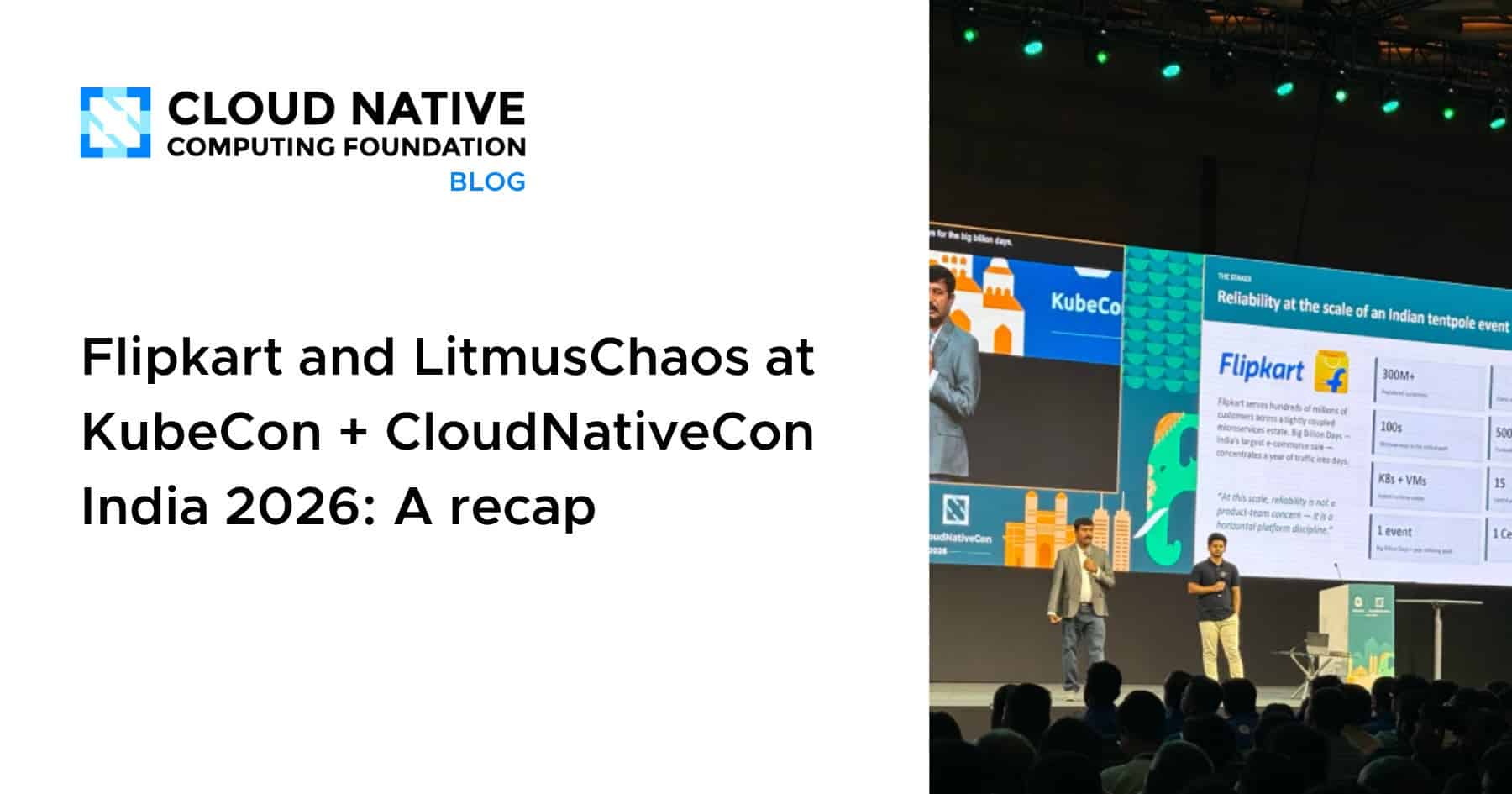
The keynote address, titled "From Afterthought to Practice: How Flipkart Built a Multi-tenant Chaos Platform on LitmusChaos," was delivered by Aditya Sridasyam, Software Development Engineer at Flipkart, and Uma Mukkara, Head of Resilience Testing. Their presentation captivated the audience by detailing Flipkart’s journey from a reactive approach to system failures to a proactive, integrated resilience engineering strategy.
Flipkart’s operational environment is characterized by hundreds of tightly coupled microservices, designed to handle the colossal traffic surges associated with major sales events like "Big Billion Days" and various festive sales. Historically, resilience was often addressed post-outage. The Central Reliability Engineering team at Flipkart recognized the critical need to shift this paradigm, leading them to construct a sophisticated, centralized chaos platform leveraging LitmusChaos.
Aditya Sridasyam provided a deep dive into four specific, production-hardened customizations that enabled Flipkart to run LitmusChaos effectively at their immense scale:
- Hybrid Multi-tenancy Architecture: Addressing the challenge of managing chaos experiments across a vast infrastructure, Flipkart implemented a hybrid multi-tenancy model. This approach strategically positions LitmusChaos installations between cluster-wide and namespace-wide deployments, offering flexibility and control while optimizing resource utilization and isolation for different teams and services. This customization is crucial for large organizations that need to balance centralized governance with distributed team autonomy.
- DaemonSet-based High-Availability Model for Chaos Injection: To ensure that chaos experiments themselves are resilient and reliably executed, Flipkart devised a DaemonSet-based high-availability mechanism for chaos injection. This design guarantees that the necessary components for initiating and monitoring chaos are robust and available even under adverse conditions, a critical requirement when intentionally inducing failures.
- Script Runner Fault for Dynamic Targeting and Context Chaining: Flipkart developed a custom Script Runner fault, significantly enhancing LitmusChaos’s capabilities. This innovation allows for dynamic target selection, meaning experiments can adaptively choose which services or instances to target based on real-time conditions. Furthermore, it enables "context chaining," where the outcome of one fault can influence the parameters or execution of subsequent faults, creating more realistic and complex chaos scenarios that mirror production challenges.
- Hybrid VM Chaos Extension: Recognizing that not all critical workloads reside solely on Kubernetes, Flipkart extended LitmusChaos’s capabilities to include hybrid VM chaos. This extension allows the platform to inject faults into traditional virtual machine-based workloads alongside Kubernetes-native applications, providing a comprehensive resilience testing solution for their heterogeneous infrastructure. This highlights the adaptability of LitmusChaos beyond pure containerized environments.
Uma Mukkara further elaborated on how these substantial contributions from Flipkart are not isolated to their internal operations. Instead, they are actively channeled back into the upstream LitmusChaos project, benefiting the entire community. This collaborative model, characteristic of open-source projects, ensures that production-grade enhancements from major adopters enrich the core project, making it more robust and versatile for all users. The full technical details, including Flipkart’s reference architecture, platform design, and quantifiable impact metrics, are available in the dedicated CNCF Flipkart case study, offering invaluable insights for other enterprises contemplating large-scale chaos engineering adoption.
Engaging the Community at the Project Pavilion
Beyond the main stage, the LitmusChaos project booth at the KubeCon + CloudNativeCon India pavilion buzzed with activity, hosting between 100 and 200 visitors over the two days. The interactions spanned a wide spectrum, from initial introductions to chaos engineering concepts for newcomers to in-depth technical discussions with seasoned practitioners regarding architecture, integrations, and advanced use cases. The quality of engagement underscored the genuine interest and practical orientation of the Indian cloud-native community.
Several recurring themes emerged from these invaluable conversations:
- Resilience Testing and Reliability in the Age of AI: A significant portion of discussions revolved around the emerging challenges of AI inference workloads. These workloads often exhibit unique fragility characteristics compared to traditional services, prompting keen interest in how chaos engineering methodologies can be adapted to ensure the reliability and robustness of AI-driven applications. This reflects a forward-looking concern within the community about new technological frontiers.
- ChaosHub: The Default Fault Library: Many visitors were introduced to ChaosHub for the first time, LitmusChaos’s comprehensive, ready-to-use fault library. This library provides an extensive collection of experiments covering Kubernetes, Linux, AWS, GCP, and other environments. Attendees expressed surprise and appreciation for the sheer breadth of pre-built faults available, highlighting its role in lowering the barrier to entry for chaos engineering.
- Automating Chaos in CI/CD: A pervasive inquiry concerned shifting chaos engineering "left" – integrating it earlier into the software development lifecycle, specifically within CI/CD pipelines. The LitmusChaos team demonstrated how tools like LitmusCTL, various SDKs, and Terraform integrations enable seamless automation without necessitating a complete overhaul of existing delivery processes. This focus on "shift-left" resonates with modern DevOps principles.
- Tool Comparisons and Ecosystem Positioning: Given the growing landscape of chaos engineering tools, several discussions involved side-by-side comparisons with other solutions. The LitmusChaos team emphasized the advantages of its CNCF-backed, community-driven model, highlighting its sustainability, transparency, and collaborative development as critical factors for long-term enterprise adoption and trust.
- Custom Chaos and Best Practices: For organizations with unique infrastructure patterns not fully covered by the default ChaosHub library, discussions delved into the methodologies for building custom experiments. The team also provided guidance on establishing a mature chaos engineering practice, outlining different stages of adoption and best practices for continuous improvement.
- LitmusChaos MCP (Model Context Protocol): A forward-looking innovation, the LitmusChaos MCP was introduced, showcasing an integration that allows engineers to interact with and learn about chaos engineering through natural language. This groundbreaking feature aims to significantly lower the barrier to entry, making chaos engineering more accessible to a broader audience, including those less familiar with command-line interfaces or specific YAML configurations.
- New Adopters and Validation: The team proudly shared news of recent official adopters, including Canonical and Intertech. This news, coupled with Flipkart’s keynote success on the same day, provided powerful validation of LitmusChaos’s production-readiness and growing enterprise appeal, reinforcing confidence among potential new users.
Beyond the technical discourse, the booth fostered an engaging and interactive atmosphere. A "Chaos Bird" game, a leaderboard-based twist on the popular Flappy Bird, offered a fun challenge with LitmusChaos swag prizes for top scorers. Additionally, random giveaways were conducted throughout both days. This blend of technical depth and engaging activities ensured high visitor retention and created a memorable experience for attendees.
Broader Implications and Future Outlook
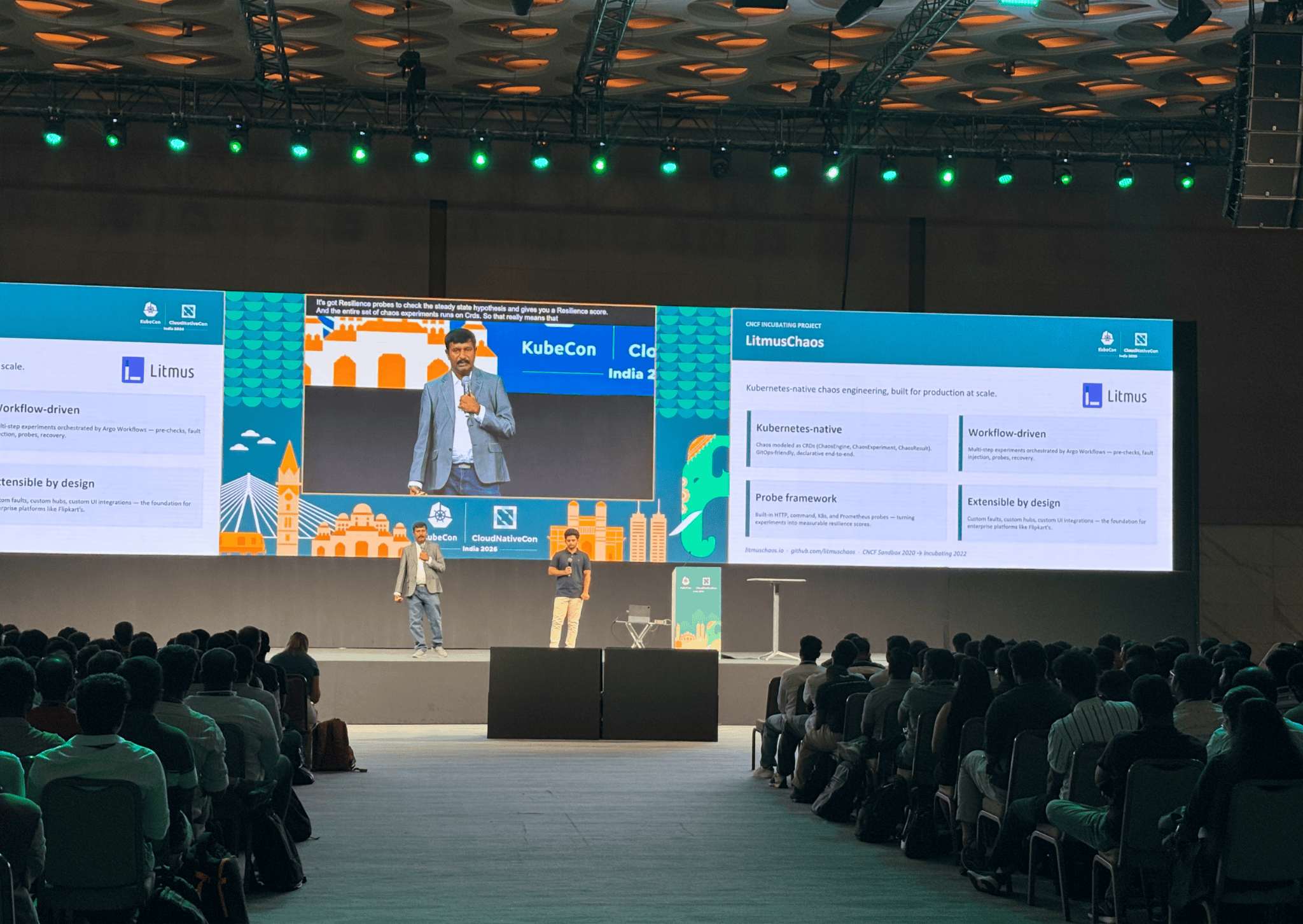
KubeCon + CloudNativeCon India 2026 marked a significant inflection point for LitmusChaos. The enthusiastic engagement from an audience predominantly composed of practitioners building and running large-scale systems in India underscored the project’s relevance. The specific and grounded nature of the questions and discussions demonstrated a mature understanding of the challenges and opportunities in cloud-native resilience. This level of community engagement is invaluable, directly influencing the project’s roadmap and ensuring its continued evolution to meet real-world demands.
Flipkart’s victory in the CNCF End User Case Study Contest is more than just an award; it’s a powerful statement about the maturity of chaos engineering and the capabilities of open-source projects like LitmusChaos to drive enterprise-level reliability. It sets a precedent, demonstrating that chaos engineering, when implemented thoughtfully, can transform system resilience from an afterthought into a foundational practice. This success story is expected to inspire more organizations in India and globally to explore and adopt LitmusChaos, accelerating the shift towards proactive resilience strategies.
Uma Mukkara’s role in anchoring the keynote session, highlighting the flow of contributions back to the community, reinforces the core tenets of open source. It underscores that enterprise adoption is not just consumption but a partnership that strengthens the entire ecosystem. The CNCF and event organizers were commended for creating a platform that facilitates such recognition and collaboration.
Looking ahead, the insights gathered from KubeCon India, particularly regarding AI workload resilience and simplified interaction models like MCP, will undoubtedly shape the future development of LitmusChaos. The project is well-positioned to continue its trajectory as a leading open-source chaos engineering solution, fostering a more resilient and reliable cloud-native future.
Staying Connected with LitmusChaos
For those introduced to LitmusChaos at KubeCon + CloudNativeCon India 2026, or for anyone interested in delving deeper into chaos engineering, the project offers multiple avenues for engagement. These include joining its active Slack community, contributing to its GitHub repositories, exploring comprehensive documentation, attending community meetings, and following its updates on social media platforms. Such participation is vital for the continuous growth and improvement of the project, inviting both new users and seasoned contributors to shape its future.
The success at KubeCon + CloudNativeCon India 2026 was a testament to the dedication of the LitmusChaos team and the vibrant, growing community that supports it. The event solidified LitmusChaos’s position as a critical tool in the cloud-native reliability landscape, especially within the dynamic Indian market.
Related posts: