David’s Bridal to spin off its AI-powered Pearl wedding planning platform in a $350 million public listing deal

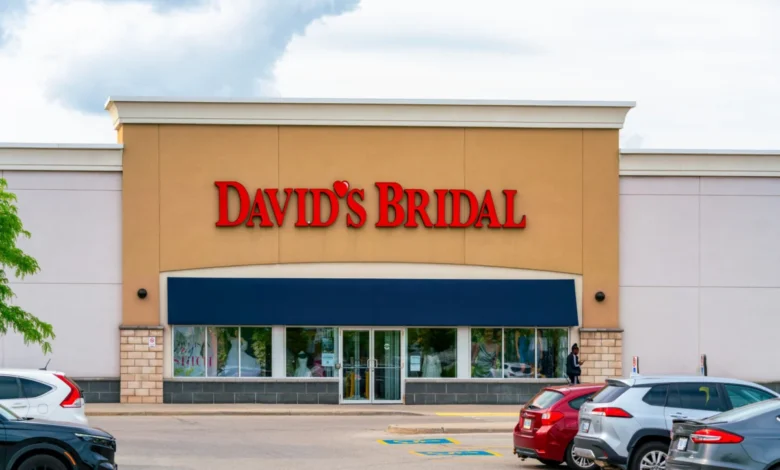
The bridal retail landscape is undergoing a significant transformation as David’s Bridal, a legacy player in the wedding industry, moves to carve out its sophisticated artificial intelligence division, Pearl, into a standalone public entity. This strategic pivot, announced in late October 2025, marks the culmination of a multi-year digital modernization effort. By partnering with K&F Growth Acquisition Corp. II—a special purpose acquisition company (SPAC)—David’s Bridal aims to transition Pearl from an internal technological asset into a publicly traded company that will eventually hold ownership of the retailer’s extensive brand and intellectual property portfolio.
The proposed transaction values Pearl at $350 million, a figure reflecting both the platform’s current operational success and its projected scalability as a premier digital destination for wedding planning. The deal also includes a $75 million private investment component, with $25 million committed by CION Investment Corporation, which currently holds the position of David’s Bridal’s largest shareholder. While a definitive agreement remains in the negotiation phase, the letter of intent outlines a roadmap that separates the retail operations from the high-growth software and media arm.
A Chronology of Digital Evolution
To understand the significance of this spin-off, one must look at the timeline of David’s Bridal’s digital transformation. For decades, the company functioned primarily as a brick-and-mortar giant. However, the retail volatility of the early 2020s necessitated a radical shift in business strategy.
In 2025, the company successfully migrated its e-commerce infrastructure to the Shopify platform. This was not merely a backend technical upgrade; it was the foundational prerequisite for launching the "agentic" version of Pearl. By leveraging Shopify’s robust APIs, David’s Bridal was able to integrate sophisticated AI capabilities that moved beyond basic search functions into autonomous, task-oriented planning.
The acquisition of Love Stories TV in late 2024 served as another critical milestone. This move allowed David’s Bridal to establish the Pearl Media Network, a retail media ecosystem that provides vendors with direct access to a highly qualified audience. By the summer of 2025, the beta launch of the agentic Pearl wedding planner began to change how couples interact with wedding services, effectively bridging the gap between inspiration and transaction.
The Strategic Value of Agentic AI
The term "agentic" in the context of Pearl refers to the platform’s ability to act on behalf of the user to complete complex tasks rather than simply providing static information. Traditional wedding planning sites serve as directories; Pearl serves as an assistant.
Pearl’s architecture includes two primary pillars: the agentic planning engine and the Pearl Connect platform. Pearl Connect is designed to optimize the conversion funnel, ensuring that qualified leads—couples actively looking for services—are efficiently matched with vendors. This asset-light, software-as-a-service (SaaS) model is what makes the platform particularly attractive to public market investors.
The company reports that approximately 90% of U.S. brides already interact with some facet of the Pearl ecosystem, whether through digital discovery, vendor recommendations, or retail media engagement. This saturation gives Pearl a distinct advantage in data acquisition, allowing the AI to refine its recommendations based on real-time consumer behavior.
Leadership and Operational Continuity
The leadership team driving this transition is deeply embedded in the company’s history. Kelly Cook, the current CEO of David’s Bridal, is expected to lead Pearl as its CEO upon the completion of the spin-off. Elina Vilk, who serves as the president and chief business officer of David’s Bridal, is slated to take on the role of president at the new entity.
According to official statements, this leadership continuity is intended to ensure that the transition remains seamless for both employees and the millions of customers who rely on the brand. For the brick-and-mortar retail side of the business, the message is one of stability. The companies have explicitly stated that David’s Bridal’s physical store operations, appointment schedules, and service standards will remain unaffected by the corporate restructuring.
Financial Projections and Market Implications
The financial outlook for the post-spin-off Pearl entity is aggressive. The company has forecasted a significant trajectory for 2026 and 2027, projecting margins exceeding 30% by the end of 2026. Furthermore, revenue is expected to experience a year-over-year growth rate of more than 100% in 2027, with total revenue projected to surpass $85 million.
For investors, the appeal lies in the "trifecta" described by K&F Growth Acquisition Corp. II co-CEO Dan Fetters: established profitability, high growth potential, and a clean balance sheet. By separating the retail assets—which are often subject to the cyclical nature of physical consumer spending—from the tech-heavy Pearl platform, the entities can cater to different types of investors. Pearl will likely be valued as a high-growth technology play, while the remaining David’s Bridal retail operations will continue to operate as a specialized destination for wedding apparel.
Broader Industry Context
The move by David’s Bridal is emblematic of a broader trend in retail: the "platformization" of niche markets. As e-commerce becomes more competitive, companies are finding that their proprietary data and consumer-facing software are often more valuable than their physical inventory. By spinning off Pearl, David’s Bridal is effectively attempting to monetize the "wedding journey" rather than just the "wedding dress."
The wedding industry is notoriously fragmented, with thousands of independent vendors—florists, photographers, venues, and caterers—competing for attention. Pearl’s ability to act as a centralized hub provides a level of efficiency that has historically been missing from the industry. If the platform can successfully scale its lead-conversion technology, it could fundamentally alter the economics of wedding planning, potentially drawing revenue away from traditional search engines and social media advertising platforms.
Potential Challenges and Risk Factors
Despite the optimism surrounding the deal, there are inherent risks. The transition to a public company requires rigorous regulatory compliance and a higher level of financial transparency. Furthermore, the reliance on AI for "agentic" functions carries technical risks. As the platform scales, maintaining the accuracy of its recommendations and the security of user data will be paramount.
Additionally, the integration of retail media networks requires a delicate balance. The platform must remain useful to the bride while ensuring that vendor-sponsored content does not degrade the quality of the user experience. If users feel that the AI is prioritizing paid placements over the best matches for their vision, trust—the core currency of the wedding industry—could erode.
Future Outlook
As the negotiations between David’s Bridal and K&F Growth Acquisition Corp. II proceed, the industry will be watching closely. The success of this venture could serve as a blueprint for other specialized retailers looking to monetize their proprietary digital tools.
If successful, the spin-off will complete the transformation of a 75-year-old retail brand into a modern, dual-track company. On one side, a resilient retail business; on the other, a high-tech, data-driven platform that sits at the center of the wedding industry. For now, the focus remains on finalizing the definitive agreement and preparing for the transition to the public markets, a process that will likely redefine the strategic direction of David’s Bridal for the next decade.
For stakeholders, the primary takeaway is that the wedding industry is moving away from purely transactional models toward service-based, AI-driven experiences. Pearl is at the forefront of this shift, and its path to becoming a standalone entity is perhaps the most significant indicator of where the future of wedding commerce lies.
Related posts: