CNCF Announces Annual Community Award Winners at KubeCon + CloudNativeCon North America 2026 Recognizing Excellence in Open Source Leadership

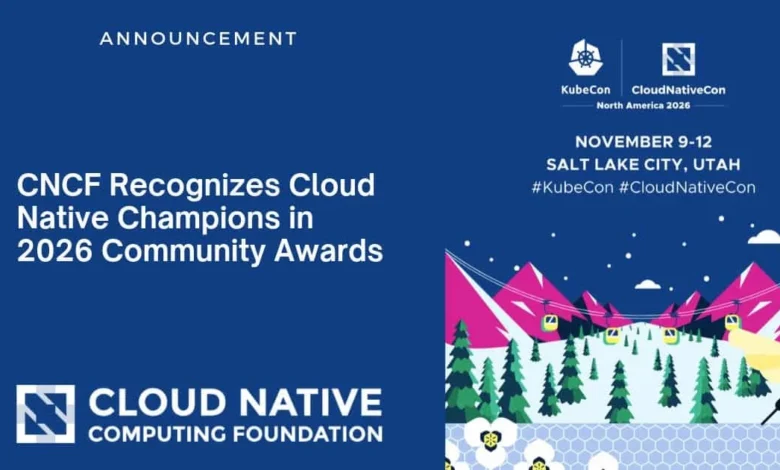
The Cloud Native Computing Foundation (CNCF) officially unveiled the recipients of its prestigious 2026 Community Awards today during the opening keynote at KubeCon + CloudNativeCon North America in Salt Lake City. These accolades serve as the industry’s primary benchmark for recognizing the individuals who provide the foundational labor, strategic guidance, and technical innovation necessary to sustain the global cloud native ecosystem. As the CNCF marks another year of rapid growth—now boasting nearly 800 member organizations and managing a vast portfolio of projects—the awards underscore the critical importance of human capital in maintaining the stability of the world’s most significant digital infrastructure.
A Decade of Excellence: The Evolution of CNCF Recognition
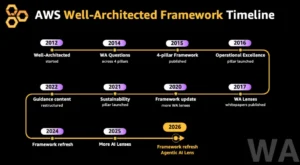
Since its inception in 2016, the CNCF Community Awards program has evolved alongside the organization itself. What began as a modest effort to highlight core contributors has transformed into a comprehensive honors system that spans multiple disciplines, including technical engineering, documentation, mentorship, and project governance.
The timeline of these awards reflects the maturation of the cloud native landscape. In the early years, the focus was primarily on initial Kubernetes contributors and the architects of the Cloud Native Interactive Landscape. By 2020, the scope expanded to include the "Chop Wood Carry Water" award, acknowledging that the sustainability of open source projects relies as much on mundane, repetitive maintenance as it does on high-level innovation. In 2026, the awards now serve as a vital indicator of the community’s shift toward addressing the complex challenges of the AI era, specifically regarding observability, security, and hardware-accelerated infrastructure.
Honoring Sustained Impact: The Lifetime Achievement Award
The most prestigious honor, the Lifetime Achievement Award, was bestowed upon Julius Volz and Rita Zhang, two individuals whose contributions have defined the trajectory of modern cloud native operations. Volz, a pivotal figure in the development of Prometheus, has been instrumental in making observability a standard requirement for cloud native deployments. His work provided the industry with the metrics and monitoring capabilities necessary to manage distributed systems at scale.
Rita Zhang, recognized for her extensive contributions to Kubernetes security and governance, has played a foundational role in hardening the platform against evolving threat landscapes. Their joint recognition signals a strategic priority for the CNCF: as AI models become more deeply integrated into cloud infrastructure, the ability to observe and secure production environments is no longer a "nice-to-have" but a core requirement for enterprise-grade reliability.
Jonathan Bryce, Executive Director of the CNCF, noted during the presentation that the work of Volz and Zhang has transcended individual projects. "Their efforts have built the invisible scaffolding upon which modern digital business rests," Bryce remarked. "By focusing on the long-term health of our infrastructure, they have ensured that the next generation of cloud native developers inherits a stable, secure, and transparent ecosystem."
Technical Innovation: The Top Committer Award
The Top Committer Award, which highlights singular technical achievement, was presented to a lead contributor who has pushed the boundaries of Kubernetes networking and testing. The recipient’s work on IPv6 dual-stack support represents a milestone for global infrastructure, enabling organizations to transition away from legacy networking constraints. Furthermore, their advancements in the KIND (Kubernetes IN Docker) testing infrastructure have drastically reduced the feedback loop for developers, allowing for faster, more reliable testing of complex clusters.
Perhaps most significant is the contributor’s work on DRANET. By extending Dynamic Resource Allocation—a mechanism designed to handle specialized hardware such as GPUs and TPUs—to network resources, this individual has paved the way for more efficient AI/ML workloads. This development is critical as the industry shifts toward "AI-native" infrastructure, where the tight coupling of network and compute resources is essential for performance.
Sustaining the Foundation: The Chop Wood Carry Water Award
Open source is often characterized by the "hero narrative," but the CNCF has long emphasized the reality that success is built on the shoulders of those performing invisible, repetitive tasks. The Chop Wood Carry Water award continues to be the most culturally significant recognition within the foundation.
This year, the recipients included a broad cohort of contributors responsible for Istio releases, core Kubernetes controllers, and community mentorship initiatives. These contributors perform the "gritty work"—triaging thousands of GitHub issues, managing complex release pipelines, and mentoring new maintainers—that prevents "project rot." Data from the CNCF’s internal metrics suggests that projects with high engagement in these mundane maintenance tasks see a 40% higher rate of security patch adoption, highlighting the direct correlation between community health and software reliability.
Advancing Usability: The Lorem Ipsum Award
Formerly known as the Top Documentarian award, the Lorem Ipsum award recognizes the often-overlooked art of technical communication. In an ecosystem as complex as the cloud native space, high-quality documentation is the primary barrier to entry for new adopters. This year’s recipients were honored for their efforts in simplifying documentation for Kubernetes, HAMi, Cilium, and the eBPF ecosystem.
By improving the clarity and accessibility of technical manuals and onboarding guides, these documentarians have effectively lowered the barrier to entry for thousands of organizations. As the cloud native stack grows in complexity, the ability to explain that complexity in a digestible format is increasingly becoming a strategic asset for the CNCF.
Industry Implications and Broader Context
The 2026 awards ceremony occurs at a pivotal moment for the technology sector. With the global cloud infrastructure market projected to reach record valuation by 2027, the role of open source in enterprise IT has never been more prominent. CNCF CTO Chris Aniszczyk highlighted that the community is currently navigating a transition toward "operational efficiency," where the focus is shifting from simply adding new features to optimizing existing ones.
The awards also serve as a recruitment and retention mechanism. By formalizing the recognition of contributors, the CNCF incentivizes long-term involvement. In an industry defined by high turnover rates, this structured recognition provides a sense of community and purpose that keeps talent within the ecosystem.
Furthermore, the focus on security-centric and networking-focused awards reflects the current geopolitical and technical climate. As organizations face increasing pressure to secure their software supply chains, the work done by these award winners is directly tied to the mitigation of systemic risk.
Moving Forward: How to Engage
The CNCF continues to invite developers, operators, and architects to participate in these initiatives. The foundation’s End User Community remains a critical hub for organizations to share best practices and influence the direction of future projects. Those interested in contributing are encouraged to review the CNCF’s project repositories and participate in the various Technical Advisory Groups (TAGs), which serve as the foundation for the collaborative efforts recognized today.
As KubeCon + CloudNativeCon North America continues through the week, the discourse remains centered on how these award-winning contributions will be scaled to support the next generation of cloud applications. With the European edition of KubeCon already in the planning stages, the momentum generated by this year’s award winners is expected to carry into 2027, ensuring that the cloud native ecosystem remains the most resilient and innovative segment of the global technology sector.
For those looking to get involved, the CNCF portal provides a roadmap for entry-level contributors, offering paths to move from passive users to active maintainers, ensuring that the cycle of recognition and contribution remains a permanent feature of the open source landscape.