Britain’s Cold Chain Under Pressure: How Scorching Summers are Exposing Vulnerabilities and Driving Tech Innovation in Food Safety

Britain’s increasingly scorching summers are exposing critical weaknesses in the intricate systems retailers rely on to keep food safe, from the visible refrigeration units in supermarkets to the complex network of trucks, warehouses, and distribution centres that constitute the nation’s vital cold chain. The persistent rise in temperatures, now a defining characteristic of the British summer, is not merely an inconvenience but a profound challenge to the integrity of the food supply, demanding urgent adaptation and technological innovation to safeguard public health and maintain consumer trust.
The Summer of Records: A Chronicle of Heatwave Impacts
The summer of 2023 has served as an stark and undeniable warning. Meteorological data from the Met Office painted a concerning picture, recording temperatures of 35C or higher in May, June, and July for the first time in the UK’s recorded weather history. This unprecedented trifecta of extreme heat was further underscored by eight days that exceeded 34C, a statistic that surpassed the previous records held by the notably hot summers of 1976 and 2020. These figures are not mere abstract statistics; they represent a tangible shift in the UK’s climate, placing immense strain on infrastructure designed for historically milder conditions.
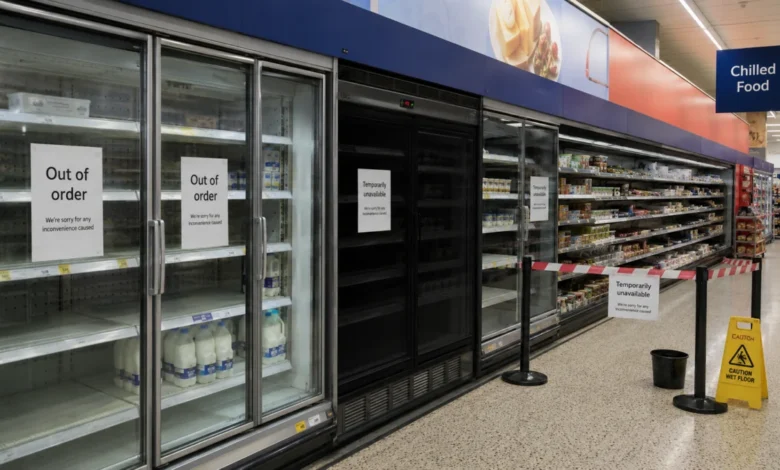
The immediate impact of these successive heatwaves was visibly felt by shoppers across the country. During the peak of the latest sweltering periods, supermarket fridges and freezers faltered, with reports emerging from stores nationwide of critical refrigeration failures. Shelves typically laden with chilled and frozen foods stood starkly empty, a direct consequence of systems buckling under the relentless heat. Leading retailers, including household names like Tesco, Marks & Spencer (M&S), and Sainsbury’s, all experienced disruptions. M&S, for instance, was compelled to proactively invest in new refrigeration units specifically engineered to withstand temperatures up to 45C, a clear acknowledgment of the new climatic reality. Industry figures were quick to warn that older refrigeration systems, prevalent across much of the retail landscape, were particularly vulnerable to such extreme and prolonged thermal stress. The sight of empty chilled aisles, a rare occurrence in a developed economy, served as a potent symbol of the fragility inherent in the existing cold chain infrastructure.
Beyond the Aisles: The Invisible Strains on the Cold Chain
While consumer-facing refrigeration failures capture immediate attention, they represent only the tip of the iceberg. The more profound and pervasive problem lies within the ‘cold chain’ itself – the vast, interconnected network of refrigerated storage facilities, vehicles, and distribution centres responsible for maintaining optimal temperatures as food travels from its point of origin to the retail shelf. This intricate logistical ballet ensures that perishable goods, from fresh produce and dairy to meat and frozen items, remain safe and of high quality throughout their journey.
At this critical juncture of the supply chain, vulnerabilities are less visible but equally, if not more, impactful. Failures can occur at numerous points: a refrigerated trailer running too warm due to insufficient insulation or an overworked cooling unit; a pallet of temperature-sensitive goods sitting exposed on a hot loading bay for an extended period; or a delivery taking too long to reach its designated refrigerated storage, allowing temperatures to creep above safe thresholds. Each of these seemingly minor breaches can significantly elevate the risk of product spoilage, bacterial growth, and, ultimately, foodborne illness. The Food Standards Agency (FSA) consistently advises that perishable foods should ideally be kept between 0C and 5C to inhibit microbial growth and maintain safety. Any prolonged deviation from this narrow range can compromise the product, rendering it unfit for consumption long before it reaches a consumer’s basket. The challenge is not just keeping food cold, but ensuring it stays cold consistently, every step of the way.
Aging Infrastructure: A System Unprepared for a New Climate
The escalating frequency and intensity of heatwaves in the UK are exposing a fundamental flaw: much of the nation’s cold chain infrastructure was simply not designed to cope with such sustained periods of extreme heat. A recent report highlighted a concerning statistic: more than half of the UK’s 460 cold storage facilities for food and pharmaceuticals are more than 20 years old. These older buildings and their integrated refrigeration systems, while perhaps adequate for historical climate patterns, struggle significantly when subjected to prolonged periods of high ambient temperatures. Their insulation may be less effective, their cooling units less efficient, and their overall structural resilience to heat stress diminished.
The Cold Chain Federation, representing the interests of the temperature-controlled logistics industry, has voiced serious concerns about this aging infrastructure. They argue that without substantial investment in modernization and climate-resilient upgrades, the UK’s food supply chain faces an increasingly precarious future. The issue extends beyond just the cooling units; it encompasses the entire ecosystem, from the thermal properties of warehouse walls and roofs to the efficiency of energy supply and the robustness of backup systems. Adapting to a hotter climate requires a holistic approach that acknowledges the cumulative impact of rising temperatures on every component of the cold chain, underscoring the urgent need for strategic capital expenditure to future-proof this vital sector.
Wiliot’s Innovation: A Digital Shield for Perishable Goods
In response to these growing vulnerabilities, technological solutions are emerging as a critical part of the adaptation strategy. Wiliot, a technology company describing itself as a "physical AI platform," is at the forefront of this innovation, offering a system designed to provide unprecedented visibility into the cold chain. The core of Wiliot’s technology lies in small, battery-free Bluetooth Low Energy (BLE) tags. These diminutive tags, which can be easily attached to individual physical products or pallets, are ingeniously powered by ambient radio waves, eliminating the need for internal batteries and thus greatly reducing their environmental footprint and maintenance requirements.
Once attached, these tags continuously transmit a wealth of crucial information, including location, temperature, and humidity. Critically, they can also detect exposure to light, which could serve as an indicator that a package has been opened or tampered with, adding an extra layer of security and integrity monitoring. Wiliot’s vice president, Amir Khoshniyati, highlights that the traditional industry approach often relies on intermittent checks, which inherently leave gaps in data and blind spots where temperature excursions can occur undetected. Wiliot’s continuous monitoring aims to close these gaps, providing real-time, granular data throughout a product’s journey.
Khoshniyati eloquently illustrates the challenge, comparing a refrigerated trailer to a room with many windows on a sunny day. "If they’re a trailer that’s supposed to be holding something at, let’s say, around 72 degrees [Fahrenheit], and now it’s starting to go through the same routes that are 10, 15 degrees warmer, we’ve all been in rooms with a lot of glass," he explains. "If there’s a 10-degree temperature change on a very sunny day, you’re going to feel warmer in that room. These trailers operate the same way." His point underscores that while refrigeration infrastructure may be capable of maintaining a set temperature under normal conditions, increasingly hot ambient weather places additional, often overwhelming, pressure on the system, potentially pushing it beyond its design limits.
The problem, Khoshniyati emphasizes, is not confined solely to the journey itself. Products are also highly susceptible during what the company terms "dwell time" – the often-overlooked periods spent waiting to be loaded or unloaded at various points in the supply chain. A pallet that might ordinarily spend 37 minutes being unloaded at a particular ambient temperature could face a drastically different risk profile when the surrounding temperature is 10C or 15C higher. "These temperature variances and these minor adjustments, they have an impact on the supply chain," he asserts. "Every bit of the supply chain has to be recalibrated, from trailer transit all the way through the mechanics of the dwell time and how quickly it moves to refrigeration or freezing."
Wiliot’s technology also incorporates artificial intelligence to analyze patterns in the vast amounts of data collected. This AI-driven insight can identify unusual conditions, flag potential problems proactively, and even predict the remaining shelf life or safety of a product based on its entire temperature history. In Wiliot’s vision, a retailer could eventually query a specific product about its journey and receive an AI-generated answer regarding its safety and quality, moving beyond simple location tracking to comprehensive condition monitoring. This approach, Khoshniyati notes, extends beyond food; cosmetics, electronics, and even pharmaceuticals can be subtly damaged by prolonged exposure to extreme temperatures, even when the effects are not immediately visible. He likens it to a mobile phone warning about overheating: while the immediate danger dissipates upon cooling, repeated exposure can degrade internal components over time. The same principle applies to products in transit – unseen damage could compromise quality or shelf life down the line.
Integrating Technology: Bridging the Gap in Supply Chain Visibility
A key challenge for retailers considering such advanced technology is how to integrate it without necessitating a complete overhaul of their existing systems. Wiliot addresses this by taking an approach that works alongside established infrastructure, including traditional barcodes, QR codes, RFID (Radio-Frequency Identification), and machine vision systems. The company asserts that its battery-free BLE tags can be used with some existing infrastructure, offering a path to enhanced monitoring without demanding a costly, start-from-scratch investment.
Historically, the cost of scaling advanced monitoring technology across a vast supply chain has been a significant barrier. Khoshniyati points out that deploying RFID infrastructure, for instance, often requires substantial capital investment when implemented at scale due to the need for dedicated readers and a more complex network. Wiliot’s lower-cost, battery-free tags, leveraging ubiquitous Bluetooth technology, aim to democratize granular condition monitoring, making it more accessible for widespread adoption.
The efficacy of Wiliot’s approach is already being demonstrated through significant partnerships. In the UK, the company is working with Royal Mail, an example Khoshniyati cites as successfully integrating their technology with existing investments and processes within a major logistics operation. On an even grander scale, Wiliot has partnered with Walmart in the US for a nationwide deployment covering more than 4,600 stores. This extensive implementation showcases the technology’s capability for mass adoption and its potential to revolutionize supply chain visibility across vast retail empires. Khoshniyati hinted at broader international expansion following these successes, underscoring the global relevance of addressing cold chain vulnerabilities.
The Broader Implications: Economic, Environmental, and Public Health
The implications of a cold chain struggling under the weight of climate change are far-reaching, touching upon economic stability, environmental sustainability, and public health.
- Economic Impact: For retailers, increased instances of refrigeration failures and product spoilage translate directly into significant financial losses. This includes the cost of discarded goods, lost sales, increased energy consumption for struggling units, and higher maintenance expenses. These costs invariably trickle down, potentially leading to higher food prices for consumers. The broader economic impact on the food processing and logistics sectors could also be substantial if adaptation is slow.
- Environmental Impact: Food waste is a major environmental concern, contributing to greenhouse gas emissions from landfills. Cold chain failures exacerbate this problem, leading to more food being discarded. Furthermore, older, less efficient refrigeration systems, especially when operating under stress, consume more energy, increasing the carbon footprint of food production and distribution.
- Public Health: This is perhaps the most critical implication. Inadequate temperature control in the cold chain creates ideal conditions for the proliferation of harmful bacteria such as Salmonella, E. coli, and Listeria. This significantly elevates the risk of foodborne illnesses, which can range from mild discomfort to severe, life-threatening conditions, particularly for vulnerable populations. The Food Standards Agency’s warnings about maintaining safe refrigeration temperatures underscore the constant vigilance required to protect public health.
- Consumer Trust: Repeated instances of empty shelves or concerns about product quality can erode consumer confidence in retailers and the broader food supply chain. In an era where consumers increasingly demand transparency and safety, such breakdowns can have lasting reputational damage.
A Dual Approach: Technology and Infrastructure Modernization
For retailers facing the undeniable prospect of more extreme weather, the question is whether technology alone can fully solve the problem. The consensus emerging from industry experts suggests that the answer lies in a comprehensive, dual approach: a combination of strategic investment in upgrading physical infrastructure and the implementation of advanced technology to provide unparalleled visibility into its performance.
Even the most visible part of the cold chain – the supermarket refrigerator – is already under immense pressure. As highlighted earlier, over half of the UK’s cold storage facilities are over two decades old. These older buildings and their refrigeration systems were designed for a different climate and are increasingly struggling to cope with prolonged periods of extreme heat. Modernizing these facilities involves not just replacing old cooling units but also improving insulation, adopting more energy-efficient technologies, and designing for greater resilience against heat stress and potential power disruptions. This makes the cold chain a broader adaptation challenge, requiring retailers to consider not only whether a refrigerator can keep a product cold once it reaches the shop, but whether the entire logistical infrastructure behind it can withstand a progressively hotter climate.
The Future of Food Safety: Empowering the Consumer
Wiliot’s longer-term vision for its technology is strikingly simple yet profoundly transformative. Imagine a future where a customer sitting down to eat a piece of sushi or a steak could, in theory, ask the product itself whether it was safe to eat. This would be based on an immutable, detailed record of everything the item had experienced throughout its journey, from farm or fishing boat to plate. "The ultimate vision here is that you go to a sushi restaurant, you go to a steakhouse, you know, seafood, whatever the preference is, and before you eat your item, you can ask your item, ‘Are you safe to eat?’" Khoshniyati envisions.
This concept, while sounding futuristic, is built upon technology that is rapidly maturing and being deployed to address a problem that is already immediate and intensifying. As Britain’s climate continues to warm, its cold chain will be forced to cope with conditions for which much of its existing infrastructure was never designed. The ability to achieve this level of granular interaction and transparency with physical items is, as Khoshniyati states, "the future that we’re really marching towards." Ultimately, he concludes, the deployment of such technology transcends mere brand reputation or logistics efficiency. "End of the day, it has to do with the customer." Ensuring the safety, quality, and availability of food in a warming world is not just a business imperative, but a societal one, and innovation in the cold chain will be critical to achieving it.