AWS Weekly Roundup: Generative AI, Security Innovations, and Infrastructure Scalability Updates

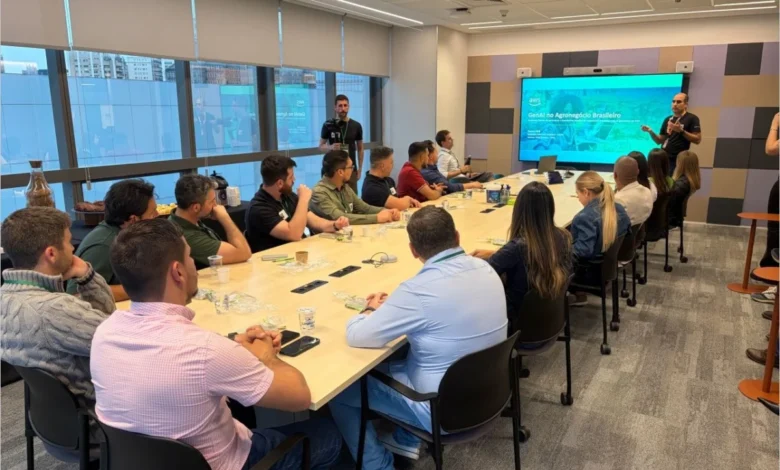
A few weeks ago, the conversation at the AWS office in São Paulo centered on a critical intersection: the practical application of generative AI within the complex, high-stakes environment of Brazilian agribusiness. For industry leaders navigating the transition from traditional operations to tech-integrated workflows, the discussion moved past the theoretical benefits of AI and into the logistics of implementation. The central question for these executives was not whether to adopt AI, but how to ensure it reaches the workforce—often mobile, working in remote fields, and relying on voice-based interfaces while operating heavy machinery. This focus on accessibility underscores the strategic importance of recent AWS developments, including a significant expansion of the Amazon Polly generative engine, which now provides more natural, localized communication tools, such as new Brazilian Portuguese voices, for users in the field.
The urgency of these technological advancements is mirrored by a heightened focus on cybersecurity. In an era where the latency between a vulnerability disclosure and its weaponization has effectively vanished, AWS has shifted its security philosophy toward proactive, evidence-based remediation. This week, the company announced the general availability of AWS Continuum, a service designed to bridge the gap between identifying vulnerabilities and executing fixes. This development arrives alongside sobering data from Amazon’s own threat intelligence, which highlights the diminishing window of safety for enterprise systems.
The Security Paradigm: AWS Continuum and the Erosion of Patch Windows
The release of AWS Continuum marks a fundamental change in how organizations manage code vulnerabilities. Traditionally, vulnerability management has been an exercise in triage—security teams receive long, often overwhelming lists of vulnerabilities from scanners and must prioritize them manually. Continuum changes this by reframing the process as an end-to-end operational task. By building a comprehensive context graph of an organization’s repositories and its specific AWS environment, the service assigns each finding an evidence-based severity rating.
Crucially, Continuum does not merely alert users to a potential threat; it attempts to reproduce the exploit within an isolated, secure sandbox. This generates proof-of-concept code, providing security engineers with concrete evidence of how a vulnerability might be weaponized against their specific infrastructure. By ranking issues based on their proximity to business-critical systems, the platform automates the creation of pull requests for remediation. While the system currently mandates human approval for all code merges, it provides a roadmap for autonomous remediation, allowing companies to set confidence thresholds for future automated patching.
The catalyst for this shift in strategy is a stark reality observed in recent telemetry. Amazon Threat Intelligence recorded a PHP2Shell exploitation attempt on October 17, 2026—four full days before the public disclosure of the associated vulnerabilities (CVE-2026-109618 and CVE-2026-109619). Even more concerning, functional proof-of-concept exploits were found circulating as early as 02:00 UTC on the day of disclosure, providing attackers with a twelve-hour head start before the official embargo was lifted at 14:00 UTC. This timeline demonstrates that the traditional concept of a "patch window" measured in days is no longer valid. Consequently, AWS has advised organizations to initiate investigations based on the earliest known exploitation activity rather than waiting for formal CVE announcements.
Streamlining Service Exposure with Amazon ECS Gateway
In tandem with its security initiatives, AWS has introduced Amazon ECS Gateway to address the complexities of service networking and infrastructure management. This tool is designed to delineate responsibilities between platform engineering teams and application development teams. Under this new model, platform teams define a single gateway that encompasses critical network infrastructure, such as subnets, security groups, TLS certificates, and AWS WAF web access control lists (ACLs).
Application teams can then opt into this infrastructure by attaching a gateway connector to their service definitions. This automatically provisions necessary resources, including ACM certificates, unique DNS hostnames, listener rules, and target groups. The economic efficiency of this model is significant: a single Application Load Balancer (ALB) can be shared by up to 25 services, with the gateway managing up to 10,000 clusters. By allowing for incremental adoption via existing UpdateService workflows, AWS provides a low-friction path for organizations to modernize their service architecture without necessitating a total overhaul of their existing load-balancing configurations.
Expanding the Generative AI Ecosystem
Beyond security and infrastructure, the past week saw a series of enhancements to AWS’s generative AI capabilities, aimed at improving both performance and developer ease-of-use.
The Amazon Polly generative engine has received a major upgrade, expanding its catalog to 57 generative voices across 11 languages and 25 locales. The addition of 14 new voices, including new options for Brazilian Portuguese, Hindi, and Finnish, represents a step toward more inclusive and localized AI interactions. Because this is a drop-in upgrade, the underlying API calls and pricing structure remain unchanged, allowing existing applications to realize immediate improvements in speech naturalness.
For developers working with machine learning models, the introduction of TorchNeuron in public beta marks a significant milestone. This open-source PyTorch backend enables models to run on AWS Trainium hardware with minimal configuration changes. By simply using the .to('neuron') command, developers can achieve native performance on Trainium2 and Trainium3 instances without the need to rewrite their code or sacrifice compatibility with torch.compile. This move is intended to prevent "hardware lock-in," ensuring that software remains portable across different compute architectures.
Additionally, Amazon SageMaker AI has streamlined the process of model customization. New training session APIs allow users to manage the post-training loop—including custom loss functions and reward signals—without the administrative burden of managing GPU clusters. SageMaker handles the complexities of distributed execution, fault recovery, and checkpoint storage, charging only for the tokens processed during the session. The integration of support for models like Muse Glimmer, Qwen 3.8, and Ministral 3 further expands the options available to enterprises seeking to fine-tune generative models for specific use cases.

Enhancing Reliability and Interoperability
Reliability remains a cornerstone of the AWS product roadmap. The announcement that Amazon ElastiCache Serverless for Valkey now supports online migration with zero downtime is a critical update for businesses managing high-availability data stores. By enabling the migration of self-managed Valkey or Redis OSS databases on Amazon EC2 to ElastiCache Serverless without interrupting client connectivity, AWS has removed a significant barrier to modernizing legacy cache infrastructure.
Interoperability is also being addressed through the AWS Agent Registry, a new managed catalog for Model Context Protocol (MCP) servers and agent skills. This registry allows orchestrators to discover approved capabilities at runtime, rather than requiring all tools to be compiled at build time. This approach facilitates more dynamic and scalable agentic workflows, providing a standardized way for AI agents to interact with a growing ecosystem of external tools.
Broader Implications for Enterprise IT
These updates, taken collectively, signal a shift in the AWS strategy toward higher-level abstraction and increased operational transparency. By providing tools that automatically handle infrastructure, security, and networking, AWS is enabling organizations to focus their resources on business logic rather than system maintenance.
The move toward "tokenomics" and cost-transparency for coding agents, as highlighted in recent technical documentation, reflects an increasing maturity in the enterprise AI market. As businesses begin to integrate AI-assisted coding tools into their development cycles, the ability to benchmark cost against quality on internal codebases becomes essential for sustainable scaling. Similarly, the successful migration of 119 TB of data by U.S. Bank from Oracle Exadata to Amazon RDS for Oracle—achieved with zero data loss and minimal downtime—serves as a benchmark for the feasibility of large-scale cloud migrations in highly regulated sectors.
As the industry looks toward the upcoming AWS re:Invent conference in Las Vegas, scheduled for November 30 to December 4, these announcements provide a clear view of the priorities shaping the cloud landscape: automated security, developer productivity, and the pragmatic application of generative AI. With over 2,200 sessions planned, the event is expected to further clarify how these individual services integrate into a unified, secure, and high-performance cloud architecture. For leaders in sectors as diverse as agribusiness, finance, and software development, the common thread is clear: the ability to move quickly—without sacrificing security or reliability—is the defining advantage in the current technological environment.
Related posts: