Amazon SQS Celebrates Two Decades of Cloud Messaging Innovation, Powering Resilient Distributed Systems


Amazon Simple Queue Service (Amazon SQS) marks its 20th anniversary as a cornerstone of cloud computing, having been launched on July 13, 2006. As one of the inaugural three services available to customers, alongside Amazon EC2 (Elastic Compute Cloud) and Amazon S3 (Simple Storage Service), SQS fundamentally addressed a critical challenge in distributed systems: the need for a reliable, asynchronous method of communication between disparate components. This initial offering laid the groundwork for modern microservices architectures and remains a vital utility in the ever-evolving landscape of cloud infrastructure, now extending its foundational role to advanced AI and machine learning workloads.
The Genesis of Cloud Messaging: A Look Back to 2006
In the nascent days of public cloud computing, developers grappled with the inherent complexities of building scalable and fault-tolerant applications. Traditional monolithic architectures were giving way to more distributed models, but inter-service communication posed a significant hurdle. Direct, synchronous calls between services often led to tight dependencies, where the failure or slowdown of one component could cascade throughout the entire system, leading to widespread outages. AWS, having experienced these challenges firsthand while scaling its own internal infrastructure, recognized the imperative for a robust messaging solution.
Amazon SQS emerged from this necessity, offering a managed message queuing service that allowed application components to communicate asynchronously. Producers could enqueue messages without waiting for consumers to be ready, effectively decoupling services and preventing single points of failure from crippling an entire application. This paradigm shift liberated developers from the burden of provisioning, managing, and scaling their own message queue infrastructure, allowing them to focus on application logic rather than operational overhead. The 2006 launch democratized this powerful pattern, making sophisticated distributed system resilience accessible to every AWS customer.
A Foundation for Modern Architectures
Over the past two decades, the core function of SQS – decoupling producers from consumers – has remained constant, yet its impact has grown exponentially. SQS became an indispensable enabler for the widespread adoption of microservices architectures, where applications are broken down into smaller, independently deployable services that communicate via messages. It also played a pivotal role in the rise of serverless computing, seamlessly integrating with AWS Lambda to process events and scale without explicit server management.
The operational benefits provided by SQS are profound. By offloading message queue management to AWS, organizations gain elastic scalability, high availability, and durability without the significant capital expenditure or operational complexity associated with self-managed message brokers. This allows developers to build more resilient, responsive, and scalable applications with greater agility, accelerating innovation and time-to-market. Industry analysts frequently cite SQS as a prime example of a foundational cloud service that has profoundly shaped how modern applications are designed and deployed, handling trillions of messages annually across diverse industries.
Two Decades of Evolution: A Timeline of Innovation
While the core principle of SQS has endured, the service itself has undergone continuous innovation, evolving dramatically in terms of scale, performance, security, and operational controls.

- Early Years (2006-2015): Following its initial launch, SQS quickly became a popular choice for buffering data, processing batch jobs, and facilitating inter-service communication. The initial standard queues offered at-least-once delivery and best-effort ordering. Early milestones included increasing message throughput and integrating with other AWS services as they launched. Jeff Barr, a prominent AWS evangelist, meticulously documented these early developments, highlighting the service’s growing capabilities from its original 8 KB message limit.
- Mid-Period Enhancements (2015-2020): This period saw significant advancements addressing more stringent workload requirements. The introduction of FIFO (First-In, First-Out) queues was a game-changer, providing strict message ordering and exactly-once processing, crucial for financial transactions, inventory updates, and other scenarios where order and uniqueness are paramount. Server-side encryption with AWS Key Management Service (KMS) added a critical security layer, allowing customers to encrypt messages at rest. Integration with AWS Lambda further solidified SQS’s role in event-driven and serverless architectures, enabling queues to directly trigger serverless functions for processing.
The pace of innovation has only accelerated in recent years, with a focus on enhancing throughput, security, operational efficiency, and developer experience:
- High Throughput Mode for FIFO Queues (2021-2023): Recognizing the demand for even greater scale in ordered message processing, AWS introduced high throughput mode for FIFO queues in May 2021, initially supporting up to 3,000 transactions per second (TPS) per API action – a tenfold increase. This capability was progressively expanded, reaching 6,000 TPS in October 2022, 9,000 TPS in August 2023, 18,000 TPS in October 2023, and a remarkable 70,000 TPS per API action in select regions by November 2023. This exponential increase empowers customers to build high-volume, mission-critical applications requiring strict message ordering without compromising performance.
- Enhanced Security Defaults with SSE-SQS (2021-2022): Security remains a paramount concern for cloud users. In November 2021, AWS introduced server-side encryption with Amazon SQS-managed encryption keys (SSE-SQS), providing a seamless, managed encryption option that eliminated the need for customers to handle key management. Building on this, in October 2022, SSE-SQS was made the default for all newly created queues, reinforcing a security-first posture and simplifying compliance for customers.
- Streamlined Dead-Letter Queue Management (2021-2023): Dead-letter queues (DLQs) are essential for handling messages that cannot be successfully processed, preventing them from blocking the main queue. AWS significantly enhanced DLQ management, first by adding direct DLQ redrive to source queues via the SQS console in December 2021. This capability was extended to the AWS SDK and CLI in June 2023 with new APIs (e.g.,
StartMessageMoveTask), providing programmatic control over message recovery. Crucially, redrive support for FIFO queues was added in November 2023, ensuring comprehensive message recovery for ordered workloads. These enhancements drastically improve operational efficiency and data integrity for applications. - Attribute-Based Access Control (ABAC) (2022): In November 2022, SQS introduced Attribute-Based Access Control (ABAC), offering a more flexible and scalable approach to managing access permissions. Instead of maintaining static policies, customers can now configure permissions based on queue tags, allowing for dynamic access control that scales effortlessly with growing resources and evolving organizational structures.
- JSON Protocol Support (2023): Performance optimization continued with the addition of JSON protocol support in the AWS SDK in November 2023. This enhancement significantly reduced end-to-end message processing latency by up to 23% for typical 5 KB payloads and concurrently lowered client-side CPU and memory usage, translating to more efficient resource utilization and faster application response times.
- Amazon EventBridge Pipes Console Integration (2023): To further simplify integrations, AWS added the ability to connect SQS queues directly to Amazon EventBridge Pipes from the SQS console in November 2023. This integration allows messages to be routed to a wide array of AWS service targets (e.g., Lambda, Step Functions, Kinesis) without requiring custom integration code, accelerating development and reducing complexity.
- Extended Client Library for Python (2024): Expanding on a capability previously available for Java, the Extended Client Library was brought to Python developers in February 2024. This allows SQS to handle messages up to 2 GB in size by automatically storing large payloads in Amazon S3 and passing only a reference through the queue, overcoming the standard message size limitations and enabling new use cases.
- FIFO In-Flight Message Limit Increase (2024): In November 2024, AWS dramatically increased the in-flight message limit for FIFO queues from 20,000 to 120,000 messages. This substantial boost enables consumers to process a significantly greater number of messages concurrently, improving throughput and reducing potential bottlenecks in high-volume, ordered processing scenarios.
- Fair Queues for Multi-Tenant Workloads (2025): Addressing the "noisy neighbor" problem common in multi-tenant environments, AWS introduced fair queues in July 2025. By leveraging message group IDs, customers can prevent a single tenant or application component from monopolizing queue resources and delaying message delivery for others. This feature enhances fairness and predictability without requiring consumer-side code changes, a significant benefit for SaaS providers.
- 1 MiB Maximum Message Payload Size (2025): Further enhancing message handling capabilities, AWS increased the maximum message payload size from 256 KiB to 1 MiB for both standard and FIFO queues in August 2025. This allows customers to send larger messages directly through SQS, reducing the need to offload data to external storage like S3 for messages up to 1MB, simplifying application logic and reducing latency. Concurrently, AWS Lambda event source mapping for SQS was updated to support this new payload size.
The Enduring Core: Decoupling in the AI Era
Despite two decades of feature additions and technological advancements, the fundamental utility of SQS remains unchanged: to decouple services, buffer bursts of traffic, and build resilient systems that withstand individual component failures. This core value proposition is proving increasingly critical in the burgeoning field of artificial intelligence and machine learning.
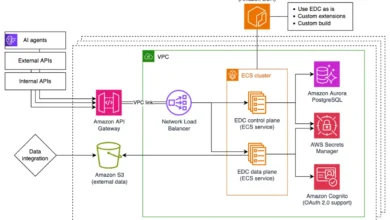
AI workloads, particularly those involving large language models (LLMs) and complex inference pipelines, often require asynchronous processing, buffering, and robust coordination. Customers are now leveraging SQS queues to buffer requests to LLMs, manage inference throughput, and orchestrate communication between autonomous AI agents operating as independent services. For instance, SQS facilitates the creation of asynchronous AI agents, as demonstrated in architectures like "Creating asynchronous AI agents with Amazon Bedrock," ensuring that even the most demanding and interconnected AI applications can operate with high availability and scalability. This adaptation highlights SQS’s enduring flexibility and its ability to seamlessly integrate with and power the next generation of cloud-native applications.
Customer and Industry Perspectives
Industry experts and developers consistently laud Amazon SQS for its reliability, scalability, and ease of use. "SQS has been a foundational element for countless organizations embracing cloud-native architectures," commented a senior cloud architect at a major financial institution. "Its ability to handle massive message volumes while ensuring durability and availability has been critical for our operations." AWS officials, in turn, emphasize the company’s commitment to continuous innovation. "We are immensely proud of SQS’s journey over the past 20 years," stated an AWS spokesperson. "It exemplifies our dedication to building services that solve real-world customer problems and evolve to meet future demands, from microservices to the most sophisticated AI applications." The service’s consistent evolution reflects AWS’s responsiveness to customer feedback and emerging industry trends, reinforcing its position as a market leader in cloud messaging.
Looking Ahead: The Future of Cloud Messaging
As Amazon SQS enters its third decade, its role as a vital component of the cloud computing ecosystem is more pronounced than ever. The continuous stream of enhancements, from performance boosts and security defaults to expanded integration capabilities and support for cutting-edge AI workloads, underscores AWS’s long-term vision for cloud messaging. SQS will undoubtedly continue to adapt, providing developers with the robust, scalable, and secure asynchronous communication backbone necessary to build the next generation of resilient, distributed applications.
To delve deeper into the capabilities and use cases of Amazon SQS, interested parties are encouraged to visit the official Amazon SQS product page, review the comprehensive developer guide, or explore the latest updates and architectural patterns on the AWS Compute Blogs, specifically under the messaging category.
Related posts: