Apple CEO John Ternus Defends Company’s AI Strategy Amid Growing Industry Scrutiny

Apple Inc. finds itself at a fascinating crossroads in its illustrious corporate history. As artificial intelligence fundamentally reshapes the technology sector, consumer electronics, and software development, the Cupertino-based giant has faced persistent questions regarding its competitive velocity in the AI race. For years, critics and market analysts have pointed to delays in rolling out advanced conversational intelligence features—most notably the highly anticipated, deeply integrated upgrades to Siri—as evidence that Apple has lagged behind nimble rivals like OpenAI, Google, and Microsoft. However, newly installed Chief Executive Officer John Ternus is pushing back against this prevailing narrative.
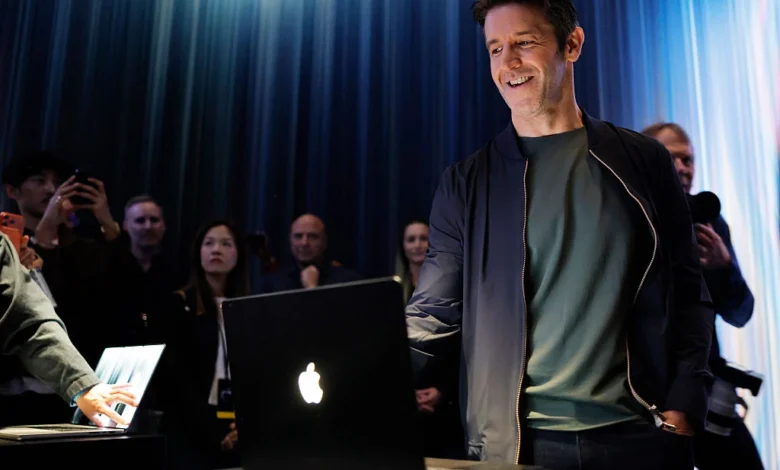
In a wide-ranging, candid interview with veteran technology journalist Steven Levy for Wired, Ternus addressed these industry perceptions head-on. Stepping into the role of CEO at the beginning of September 2026—succeeding Tim Cook after a lengthy tenure leading Apple’s hardware engineering division—Ternus made it clear that while public opinion may favor rapid, relentless deployment of generative tools, Apple’s deliberate, patient approach is an intentional strategy designed to prioritize user experience over technological novelty.
The Evolution of Apple Intelligence and the Siri Delay
To understand Apple’s current posture in the artificial intelligence landscape, one must look back at the chronology of its recent software rollouts. For much of 2024 and 2025, competitors aggressively flooded the market with generative AI agents, multimodal models, and standalone productivity applications. Meanwhile, Apple adopted a measured cadence. The company announced its proprietary Apple Intelligence framework with a strong emphasis on on-device processing and rigorous privacy safeguards, yet the rollout of a significantly more powerful, context-aware version of Siri faced repeated internal hurdles.
The culmination of these efforts finally materialized this past summer, when Apple deployed the long-awaited, overhauled version of Siri. Although the release was met with mixed reviews from tech critics who questioned whether the update arrived too late to fundamentally alter the market, it marked a critical turning point for the ecosystem. The delayed rollout fueled ongoing debates across Silicon Valley regarding whether Apple had lost its legendary knack for pioneering consumer technology trends.
Ternus, acknowledging the noise surrounding the company’s timeline, remained unperturbed during his conversation with Levy. "Everyone has an opinion," Ternus remarked, before offering a definitive counter-stance: "I really like where we’re at."
Quality Over Novelty: The Core Philosophy
At the heart of Ternus’s defense is a philosophical distinction between shipping technology for the sake of marketing and integrating technology to genuinely enhance human utility. In an era where many software developers rush to embed generative AI capabilities into every conceivable interface—often resulting in gimmicky features that confuse consumers—Apple is charting a different course.
"We’re absolutely going to leverage AI in our new products," Ternus emphasized during the Wired interview. However, he immediately drew a sharp boundary: "We don’t want to ship AI for AI’s sake. When we’re doing it right, people won’t have to think about whether it was AI that made this happen or more traditional software. What matters is, did we build something that they really love?"

This philosophy reflects Apple’s historical playbook. The company rarely invents a product category first; instead, it often waits until hardware, software, and privacy infrastructures mature to the point where an exceptional, frictionless user experience becomes possible. From graphical user interfaces and digital music players to smartphones and smartwatches, Apple’s historic market dominance has frequently relied on refining existing concepts rather than rushing unfinished innovations to market. By framing AI as an invisible utility rather than a standalone spectacle, Ternus is signaling that Apple views artificial intelligence not as a destination, but as an underlying fabric meant to serve human creativity and efficiency.
Navigating the Threat of AI Agents to the App Economy
One of the most profound anxieties currently facing the technology industry is the potential obsolescence of traditional mobile applications. As autonomous AI agents grow increasingly sophisticated, capable of executing complex multi-step tasks across the web and operating systems on behalf of users, industry analysts have begun to question the long-term viability of the app store model. If an AI agent can book a flight, order groceries, and manage calendar scheduling entirely through background application programming interfaces (APIs), the need for dedicated, standalone user interfaces—and by extension, traditional apps—could diminish significantly.
When Levy pressed Ternus on whether this paradigm shift might destabilize Apple’s lucrative ecosystem and business model, the newly minted CEO offered a perspective rooted in human-centric design. "That could make life really easy, I suppose," Ternus acknowledged, "but the creation of products is a deeply human and personal thing, something that we love to do."
This perspective highlights a fundamental tension in modern computing. While algorithmic efficiency promises frictionless automation, Apple’s core brand equity has always been deeply intertwined with tangible hardware, tactile interaction, and the curated artistry of software design. For Apple, the creation of applications and hardware is not merely a logistical utility to be automated away by a generalized agent, but an expression of craftsmanship.
Market Implications and Future Outlook
Ternus taking the helm at Apple coincides with one of the most critical transitions in the company’s nearly fifty-year history. Having officially stepped into the CEO position on September 1, 2025, his early public statements are being heavily scrutinized by Wall Street analysts, institutional investors, and tech enthusiasts eager to see how he will navigate the post-Cook era.
The financial and operational implications of Ternus’s strategy are substantial. Apple’s massive installed base of active devices—surpassing two billion worldwide—provides a uniquely powerful distribution network for AI deployment. Unlike startups that must acquire users from scratch, Apple can theoretically scale features to hundreds of millions of devices overnight. However, this scale also introduces immense risk. Any misstep in deploying AI capabilities across such a vast ecosystem could lead to widespread consumer backlash, privacy scandals, or regulatory scrutiny, particularly given the European Union’s stringent Digital Markets Act and growing global oversight of big tech firms.
By refusing to be baited into an algorithmic arms race, Ternus is attempting to insulate Apple from the boom-and-bust cycle of feature hype. Instead, he is betting that consumers will ultimately reward reliability, deep hardware-software integration, and unwavering commitment to data privacy over raw speed to market.
As Apple continues to integrate its intelligence framework deeper into its hardware lineup—from iPhones and iPads to Macs and wearable devices—the coming years will test whether Ternus’s measured methodology proves prescient or overly cautious. For now, the message from Cupertino is unambiguous: Apple intends to dictate its own pace, focusing not on how quickly it can adopt the trends of today, but on how deeply it can enrich the human experiences of tomorrow.