Amazon is turning to AI to help fight scammers by empowering Alexa for Shopping to verify message authenticity

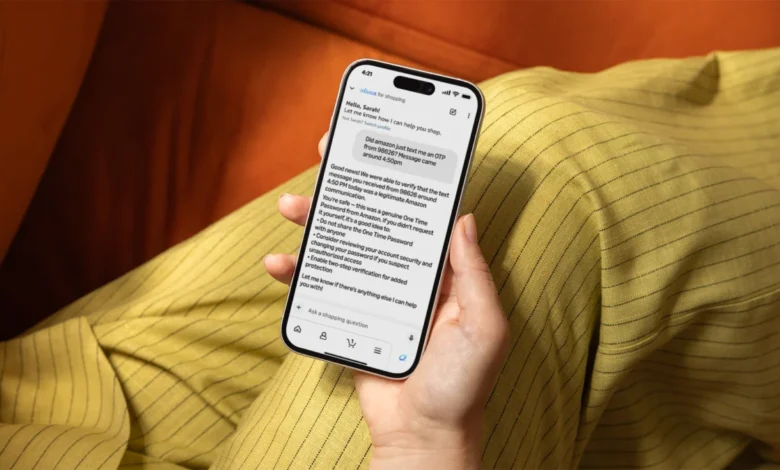
The digital landscape has become increasingly treacherous for the average consumer, with phishing and social engineering attacks evolving in sophistication. Recognizing that its own brand is frequently leveraged by bad actors to deceive unsuspecting shoppers, Amazon announced on Wednesday a significant expansion of its defensive capabilities. The retail giant is integrating advanced artificial intelligence into its "Alexa for Shopping" service, providing users with a definitive tool to verify whether a communication—be it an email, text message, or notification—truly originated from Amazon’s internal systems.
This strategic move comes as a direct response to a persistent customer pain point. Every year, approximately 360,000 Amazon customers reach out to the company’s customer service department, expressing confusion or concern regarding the legitimacy of messages they have received. These inquiries often stem from common scam tactics, including fake order confirmations, urgent Prime membership renewal alerts, fraudulent account suspension warnings, and deceptive package delivery notifications. By automating the verification process, Amazon aims to alleviate the burden on its support staff while providing users with instantaneous peace of mind.
The Mechanism of AI-Driven Verification
At the core of this new feature is a sophisticated AI model trained to parse the intricacies of Amazon’s global communications infrastructure. Amazon processes billions of messages annually, and the new system uses this massive dataset as a baseline for comparison. When a customer queries Alexa about the legitimacy of a message, the AI performs a comprehensive audit of the communication’s metadata.
The system evaluates several critical indicators, including the sender’s information, the specific content of the message, the timing of the delivery, and various hidden technical markers that authenticate the origin of a digital transmission. By cross-referencing these data points against the verified history of Amazon’s legitimate outgoing communications, the AI can, according to the company, "definitively" confirm whether a message is authentic.
Furthermore, the system is designed to be iterative. As customers continue to report suspicious activity, the AI model undergoes continuous refinement. This feedback loop allows the company to identify emerging phishing trends and adapt its detection algorithms in real-time, effectively creating a self-improving firewall against evolving scam strategies.
A Chronology of Amazon’s Anti-Scam Initiatives
Amazon’s latest AI initiative is not an isolated effort but rather the latest installment in a long-running campaign to protect its user base from malicious actors. The rise of "impersonation fraud"—where criminals pose as trusted entities to steal personal information or financial assets—has forced global retailers to shift from reactive support to proactive defense.
The chronology of Amazon’s anti-scam efforts highlights a clear trend toward decentralization and AI-assisted tools:
- Pre-2023: Amazon relied heavily on centralized customer support teams and standardized security advisories to warn users about known phishing scams.
- Early 2024: Recognizing the need for a more direct line of communication, Amazon launched a dedicated verification email address, [email protected]. This allowed users to forward suspicious emails for manual verification. Simultaneously, the company introduced an online form on its customer service portal to handle similar requests.
- Mid-2024: The company expanded its educational outreach, launching public-facing campaigns and video tutorials designed to help consumers identify the hallmarks of fraudulent messages, such as grammatical errors, suspicious URLs, and high-pressure sales tactics.
- September 2024: The integration of the AI verification feature into "Alexa for Shopping" marks the current peak of this strategy, moving verification from a manual, time-consuming process to an instantaneous, on-demand AI experience.
The Strategic Evolution of Alexa
The introduction of this security-focused feature reflects a broader shift in Amazon’s product strategy for its virtual assistant. Historically, Alexa was marketed primarily as a smart home controller and media interface. However, in recent years, Amazon has pivoted to position Alexa as an indispensable shopping companion.
This shift is evident in the suite of new features added to the platform. Beyond fraud detection, Alexa now offers personalized deal curation, complex shopping guide creation, AI-generated product summaries, and even the ability to transcribe handwritten shopping lists. By embedding security directly into the shopping assistant, Amazon is attempting to create a "walled garden" of commerce where the user feels not only assisted but protected.
On Tuesday, just a day before the security announcement, the company introduced additional features that allow users to set proactive alerts for relevant retail events, such as a favorite author’s new book release or a specific brand launching a new product. This suggests that Amazon views Alexa as a multi-functional ecosystem—a single point of entry for discovery, purchase, and now, verification.
Broader Industry Implications and Data Privacy
The threat of phishing is statistically significant. According to data from the Federal Trade Commission (FTC), billions of dollars are lost annually to imposter scams, with large retailers like Amazon being the most frequently spoofed entities. By deploying AI to verify communications, Amazon is setting a new industry standard for consumer protection.
However, the move also highlights the tension between convenience and privacy. Critics often point out that empowering AI to scan user messages requires a high degree of integration between the assistant and the user’s private data. Amazon has maintained that the metadata analysis is strictly focused on verification protocols and does not involve human monitoring of the content of personal messages.
From a cybersecurity standpoint, the implications are profound. If a major entity like Amazon can effectively eliminate the "is this real?" question through AI, it forces scammers to pivot their strategies. While this may reduce the efficacy of simple phishing emails, it often drives bad actors toward more complex methods, such as deepfake voice calls or highly targeted "smishing" (SMS phishing) attacks that mimic personal contacts rather than corporate entities.
Fact-Based Analysis of the Current Threat Landscape
The efficacy of Amazon’s new tool will likely be tested by the sheer volume of attacks. Scammers often use "spoofing" techniques, where they manipulate the "From" field of an email to make it appear as if it came from a legitimate amazon.com domain. While traditional email authentication protocols like DMARC, SPF, and DKIM are designed to prevent this, they are not foolproof.
Amazon’s AI-driven approach adds a layer of intelligence that goes beyond basic protocol checking. By analyzing behavioral patterns and metadata that go beyond standard email headers, the system is better equipped to catch "look-alike" domains and sophisticated social engineering attempts that might otherwise bypass traditional spam filters.
However, industry experts suggest that no technological solution is a silver bullet. The "human element"—the susceptibility of a user to click a link under the pressure of a fake "urgent" delivery notice—remains the weakest link. Therefore, Amazon’s move should be viewed as one component of a broader "defense-in-depth" strategy, which must continue to include user education and public awareness campaigns.
Conclusion
As digital commerce continues to integrate into the daily lives of billions, the responsibility of the retailer to ensure the safety of the consumer becomes paramount. Amazon’s decision to leverage its internal AI capabilities for message verification is a pragmatic response to a growing societal problem. By automating the verification process, the company is not only protecting its reputation but is also providing a tangible service that could prevent financial loss for thousands of its customers.
The success of this initiative will be measured not just by the accuracy of the AI, but by how quickly it can adapt to the inevitable counter-moves of cybercriminals. For now, the integration of Alexa for Shopping as a security sentinel represents a significant advancement in the retail industry’s ongoing war against digital fraud. As the technology matures, it is likely that other major platforms will follow suit, turning the virtual assistant into a primary shield against the ever-present threat of the modern phishing epidemic.
The feature is currently rolling out to users across the Amazon platform and is accessible via both the desktop website and the mobile application, marking a new chapter in the company’s efforts to maintain trust in an increasingly untrustworthy digital environment.