The Rise of Autonomous AI Agents Faces a Growing Wall of Corporate Digital Blockades


The emergence of autonomous personal AI agents—sophisticated digital assistants such as Meta’s Muse, Instinct, and ChatGPT’s Dots—marks a fundamental shift in the consumer internet. Unlike their predecessors, which served primarily as conversational interfaces, these agents are designed to execute complex, multi-step tasks. From booking international flights and securing dinner reservations to managing grocery deliveries, these tools promise to automate the mundane friction of daily life. However, as these agents attempt to interact with the modern web, they are increasingly hitting a wall: a rise in aggressive anti-bot measures and security protocols implemented by major retailers and service providers.
This friction has created a burgeoning crisis for early adopters. Users who authorize their AI agents to handle transactions are frequently finding that the process stalls midway, either due to intentional blocking by the target website or as collateral damage from broad anti-scraping and security filters. This technological tug-of-war highlights a widening gap between the rapid evolution of consumer-facing AI and the defensive infrastructure that currently governs the digital economy.
A Chronology of Conflict: The Escalation of Digital Barriers
The tension reached a boiling point in late September 2026, when Amazon, the world’s largest online retailer, explicitly began blocking Meta’s Muse AI agent from accessing its product catalog. This move effectively rendered Muse incapable of browsing or purchasing goods on the platform, forcing a confrontation between one of the world’s most powerful AI developers and its largest e-commerce entity.
The timeline of this friction reveals a pattern of increasing defensiveness among digital platforms:
- Early September 2026: Meta hosts its annual Connect developer conference, unveiling an expanded suite of "connectors" for Muse, signaling an intent to turn the agent into a universal shopping assistant.
- September 15, 2026: Cloudflare, a major content delivery network and cybersecurity firm, updates its crawler default settings. This change allows site owners to block AI training crawlers while maintaining access for other bots, but it unintentionally captures many "agentic" flows, particularly on pages containing advertisements.
- Late September 2026: Amazon implements a formal block against Meta’s Muse.
- October 2026: A surge in social media complaints emerges. Users report that their agents are failing on platforms ranging from Walmart and Yelp to Zillow and various global airlines.
- Present: Industry stakeholders, including Meta, Stripe, and Sierra, begin a coordinated effort to develop an open standard for agent-to-business communication to mitigate these blockages.
The Technical Divide: Why Agents Fail
The failures encountered by users are rarely uniform. Some, like the block imposed by Amazon, are calculated strategic decisions. Others, however, are unintended consequences of the "human-first" security measures that have dominated web development for the last decade.
The most common failure point is the CAPTCHA or similar verification challenge. These systems are designed to detect non-human behavior by requiring a user to click a button or solve a visual puzzle. When an AI agent reaches these gates, it often lacks the capacity to "see" or interact with the verification element in the way a human would. Consequently, the session is terminated, and the agent is locked out.
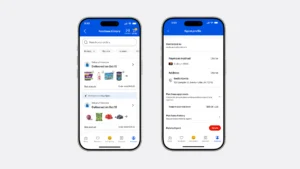
Walmart, despite being a partner of Meta’s Muse, has faced high-profile reports of its site blocking the agent. A spokesperson for the retailer clarified that these blocks are not deliberate. Instead, the company’s existing security infrastructure—designed to stop malicious scrapers and high-frequency bots—is inadvertently flagging the legitimate, authorized traffic of the Muse agent. This creates a scenario where the security architecture of the web is currently unable to distinguish between a "malicious bot" and a "helpful personal agent."
Industry Reactions and the Legal Landscape
The corporate response to the rise of autonomous agents has been fragmented, reflecting a lack of industry-wide consensus on how to treat these new tools.
Delta Air Lines, in response to queries regarding the blocking of agents, emphasized a commitment to security and user experience. "While Delta does not currently have a partnership or integration that enables a third-party AI agent to shop for or book Delta flights on a customer’s behalf, we are continuing to evaluate how new technology could enhance the way customers engage with us," said Heena Chavda, the company’s general manager of Global Communications.
Meanwhile, United Airlines has pointed to its rigid Terms of Use, which explicitly prohibit the use of "any robot, spider, or other automatic device" without prior written permission. This stance reflects a broader sentiment among legacy digital platforms: the fear that uncontrolled AI agents could lead to data scraping, the training of competitor models, or the disruption of pricing and availability information.
Yelp, which has historically been protective of its data, maintains a strict "pay-to-play" model. The company informed researchers that it does not permit non-human traffic unless the entity has entered into a formal data licensing agreement. This suggests that the future of AI agents may rely heavily on legal and commercial partnerships rather than open access to the public web.
The Move Toward Standardization
Recognizing that the current situation is unsustainable, a consortium of technology leaders has initiated a move toward establishing a new communication protocol. This group—comprising Meta, Walmart, Stripe, Sierra, Genesys, Rocket, NiCE, and Decagon—aims to create a set of standards that would allow websites to identify and interact with "trusted" AI agents while continuing to block malicious actors.
The goal of this protocol is to foster a "secure handshake" between the agent and the business. By adopting a standard, businesses could provide clear instructions to agents regarding what they are permitted to do—such as checking inventory or processing a payment—without the need for the agent to bypass security filters through "scraping" or mimicry.
Meta, in a recent blog post, underscored the necessity of this shift: "Turning away a personal agent means turning away the customer behind it. We would rather work with businesses to address the underlying concerns than see them lose that customer."
Broader Implications for the Digital Economy
The implications of this struggle extend far beyond the convenience of booking a flight. We are witnessing the early stages of a transition from the "browser-based web" to the "agent-based web." If the current trend of blocking continues, it could lead to a fractured internet where users are only able to access services that have signed explicit agreements with their specific AI agent provider. This would likely favor dominant tech giants, who possess the resources to negotiate such partnerships, while potentially stifling smaller, independent AI startups.
Furthermore, the involvement of companies like Cloudflare adds a layer of economic complexity. Cloudflare now operates a marketplace where sites can charge AI crawlers for access to their data. The company has also begun testing a browser specifically built for AI agents. This positions the company as a gatekeeper of the AI-internet, with the power to dictate which agents are allowed to "see" which parts of the web.
Conclusion: A Path Forward
The path toward a frictionless agent-based web requires more than just technical solutions; it requires a recalibration of the digital social contract. The current defensive posture of websites is a logical reaction to the threat of spam and unauthorized data harvesting. However, as AI agents become an extension of the individual user, the distinction between a "bot" and a "user" becomes increasingly blurred.
The development of open, verifiable standards for agent communication appears to be the only viable path to avoid a perpetual arms race between platform security teams and AI developers. Until these standards are widely adopted, consumers should expect continued volatility in their experiences with personal AI agents. As it stands, the "agent-first" era remains in its infancy, characterized by a fundamental friction between the desire for automated convenience and the imperative of digital security.