J. Crew transforms digital customer experience with the launch of an AI-powered Style Advisor utilizing Anthropic’s Claude technology.

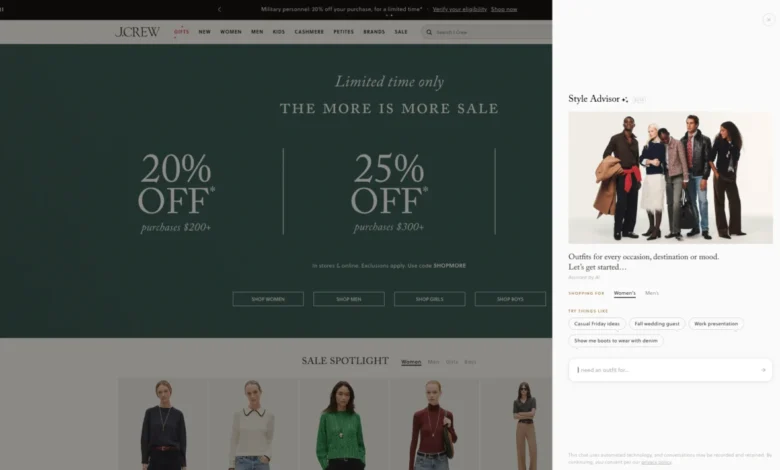
The fashion retail landscape underwent a significant shift on November 12, as J. Crew officially debuted its new Style Advisor, an artificial intelligence-driven interface integrated directly into its e-commerce platform. By leveraging Anthropic’s advanced Claude large language models, the retailer aims to transition from a traditional, search-based digital storefront to a personalized, inspiration-led shopping ecosystem. This strategic deployment marks a milestone in J. Crew’s ongoing efforts to modernize its digital infrastructure and address the shifting expectations of modern consumers who increasingly demand bespoke, conversational interactions during their online shopping journeys.
A Chronology of Integration and Development
The development of the Style Advisor was not an overnight endeavor but the culmination of a deliberate, multi-phase technical roadmap. J. Crew’s internal product team spearheaded the project, prioritizing a hybrid approach that combined the creative expertise of their human merchandising staff with the computational power of frontier AI models.
The initial development phase began with the creation of a prototype utilizing Claude Code and the Claude Opus 5.5 model. These high-capacity tools allowed engineers to establish a framework that understood the nuances of fashion styling—an industry where context, tone, and visual cohesion are paramount. Once the proof-of-concept was validated, the team moved into the production phase, transitioning the assistant to the Claude Fable 5.1 model, which is specifically optimized for complex, open-ended reasoning tasks.
By mid-November, the tool was finalized and pushed to the live website. Unlike static recommendation engines that rely solely on past purchase data, the Style Advisor is designed to engage in fluid, real-time dialogue with users, mimicking the consultative experience a shopper would receive from a live stylist in a brick-and-mortar boutique.
The Technical Architecture: How the Advisor Functions
At the heart of the Style Advisor lies a sophisticated multi-model architecture. J. Crew has deliberately segmented the workload to balance performance with intelligence. When a customer inputs a prompt, the system utilizes the Claude Sonnet 5.5 model to process the request, interpret the stylistic intent, and generate nuanced, brand-aligned feedback.
For more routine or time-sensitive interactions, the system offloads tasks to the Claude Haiku 5.5 model. This division of labor ensures that the interface remains responsive and fluid, minimizing latency—a critical factor in maintaining conversion rates within e-commerce environments.
The primary constraint imposed by the engineering team ensures that the AI remains tethered to the brand’s identity. Because the underlying data set is derived from J. Crew’s proprietary archives of merchandising and styling guides, the AI is effectively "constrained" to provide advice that remains consistent with the company’s established aesthetic, preventing the common AI pitfall of "hallucinating" advice that falls outside the brand’s specific catalog or style point of view.
Industry Positioning and Market Context
J. Crew occupies a prominent position in the North American retail sector, currently ranked No. 80 in the Digital Commerce 360 Top 1000 Database. This database, which tracks the largest online retailers by annual e-commerce sales, highlights the scale at which J. Crew is operating. Furthermore, the company’s inclusion at No. 135 in the Digital Commerce 360 and ReFiBuy AI Commerce Rankings underscores its commitment to technological adoption.
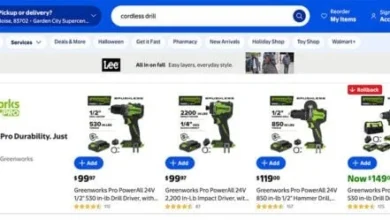
The retail industry is currently in the midst of a massive pivot toward Generative AI. According to industry analysts, the "search and filter" era of e-commerce is being rapidly replaced by "discovery and guidance" models. Retailers are realizing that traditional search bars often frustrate users who cannot articulate exactly what they want in keywords. Conversational assistants, by contrast, can translate abstract needs—such as "I need an outfit for a business casual dinner in November"—into actionable, cohesive product sets.
Leadership Vision and Strategic Objectives
Libby Wadle, CEO of the J. Crew Group, has framed the launch of the Style Advisor not merely as a technical upgrade, but as a fundamental shift in the retail business model. In official statements following the rollout, Wadle emphasized that the company is attempting to lead, rather than react to, the evolution of consumer behavior.
"As consumer expectations evolve and AI opens up new possibilities for retail, J. Crew is challenging the traditional model of online shopping, moving beyond individual product searches toward a more connected and inspiration-led experience," Wadle noted. She added that the integration represents the synthesis of decades of human merchandising experience with modern machine learning, effectively digitizing the "institutional memory" of the brand’s creative teams.
Anthropic, the developer behind the Claude ecosystem, has framed the partnership as a demonstration of how "frontier models" can be applied to specific vertical industries. Paul Smith, Chief Commercial Officer at Anthropic, highlighted the importance of brand integrity. "J. Crew has one of the most recognizable points of view in fashion, and its team used Claude to bring that expertise to customers in a new way," Smith stated. By utilizing a mix of high-intelligence models for complex reasoning and faster, efficient models for speed, J. Crew has effectively created a scalable solution for high-volume customer service.
Implications for the Future of Retail
The launch of the Style Advisor carries significant implications for the broader retail industry. Firstly, it signals a move toward "brand-aware" AI. For years, retailers were wary of deploying public-facing AI tools due to risks regarding accuracy, brand voice, and potential PR liabilities. By curating the data inputs and using specific model versions (Fable 5.1, Sonnet 5.5, and Haiku 5.5), J. Crew has demonstrated a path toward safe, controlled AI deployment.
Secondly, the move suggests a change in how retailers will measure the success of their websites. Traditionally, KPIs have centered on "time on site" and "conversion rate." With the introduction of an advisor that encourages deeper, more conversational engagement, companies may begin to track "stylistic engagement" or "consultation success rates." If the AI can effectively cross-sell items that a human stylist might recommend—such as pairing a scarf with a coat that a user hadn’t considered—it could lead to a measurable increase in average order value (AOV).
However, the technology is not without challenges. Maintaining the "human touch" while scaling via automation remains the industry’s greatest hurdle. As the tool matures, J. Crew will likely face the challenge of updating the model’s knowledge base to keep pace with seasonal fashion trends, which move much faster than standard product inventory cycles. The reliance on Claude implies a continuous feedback loop between the retail team and the AI developers to ensure the model evolves as the company’s collections change.
Conclusion and Looking Ahead
The implementation of the Style Advisor is a clear indicator that the competitive advantage in the 2020s will be defined by the ability to integrate deep domain expertise with advanced artificial intelligence. For a retailer like J. Crew, which has historically relied on a strong brand identity, the ability to codify that identity into an automated assistant is a significant competitive barrier against less established competitors.
As the retail sector continues to navigate the complexities of digital transformation, the success of J. Crew’s Style Advisor will likely serve as a case study for other apparel brands. The focus on "complex, open-ended work" suggests that the company is preparing for a future where digital shopping is no longer a solitary task of scrolling through pages, but a collaborative, interactive process. Whether this technology will successfully drive long-term customer loyalty remains to be seen, but the initial integration marks a definitive, data-backed step into the next generation of digital commerce. As the industry monitors these developments, the integration of Anthropic’s technology into mainstream retail will remain a pivotal development to watch.